Beware of fake job offers and payment requests. We only use official email IDs and never conduct interviews on messaging apps.Beware of fake job offers and payment requests. We only use official email IDs and never conduct interviews on messaging apps.
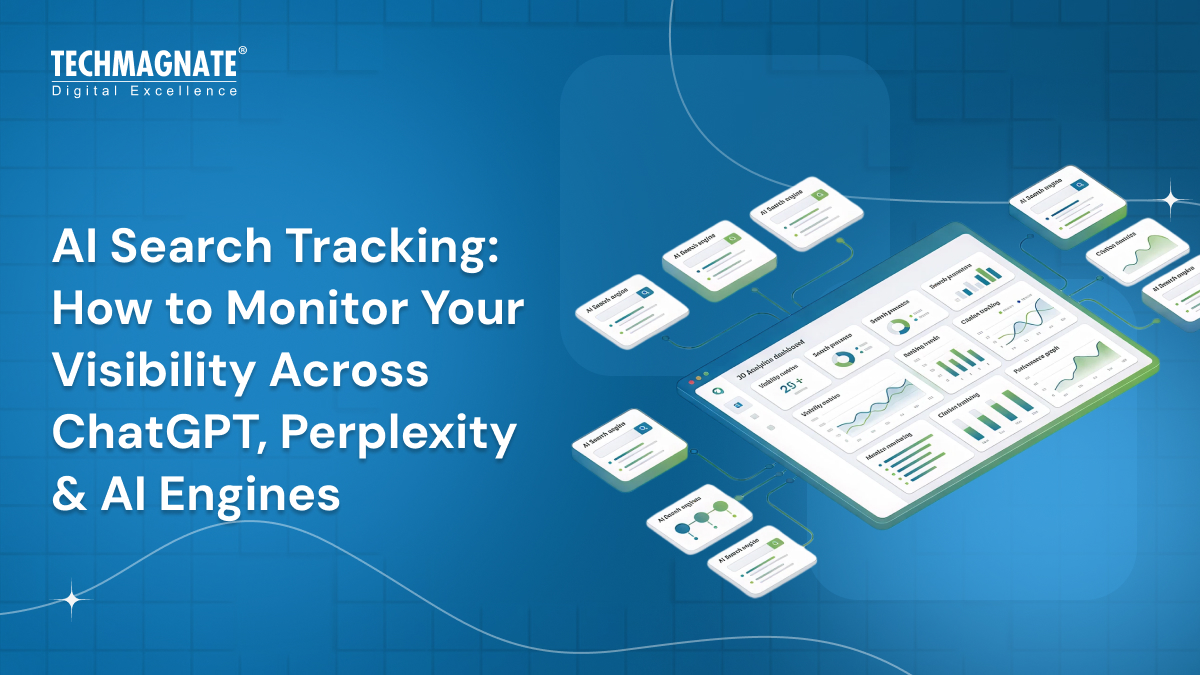
AI search tracking helps businesses monitor their visibility across AI-generated answers. It shows whether AI systems cite your brand, which sources influence recommendations, and how competitors appear alongside you. As AI-driven search continues to shape purchase decisions, monitoring AI visibility is becoming as important as traditional SEO rankings.
AI-powered search is changing how people discover businesses online. Users now rely on ChatGPT, Gemini, Perplexity, and Google AI Overviews for recommendations, comparisons, and buying decisions instead of manually visiting multiple websites. This shift means brands must understand how AI platforms mention, recommend, and describe their business during customer research journeys.
Table of Contents
What is AI Search Tracking and Why Does Your Brand Need It?
AI search tracking helps you monitor how AI-powered platforms such as ChatGPT, Perplexity, Gemini, and Google AI Overviews mention, recommend, or cite your brand, worth tracking given the AI Overviews share of Google search. Instead of measuring where your website ranks on a search page, you measure whether AI systems include your business directly in the answer users see.
Traditional SEO focuses on rankings and website clicks. AI engine monitoring focuses on whether AI platforms mention and recommend your brand in generated answers. In simple terms, traditional SEO checks if your business appears in search results, while AI search tracking checks if AI platforms actively suggest your business to users.
An AI citation is a source, brand, or webpage referenced inside an AI-generated answer one lever worth understanding is llms.txt SEO. Google AI Overviews are AI-generated summaries that appear above standard search results for selected queries.
The key differences between traditional monitoring and AI visibility tracking include:
Traditional Search Monitoring
AI Search Tracking
Tracks keyword rankings
Tracks AI-generated brand mentions
Measures clicks and impressions
Measures citations, sentiment, and visibility
Focuses on search result pages
Focuses on conversational AI answers
Uses traditional SEO tools
Uses AI visibility and monitoring workflows
Optimizes for search engines
Supports generative engine optimization and AI discovery
This shift matters because users increasingly rely on AI-generated answers instead of visiting multiple websites. In 2024, Gartner report projected that traditional search engine volume could decline by 25% by 2026 as AI assistants reshape search behavior.
AI search tracking helps you understand whether AI systems recommend your brand, ignore it, or misrepresent it during buyer research journeys. If your business does not appear inside AI-generated answers, your visibility decreases even when traditional rankings remain strong.
You Rank on Google, But AI Search Ignores Your Brand
Your website can rank at the top of Google while remaining completely absent from ChatGPT, Perplexity, and other AI-generated search experiences. AI brand visibility depends on different signals than traditional rankings, which means strong SEO performance does not automatically translate into strong AI visibility.
Most AI brand mentions come from third-party sources instead of brand-owned websites which is exactly what reputation management tools for brands are built to monitor. AI platforms frequently pull information from Reddit discussions, review platforms, industry publications, directories, and online forums to generate recommendations. If your business lacks sufficient trusted mentions on external platforms, AI systems may not consider your brand reliable or important in your industry.
The most common reasons brands struggle with brand visibility in AI search are:
No Structured Data: AI systems struggle to interpret your services, expertise, and business relationships correctly without schema markup.
Weak Third-Party Presence: AI engines rely heavily on external citations from reviews, forums, directories, and industry websites when deciding which brands to recommend.
Inconsistent Brand Entity: Different business names, descriptions, or contact details across platforms can confuse AI systems trying to accurately connect your brand signals.
This shift is already affecting website traffic and online visibility. A study by Ahrefs found that Google AI Overviews can reduce click-through rates for the top-ranking page by up to 58%, as users increasingly get answers directly from AI-generated summaries rather than clicking through to websites.
Strong Google rankings are no longer enough for brand visibility in AI search. If AI systems cannot clearly understand and trust your business, competitors may appear in AI-generated recommendations while your brand gets overlooked by potential customers.
How to Monitor Your Brand Visibility on ChatGPT, Perplexity, Gemini & Google AI Overviews
AI engine monitoring helps businesses track how AI platforms mention, describe, and position their brand across generated answers. It shows whether your business appears in AI recommendations, which sources influence those mentions, and how competitors compare across conversational search platforms.
You can also track brand visibility across LLM platforms through Techmagnate’s Prism tool, which helps businesses monitor AI-generated mentions but the content itself matters too; see our essential tools for optimizing content for LLMs. across ChatGPT, Gemini, Perplexity, and Google AI Overviews.
Your AI search monitoring process should include the following steps:
Step 1: Define Your Tracking Scope
Start by identifying the entities and search terms AI platforms may associate with your business. These usually include:
Brand Name: Track your official business name along with common variations and abbreviations.
Product Names: Include branded products, services, tools, and solution categories.
Founder Names: Senior leadership and founders can influence entity recognition and AI trust signals.
Key Service Terms: Track commercial and informational search queries connected to your core offerings.
Competitor Brands: Compare whether competitors appear more frequently than your business in response to the same prompts.
This creates a reliable baseline for long-term AI engine monitoring.
Step 2: Run Manual Prompt Tests
Search your brand across ChatGPT, Gemini, Perplexity, and Google AI Overviews using realistic buyer-focused questions. Use prompts that customers might naturally search for, such as “best enterprise SEO agency” or “top GEO optimization companies.”
Track:
Whether your brand appears
How AI platforms describe your business
Which competitors appear alongside your brand
Whether AI systems cite your website or third-party sources
Which prompts trigger visibility most often
This helps you measure ChatGPT brand visibility and understand how your business appears across different AI-generated search results.
Step 3: Use the Dedicated AI Monitoring Tool
Modern AI search monitoring tools are built to track how AI platforms cite, describe, and recommend brands across conversational search experiences. Our Prism tool helps businesses track brand visibility across LLM platforms including ChatGPT, Gemini, Perplexity, and Google AI Overviews.
Platform Coverage: Which LLM platforms reference your brand most frequently?
Competitor Visibility: Which competing brands appear for the same prompts?
Prompt-Level Visibility: Which buyer-intent prompts trigger your brand mentions?
AI Visibility Trends: How your visibility changes across platforms over time.
This creates a stronger visibility framework than traditional SEO tracking alone.
Step 4: Track Third-Party Mentions
AI systems frequently rely on third-party sources instead of brand-owned pages. Monitor mentions across sources such as:
Reddit: Community-led discussions and peer recommendations.
Review Platforms: Trust and reputation signals from customers.
Industry Publications: Expert commentary, rankings, and thought leadership.
Forums and Directories: Category-specific conversations and business listings.
YouTube and Podcasts: Long-form discussions that influence AI interpretation.
These external references often shape how AI systems frame your business during recommendations.
Step 5: Build a Tracking Log
Maintain a structured tracking log to monitor how your brand appears across different AI platforms over time. Record details such as:
Platform name
Prompt used
Citation frequency
Sentiment
Source referenced
Competitor mentions
Context accuracy
This helps you identify whether AI systems describe your brand correctly and whether visibility improves month over month.
Step 6: Review Monthly
Review your visibility monthly to compare citation growth, sentiment shifts, and platform-level changes. Monthly reviews help you identify visibility gaps before competitors strengthen their AI search presence.
Different AI platforms also prioritize different visibility signals:
ChatGPT’s brand visibility depends heavily on authoritative content, trusted entities, and strong topical authority.
Perplexity AI tracking should focus on citation sources because Perplexity frequently references external websites directly inside responses.
Visibility depends heavily on featured-snippet-ready formatting and strong schema implementation.
Consistent AI engine monitoring helps you understand how AI systems describe your business, which sources influence recommendations, and where competitors gain visibility advantages. When you combine prompt testing, Prism monitoring, third-party tracking, and monthly reviews, you build a stronger foundation for long-term AI search visibility.
The 4 AI Search Visibility Metrics Every Brand Should Track
Modern AI visibility metrics help you measure how AI systems interpret, recommend, and position your brand inside generated answers. Traditional SEO rankings cannot measure how AI platforms mention, recommend, or describe your brand in AI-generated answers.
The most important visibility metrics include:
Citation Frequency: How often AI platforms mention your brand when users ask relevant industry or service-related questions.
Context Accuracy: Whether AI systems describe your products, services, and expertise correctly during generated responses.
Sentiment Weight: Measures whether AI-generated mentions frame your brand positively, neutrally, or negatively during recommendations.
Platform Priority: Which AI platforms mention your brand most frequently, and where your largest visibility gaps exist.
You should also monitor LLM perception drift, which means how AI platforms change their understanding of your brand over time. New reviews, citations, and online discussions can influence how platforms like ChatGPT and Gemini describe your business in AI-generated answers.
Traditional SEO tools cannot measure these conversational signals because they focus on rankings, backlinks, and keyword data. Effective LLM Optimization, LLM brand citation tracking and AI Overviews brand tracking require dedicated monitoring systems built specifically for AI-generated search experiences.
How to Improve Your Brand Visibility in AI Search
Improving AI search visibility requires more than publishing additional content. Tracking helps you identify where AI systems misunderstand or ignore your brand, while structured AEO optimization improves how platforms like ChatGPT, Gemini, Perplexity, and Google AI Overviews interpret and recommend your business.
The most effective ways to improve visibility include:
Add Schema Markup: Implement FAQ Page, Article, Organization, and HowTo schema across your highest-priority pages. Strong schema markup for AI helps AI systems understand your services, authorship, business relationships, and page intent more accurately.
Fix Brand Entity Consistency: Use the same brand name, descriptions, contact details, and positioning across LinkedIn, Google Business Profile, Crunchbase, directories, and social platforms.
Build Third-Party Presence: AI platforms frequently cite Reddit, YouTube, review platforms, industry publications, and expert discussions instead of brand-owned websites.
Create Answer-First Content: Rewrite key pages with concise definitions, FAQs, summary blocks, and quick-answer sections within the first 200 words.
Build Topical Authority:Develop content clusters around a pillar page, supported by 8 to 10 related articles, so AI systems recognize your business as a trusted category authority.
These improvements require technical SEO, content strategy, digital PR, and ongoing entity optimization working together consistently. Our GEO optimization and AI visibility services help brands strengthen discoverability across modern AI search platforms.
Request a free AI visibility audit from Techmagnate to understand how AI systems currently interpret and position your brand.
Tracking visibility only identifies the gaps. Improving brand visibility in AI search requires structured entities, authoritative third-party signals, answer-first content, and sustained optimization so AI systems can confidently recommend your business across conversational search experiences.
Conclusion
AI-powered search experiences are increasingly influencing how users discover, evaluate, and select businesses online. AI search tracking helps businesses understand how platforms such as ChatGPT, Gemini, Perplexity, and Google AI Overviews present and recommend their brand across conversational search journeys.
Without consistent AI search visibility monitoring, businesses may struggle to identify dominance by competitors, citation gaps, or inaccurate brand representation in AI-generated answers. Structured AI engine monitoring and GEO optimization strategies can help improve how AI systems interpret, position, and recommend your business across evolving search experiences.
Find out how AI systems describe your brand before competitors shape the conversation first. Explore Techmagnate’s GEO and AI visibility services to strengthen your visibility across major AI platforms.
Frequently Asked Questions
What is AI search tracking?
AI search tracking is the process of monitoring how AI platforms such as ChatGPT, Gemini, Perplexity, and Google AI Overviews mention, recommend, or cite your brand inside AI-generated answers. It helps you measure conversational visibility, sentiment, and AI-driven brand perception.
How do I check if ChatGPT mentions my brand?
Start by searching for your brand name and related industry questions inside ChatGPT. Record whether your business appears, how it is described, and which competitors appear alongside it. Manual prompt testing provides a useful starting point for broader AI visibility monitoring.
Which AI platforms should I monitor for brand visibility?
You should monitor ChatGPT, Gemini, Perplexity, and Google AI Overviews because each platform uses different citation behaviors, entity signals, and content preferences that influence visibility differently.
Why does my brand appear on Google but not in AI search results?
Google rankings and AI citations rely on different signals. AI systems prioritize schema markup, third-party mentions, entity consistency, and contextual authority over keyword rankings alone.
How often should I monitor my AI search visibility?
Weekly monitoring helps identify sudden changes in visibility, while monthly audits reveal long-term citation trends, sentiment shifts, and broader AI interpretation changes over time.
Sarvesh Bagla is an enterprise SEO expert and industry leader who has driven transformational digital growth for India’s top brands across the BFSI, Healthcare, Automotive, and ECommerce industries. As the Founder and CEO of Techmagnate, he leads large-scale organic search strategies and performance marketing campaigns for businesses looking to succeed in today’s AI-driven search landscape.
A strong advocate for thought leadership, Sarvesh is deeply involved in SEO evangelism and regularly contributes to industry discussions through LinkedIn, webinars, and CMO roundtables. His focus today is on helping brands prepare for an AI-first SEO future (AEO, GEO) and strategies for Large Language Models (LLMs) at the core.
Get the most valuable search related insights about leading brands, trending keywords, search volumes, fastest growing categories, city-level insights and much more!
It has come to our notice that fraudulent job offers are being circulated on the internet through messaging apps like WhatsApp and Telegram, which falsely claim to be from Techmagnate. We take this matter seriously and would like to caution all candidates to be wary of such postings.
Please Note That –
We do not charge any fees/security deposit/payment from candidates, irrespective of the professional experience they hold, for job applications or interviews
Official communication channels include our website and verified social media accounts, primarily LinkedIn.
Kindly double-check the domain name – @techmagnate.com – in the email address
We follow a transparent and ethical approach for hiring/onboarding supported by proper documentation.
Ensure that you only apply through verified channels to avoid being scammed. We also recommend that you exercise caution when sharing personal information or financial details with any job posting or recruitment agencies claiming to represent us.
We want to ensure that potential candidates interested in joining Techmagnate have a safe and positive experience.
If you find that someone that fits the description above has reached out to you, please notify us immediately at jobs@techmagnate.com.
Team @Techmangate
Build a Better Digital Marketing Strategy with Techmagnate’s Search Trends Reports
 Important Alert: