Beware of fake job offers and payment requests. We only use official email IDs and never conduct interviews on messaging apps.Beware of fake job offers and payment requests. We only use official email IDs and never conduct interviews on messaging apps.
Summary: Learn how to optimize your content for LLMs in 2025. Discover proven strategies, tools like OpenAI and Jasper, and best practices to improve SEO, scale content, and reach your audience more effectively. It covers key strategies, best practices, and tools to create content that’s both AI-friendly and engaging for human readers. It also highlights how brands can use LLMs to streamline content creation, maintain consistency, and enhance audience targeting.
Key Takeaways:-
LLMs help scale and improve content quality.
Clear prompts and structure boost AI understanding.
Aligning with SEO improves search visibility.
Tone and voice can be tailored for different audiences.
Tools like OpenAI and Jasper streamline content creation.
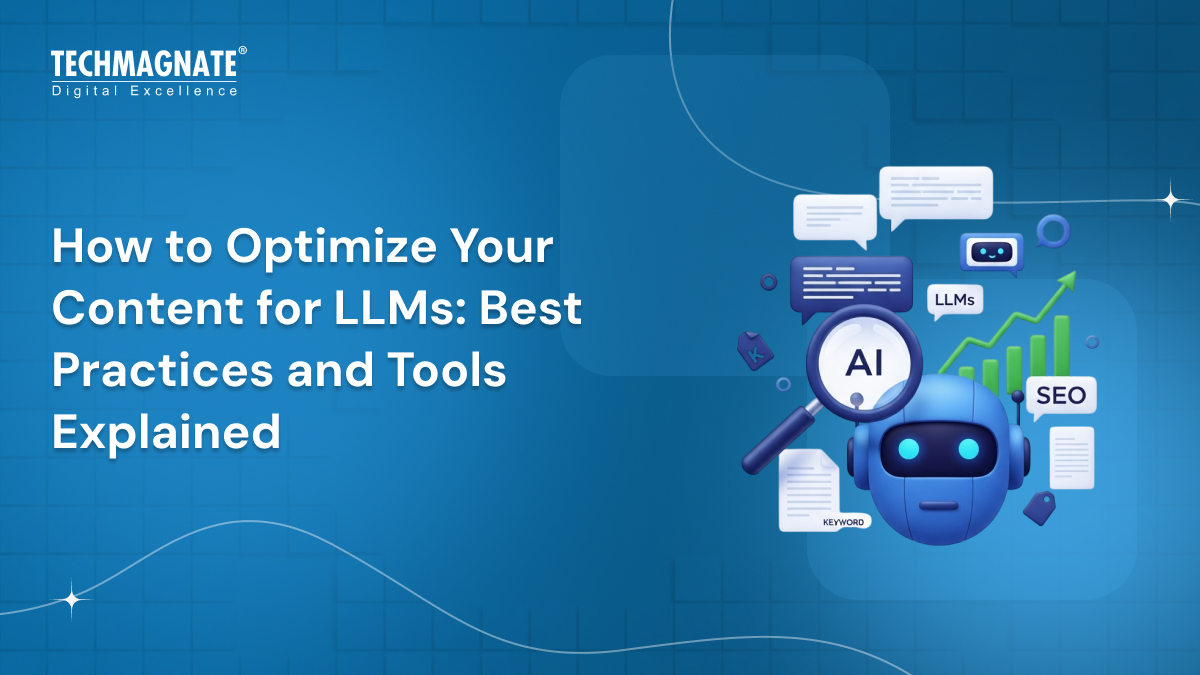
LLM Optimization is short for Large Language Model Optimization and it is about fine-tuning your content strategy so that AI tools understand your content better.
Why does it matter? Because these AI powerhouses can boost your workflow by creating high-quality drafts fast, see what AI content optimization means for the full picture. The underlying technology seems complex, but the concept is simple: optimizing for LLMs allows you to create impactful content more efficiently with no advanced technical background required.
Table of Contents
Why Aligning Content Strategy with LLMs is Crucial?
In a world where attention spans are shorter than a TikTok loop and audiences expect instant value, aligning your content strategy with LLMs isn’t just a clever move – it’s crucial.
Each type of LLM optimization technique is designed to improve how AI understands and generates content.
Discover What Your Customers Search ForDiscover What Your Customers Search For
Get insights on evolving customer behaviour, high volume keywords, search trends, and more.
Prompt tuning refines input instructions to guide AI output effectively.
Content formatting enhances clarity and structure for better readability.
SEO alignment ensures content meets search engine criteria to boost visibility.
Tone and voice adjustment help tailor content to different audiences or platforms.
Real-time feedback systems allow ongoing improvement through performance insights and user responses.
Together, these strategies make your content more adaptive and AI-friendly.
Let’s Talk Scalability
LLMs are like having a supercharged content team. Whether you need ten product descriptions or a thousand blog intros, they can create content quickly and at scale. For example, e-commerce brand Wayfair has explored AI to assist with product copy at scale – though specific implementation details aren’t publicly confirmed. A well-documented example is Amazon, which uses AI tools extensively for product descriptions and recommendations.
How LLMs Improve Content Relevance and Personalization
LLMs are data nerds helping you craft content that caters to your audience’s needs, interests, and browsing behavior – explained fully in our how GEO differs from SEO. Imagine an email that adapts to a customer’s purchase history or a landing page that shifts tone for different user segments – LLMs make that possible. Companies like Spotify and Netflix already use AI-driven personalization – Spotify for playlist recommendations and Netflix for show suggestions – both powered by machine learning models trained on user behavior.
LLM and SEO Alignment: How AI Helps Your Content Rank
LLMs are trained on large amounts of web content, which means they’ve learned many of the same patterns that search engines reward – like clear structure, relevant context, and natural language. They help craft content that’s not only keyword-optimized but contextually rich. LLMs understand search intent, semantic relationships, and phrasing patterns far better than any keyword-stuffing tool of the past.
The Cherry On Top: Audience Targeting
Audience targeting isn’t just about demographics anymore – it’s about voice and value. Want a playful, emoji-packed product description for Gen Z? Done. Need a research-backed grant proposal that resonates with an academic researcher? Easy. LLMs can shift tone, complexity, and even format to match the unique expectations of each group. This means your content doesn’t just reach your audience – it resonates with them, whether scrolling Instagram or scanning LinkedIn.
In short, aligning your content strategy with LLMs isn’t about replacing the human touch but supercharging it. The brands that get this aren’t just keeping up, they’re leading the pack.
Let’s look at this in action by considering The Washington Post and its in-house AI tool, Heliograf. Heliograf was built to cover the 2016 Rio Olympics and U.S. election results. Since then, it has helped the newsroom publish hundreds of short updates and local stories automatically. This is a rule-based automated journalism tool – not an LLM. It ensures relevance through punctual delivery and core updates, boosts audience targeting by covering niche moments, and supports SEO goals by enriching the site with structured and searchable content.
Building Your AI BFF: Developing a Content Strategy for LLM Integration
Using LLMs in your content process is like getting a smart assistant – you’re still in charge, but things move faster and more smoothly. But before you dive in, you need a clear plan. Start by checking what content you already have, choose which tasks to automate, write clear prompts, and review the results to improve them. Here’s how to build a smart and scalable content workflow.
Start with a Content Audit: Review existing blog posts, web pages, product descriptions, and emails. Identify outdated content and pinpoint opportunities where LLMs can improve quality, refresh tone, or fill content gaps.
Spot Automation Goldmines: Not every piece of content needs a dedicated resource. FAQs, product pages, email snippets, social captions, they’re ripe for automation. Map out which formats and tasks can be drafted by an LLM so your human team can focus on creativity and strategy.
Create Prompt Guidelines (Because AI Needs Coaching Too): LLMs are smart, but they still need direction. Develop prompt playbooks that reflect your brand’s tone, style, and personality. Be it cheeky and casual or buttoned-up and corporate, make sure your prompts clearly say the “Dos and Don’ts” and “This is who we are, and this is how we talk.”
Establish a feedback loop: Regularly review AI-generated content, gather insights from your team, and refine your prompts based on performance to continuously improve the output quality and ensure it aligns with your audience’s needs. Treat it like training a new hire: the more feedback you give, the better it gets. You’re not just using AI, you’re co-evolving with it.
By following this roadmap, you’re not just adding AI to your workflow; you’re making it a well-trained, brand-savvy content partner.
7 Best Practices for LLM-Optimized Content Creation
Writing for both humans and AI requires finesse and strategy. If you want your work to be noticed and used by these digital curators, you need to create evergreen content that’s difficult to resist. Here’s how to do just that:
1. Understand Your Target Audience and Intent
Tailor content based on whether your audience is looking for information, making comparisons, or ready to make a purchase, ensuring alignment with search intent and improving engagement. For instance, a top-of-funnel visitor might want a fun, skimmable listicle, while someone mid-funnel may prefer a detailed comparison guide. LLMs are great at matching content to user intent, but only if your writing signals that intent from the start.
2. Use Clear, Structured, and Concise Language
LLMs love clarity like bees love flowers. Use short paragraphs, bullet points, subheadings, and clean formatting. Avoid jargon unless necessary, and break complex topics into digestible pieces. Think of your content like a well-organized closet: everything should have a place, and it should be easy to find what you’re looking for.
3. Leverage Semantic SEO and Entity Optimization
Semantic SEO goes beyond keywords. It’s about meaning. Instead of stuffing “best coffee maker” 20 times into your blog, include related terms and concepts like “espresso machine,” “brew strength,” or “single-serve pods.” Use recognized entities (brands, places, tools) to help LLMs understand your content’s full context. This helps your content surface in the broader spectrum of relevant searches, even if the exact keyword isn’t used.
4. Incorporate FAQ Sections and Natural Language Questions
LLMs (and users!) love content that mirrors the way people speak. Including FAQs with questions like “What’s the best way to clean a French press?” boosts visibility in voice searches and increases your odds of being pulled into AI-powered snippets or chatbot responses.
5. Optimize for Featured Snippets and AI Summaries
Want your content to be the answer that Google pulls into a featured snippet or summary box? You’ll need to give it exactly that: a clear, concise answer. Structure your response right after a question, use straightforward phrasing, and keep it between 40 and 60 words.
6. Use Data, Examples, and Visuals Strategically
LLMs respect credibility, and nothing screams “trust me” like a stat or real-world example. Sprinkle in case studies, expert quotes, charts, or infographics to support your claims and add visual interest.
7. Maintain a Consistent and Authoritative Voice
LLMs are trained on quality content from reputable sources, so if you want to be seen as one, write like one. Keep your voice consistent, no matter what you opt for – casual, technical, or storytelling, and back up your claims with links to trusted sources. Avoid hedging language (“might,” “could be”) unless it’s truly necessary.
LLM Optimization Tools and Platforms: Your AI Toolbox for Content Perfection
Meet LLM-powered tools – each with its speciality to help you work smarter and faster:
OpenAI: The OG powerhouse. OpenAI’s GPT models are considered one of the best AI content writing tools. They help brainstorm blog ideas, draft marketing copy, or write customer replies. This platform is flexible enough to handle everything across almost any industry.
Claude (by Anthropic): Claude is designed for safe, thoughtful AI responses. It works well for long-form content, sensitive topics, and tasks where accuracy and careful reasoning matter – like research summaries or detailed editorial work that requires a human-like touch without crossing lines.
Jasper: Your fast-talking, deadline-loving copywriting buddy. Jasper helps you turn ideas into polished, conversion-ready content that matches your brand voice and tone. The future of content marketing is perfect for marketers who need everything from punchy social captions to full-on blog articles.
SurferSEO: An AI-powered SEO tool that analyzes top-ranking pages and guides you on keywords, content structure, and word count – so your content is built to rank from the start. It audits the competition, recommends high-performing keywords, and guides your structure – all so you can land that coveted top spot on Google.
These LLM platforms make optimizing your strategy for both humans and AI easier.
Embracing the Wins of LLM-Driven Content Creation
LLM optimization is key to future-proofing your content creation strategy. By aligning your content with LLM-driven workflows, you can improve scalability, boost SEO performance, and save time, all while maintaining high-quality, relevant output.
With accurate practices, you’ll hit the sweet spot where AI amplifies your content without losing the human touch.
If you’re looking for expert support, partnering with a specialized AI SEO agency can help you audit existing content, fine-tune audience targeting, and leverage platforms like OpenAI, Jasper, and SurferSEO effectively. Don’t forget: optimizing for SEO, structuring content for snippets, and making AI-friendly tweaks can help get your content seen, heard, and loved by both search engines and human readers alike.
Frequently Asked Questions (FAQs)
How do LLMs impact content strategy?
LLMs shake up your content strategy by improving the quality, speed, and relevance. They help tailor content to match what your audience is searching for, suggest SEO-friendly tweaks, and make your workflow faster and more efficient.
What are the best practices for aligning content with LLMs?
To make your content LLM-ready, review what you already have and find places to make it LLM-ready. Use simple, structured language, focus on what people are searching for, and make your content easy to scan. Add FAQs, real-world examples, and visuals to make your content stand out.
Which tools assist in optimizing content for LLMs?
Tools like OpenAI, Claude, Jasper, and SurferSEO can significantly simplify LLM optimization. OpenAI and Claude generate excellent content, while Jasper helps create catchy marketing copy. SurferSEO and other AI SEO Service platforms are perfect for fine-tuning your SEO strategy, analyzing what works, and ensuring your content ranks high with LLMs.
What are common mistakes in LLM content strategies?
Watch out for these common slip-ups: stuffing your content with too many keywords, making it overly complicated, or ignoring SEO altogether. Not keeping your voice consistent or failing to adjust your content based on AI feedback can also trip you up. Keep it relevant and straightforward, and always prioritize what your audience (and AI) wants!
Sarvesh Bagla is an enterprise SEO expert and industry leader who has driven transformational digital growth for India’s top brands across the BFSI, Healthcare, Automotive, and ECommerce industries. As the Founder and CEO of Techmagnate, he leads large-scale organic search strategies and performance marketing campaigns for businesses looking to succeed in today’s AI-driven search landscape.
A strong advocate for thought leadership, Sarvesh is deeply involved in SEO evangelism and regularly contributes to industry discussions through LinkedIn, webinars, and CMO roundtables. His focus today is on helping brands prepare for an AI-first SEO future (AEO, GEO) and strategies for Large Language Models (LLMs) at the core.
Get the most valuable search related insights about leading brands, trending keywords, search volumes, fastest growing categories, city-level insights and much more!
It has come to our notice that fraudulent job offers are being circulated on the internet through messaging apps like WhatsApp and Telegram, which falsely claim to be from Techmagnate. We take this matter seriously and would like to caution all candidates to be wary of such postings.
Please Note That –
We do not charge any fees/security deposit/payment from candidates, irrespective of the professional experience they hold, for job applications or interviews
Official communication channels include our website and verified social media accounts, primarily LinkedIn.
Kindly double-check the domain name – @techmagnate.com – in the email address
We follow a transparent and ethical approach for hiring/onboarding supported by proper documentation.
Ensure that you only apply through verified channels to avoid being scammed. We also recommend that you exercise caution when sharing personal information or financial details with any job posting or recruitment agencies claiming to represent us.
We want to ensure that potential candidates interested in joining Techmagnate have a safe and positive experience.
If you find that someone that fits the description above has reached out to you, please notify us immediately at jobs@techmagnate.com.
Team @Techmangate
Build a Better Digital Marketing Strategy with Techmagnate’s Search Trends Reports
 Important Alert: