Beware of fake job offers and payment requests. We only use official email IDs and never conduct interviews on messaging apps.Beware of fake job offers and payment requests. We only use official email IDs and never conduct interviews on messaging apps.
Summary – The importance of optimizing sitemaps for BFSI websites with millions of pages is discussed in this article. It includes guidelines for creating and refining XML and HTML sitemaps, as well as an explanation of how sitemaps help search engines navigate complex structures.
Key Takeaways:-
Sitemaps are essential for BFSI websites with a lot of pages because they aid search engines in comprehending and indexing the site.
Utilizing automation tools, concentrating on important pages, and producing XML and HTML versions are all part of optimization.
Strategic optimization can be used to address two challenges: scalability and regulatory compliance.
BFSI (Banking, Financial, Services, and Insurance) websites are known for their complex procedures, including varied pages and subpages—critical for search engine rankings. Sitemaps enable search engines to provide a seamless overview of a website’s structure, links, and more. Optimizing BFSI sitemaps with a million pages can be challenging; hence, we have mentioned detailed steps in this article.
By implementing a scalable strategy for optimizing BFSI sitemaps, organizations can improve online visibility, user experience, and website credibility and drive better revenue. Sounds interesting?
We will help you explore the importance of sitemaps, highlight accurate steps and tools to leverage diverse perks, and guide you on how to optimize large website sitemaps hassle-free.
Table of Contents
BFSI Sitemaps: What it is & Why it’s Important
A sitemap is a detailed blueprint of your website designed to help search engines identify, crawl, and index diverse content and pages on your website. However, sitemap optimization means that you are telling search engines which pages to focus on or which page holds the utmost importance.
When search engines or bots crawl/find content on your website, they explore varied links to discover specific pages. However, when there are a million pages, or if your site entails complicated navigation, the search engine may miss out on particular pages or nooks.
This is the reason why most organizations optimize sitemap for large websites. By creating sitemap optimization, you are simplifying methods for search engines with a structured directory to explore your web pages.
Discover What Your Customers Search ForDiscover What Your Customers Search For
Get insights on evolving customer behaviour, high volume keywords, search trends, and more.
The common types of sitemaps enable list or linking pages, making it easy for varied search engines to coral or scan the website pages. Some of the different types include:
1. XML Sitemaps
An XML Sitemap refers to a file that strives to list all web pages seamlessly. This means that this file simplifies the job of search engines, and accessing links and other details is easy through a centralized XML file. However, remember that XML files are written for search engines or bots and not for end users.
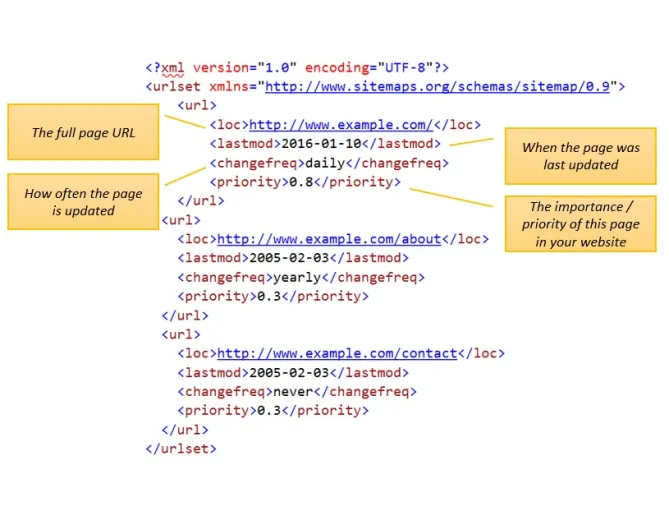
In addition, XML sitemap focuses on other technical information like:
When was the last modification implied on the website?
How often the content of a particular page is changed?
What is the page’s priority relative to other web pages on your site?
Here’s what XML sitemap looks like:
2. HTML Sitemap
An HTML sitemap is a dedicated page on your tremendous website that lists essential website pages for search engines. This type of Sitemap acts as a table of contents for your website. It tends to assist search engines and website visitors in navigating across the site—ideal for huge websites containing millions of pages with critical information.
Here’s what HTML sitemap looks like:
3. Image and Video Sitemaps
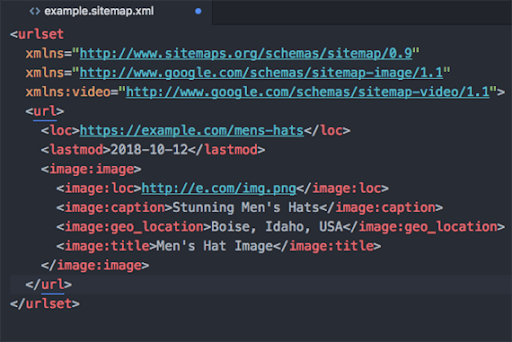
An image sitemap is utilized to ensure the images mentioned on your site are listed in the section of Google Image on the Search Result. On the other hand, a Video sitemap aids users in discovering your videos on Search Engine Result Pages (SERPs).
This method of sitemap optimization helps crawlers to understand the context of the content from the video easily. Details like URL location, title, description, video content, thumbnail location, and video player location improve the chances of ranking your video.
Here’s what Image and Video Sitemaps looks like:
How do you optimize a large website sitemap for SEO?
Sitemaps are typically a map for your website listing essential web pages or links that correlate with each other. They guide search engines to crawl the content quickly and effortlessly, enhancing your website’s online visibility. Let us explore a few methods to optimize BFSI Sitemaps.
1. Create Manual HTML Sitemap
Building a manual sitemap requires attention to detail, like XML format. Let’s explore a few steps to create an HTML sitemap for BFSI Organizations successfully:
List all Web Pages: To begin with, list all pages of your site, including main sections, categories, subcategories, and other pages.
Organize Web Pages: Arrange web pages in well-defined hierarchical pages that reflect the site’s navigation. In this step, you can exclude pages that are non-essential to the website structure
Construct HTML Page: Build an HTML page with a title – Sitemap, and add internal links to the pages on Sitemap to enhance SEO results.
Design Sitemap: Make sure your Sitemap is designed in the same style as other site pages to maintain consistency and improve user experience.
Update Sitemaps Regularly: Keeping your sitemaps up-to-date is essential as it represents the site’s structure, modifications, and overall content.
Submit Sitemaps to Search Engines: After completing sitemap creation, submit it to the search engine for indexing. This process aids them in crawling and indexing web pages effectively.
2. Tools for Automatic XML Sitemap Creation
In contrast to HTML sitemaps, creating sitemaps can take some time. However, you can optimize BFSI sitemaps in XML format by automating the process with powerful tools. Here are some of the best choices:
1. XMLSitemaps.com
This tool generates sitemaps for websites with 500 pages for free. It is user-friendly and does not demand technical expertise. It can be used directly from the browser to create sitemaps ready for search engine submissions.
2. XML Sitemap for Google
WordPress plugin is designed to meet Google’s guidelines for XML sitemaps. It is easy to use and can enhance website visibility with minimal effort.
3. Sitemap automation template –
You can easily generate a sitemap using the sitemap automation template. Simply refer to the attached spreadsheet, go to the instructions tab, and follow the steps. You’ll have your sitemap generated in seconds.
Challenges in Managing Large BFSI Sitemaps
When it comes down to the challenges of managing large BFSI sitemaps, the list can be a bit long. Some of the most common ones include:
1. Regulatory Compliance
BFSI includes strict and complex regulatory laws. Implementing operations as per recent rules can be time-consuming. Hence, regularly updating sitemaps based on the website changes and meeting evolving search engine guidelines can help address this challenge.
2. Scalability Issues
Since BFSI organizations face critical challenges in maintaining massive databases effectively, they need to make sure the data management system oversees the complexity of data to scale website performance and reliability with effective sitemaps.
3. Indexation Issue
Due to complex processes and data, integrating diverse information across sites can be challenging, leading to indexation-based issues. Hence, implying reliable and effective data integration practices is essential to making sitemaps effective with structured and accurate page linking.
Along with the mentioned challenges, other technical SEO issues such as slow page load times, broken links, and mobile usability can also hinder site performance. Addressing these issues are equally important to provide optimal user experience and maintain search engine visibility.
Effective Strategies for Optimizing Sitemaps with 1M+ pages
As discussed in this article, a sitemap is essential in optimizing a website. To enhance your SEO performance and streamline sitemap practices, let us explore a few methods dedicated to optimizing sitemaps for BFSI organizations.
1. Utilize Tools to Create the Sitemap Automatically and Submit it to Google
Utilize a robust sitemap generator tool to create sitemaps ( as discussed above) automatically. However, if you have a WordPress website, you can utilize the Yoast plugin and enable XML sitemaps directly. Organizations can use Google XML Sitemaps for other websites to create sitemaps seamlessly.
Then, submit the Sitemap to Google through Google Search Console. Then, through your dashboard, click on Sitemaps. Add the URL of your SItemap in the blank space. Then, submit the Sitemap and check it in the Submitted Sitemap section.
2. Hierarchy and Organization
It is important to structure and organize your sitemap URLs by site section in Google Search Console to optimize XML sitemaps. To begin with, you must create sitemap index files for every section on your website. A basic structure for Sitemap can include:
Index.xml
products-index.xml
product.xml
product1.xml
product 2.xml
blog-index.xml
blog.xml
some-directory-index.xml
Directory.xml
3. Put only the Canonical URLs in your Sitemap
Include only canonical URLs in the Sitemap, as this ensures that search engines rank and index the ideal version of every page. This would eliminate duplicate content problems with huge websites and enhance SEO performance.
In addition, by mentioning canonical URLs in the Sitemap, you’re guiding search engines to the primary content sources, which allows for imposing website ranking.
4. Give Priority to High-quality Pages in your Sitemap
If your website sitemap directs engines to thousands of low-quality pages, then the bot would interpret webpages as an indication that the site is not credible and reliable that the audience may visit.
To avoid such circumstances, consider directing search engines to primary web pages such as:
Highlight optimized webpage
Pages with images and videos
Unique & structured content
User engagement with reviews
5. Leverage Dynamic Sitemaps for Large Websites
Utilize dynamic sitemaps that automate the updates when the content is modified.
This will ensure that search engines are instantly well-informed about modified pages. In addition, consider categorizing and splitting content into varied sitemaps based on categories defined to overwhelm bots with multiple URLs in a single file.
Take the Next Step With Our Experts
To optimize BFSI sitemaps for websites containing over 1 million pages, it is important to implement ideal practices to ensure effective crawling and indexing. Alongside following best practices, businesses should choose the right enterprise SEO agency for BFSI brands to ensure these strategies are implemented accurately and deliver long-term search visibility.
Our team has many years of experience optimizing BFSI sitemaps for multi-million-page websites. To guarantee effective crawling and indexing, we utilize industry best practices including content categorization, and automated sitemap creation.
Trust our experts to manage your large website in the BFSI industry!
Frequently Asked Questions (FAQs)
How to Manage Large Sitemaps for Better SEO Indexing?
Categorize the Sitemap in multiple small XML files and regularly update It to ensure it represents the site’s modified content. By leveraging a sitemap index file, you can manage diverse sitemaps and track issues of every sitemap in real-time.
How to Structure Your Sitemap for a Large Website?
Begin by auditing the website structure and understanding canonical addresses. Then, the file format is defined, and the Sitemap is built by listing URLs to prioritize essential pages.
How to Create XML Sitemap for BFSI?
To construct XML sitemaps for BFSI, crawl your site, eliminate non-essential URLs, and create an ideal structure. Then, test Sitemap before submitting it to the Google Search Console.
What are the Advantages of Sitemap for Large Websites?
Optimize BFSI sitemaps for large websites simplifies directing traffic to certain pages, ensures ideal organization and indexing or ranking with search engines, and offers a seamless method for users to navigate the website.
Sarvesh Bagla is an enterprise SEO expert and industry leader who has driven transformational digital growth for India’s top brands across the BFSI, Healthcare, Automotive, and ECommerce industries. As the Founder and CEO of Techmagnate, he leads large-scale organic search strategies and performance marketing campaigns for businesses looking to succeed in today’s AI-driven search landscape.
A strong advocate for thought leadership, Sarvesh is deeply involved in SEO evangelism and regularly contributes to industry discussions through LinkedIn, webinars, and CMO roundtables. His focus today is on helping brands prepare for an AI-first SEO future (AEO, GEO) and strategies for Large Language Models (LLMs) at the core.
Get the most valuable search related insights about leading brands, trending keywords, search volumes, fastest growing categories, city-level insights and much more!
It has come to our notice that fraudulent job offers are being circulated on the internet through messaging apps like WhatsApp and Telegram, which falsely claim to be from Techmagnate. We take this matter seriously and would like to caution all candidates to be wary of such postings.
Please Note That –
We do not charge any fees/security deposit/payment from candidates, irrespective of the professional experience they hold, for job applications or interviews
Official communication channels include our website and verified social media accounts, primarily LinkedIn.
Kindly double-check the domain name – @techmagnate.com – in the email address
We follow a transparent and ethical approach for hiring/onboarding supported by proper documentation.
Ensure that you only apply through verified channels to avoid being scammed. We also recommend that you exercise caution when sharing personal information or financial details with any job posting or recruitment agencies claiming to represent us.
We want to ensure that potential candidates interested in joining Techmagnate have a safe and positive experience.
If you find that someone that fits the description above has reached out to you, please notify us immediately at jobs@techmagnate.com.
 Important Alert: