Beware of fake job offers and payment requests. We only use official email IDs and never conduct interviews on messaging apps.Beware of fake job offers and payment requests. We only use official email IDs and never conduct interviews on messaging apps.
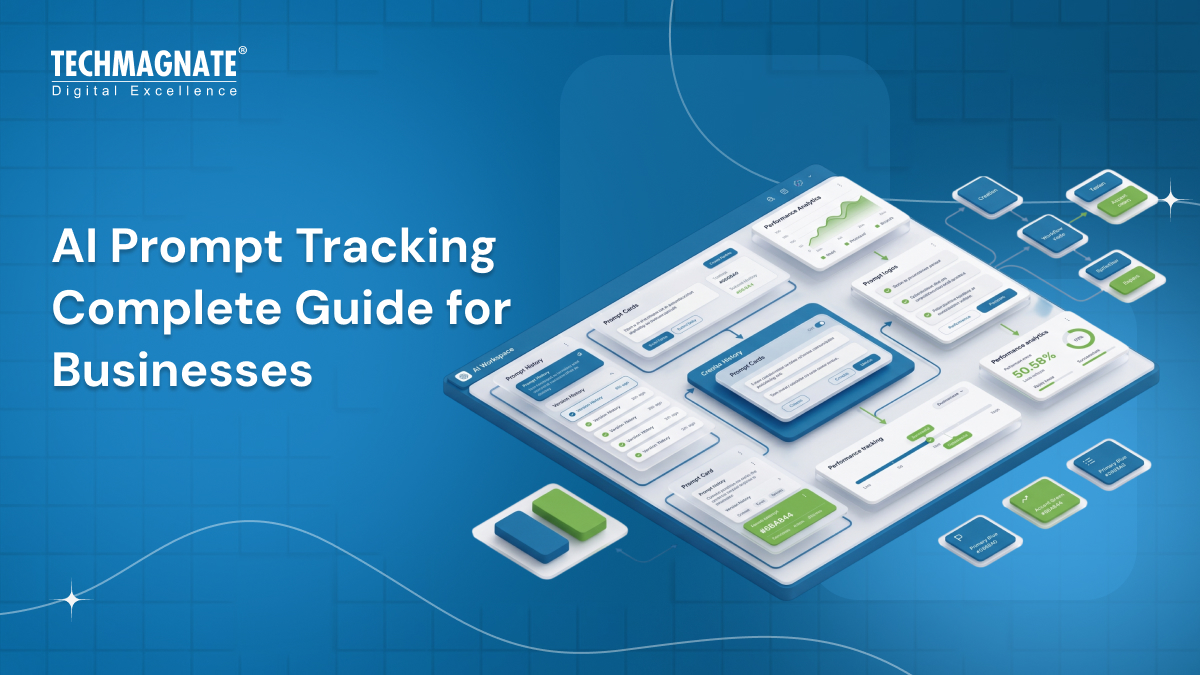
Prompt tracking means monitoring how your brand appears inside AI-generated answers. It helps businesses understand whether AI tools mention them, recommend competitors, or share incorrect information.
AI tools now influence how people discover brands, products, and services online. Users ask ChatGPT, Gemini, or Perplexity for recommendations before visiting websites or comparing options. These AI answers shape trust, buying decisions, and brand perception. This makes prompt tracking important for businesses. Unlike traditional SEO, AI search visibility focuses on how LLMs present your brand. As AI search grows, prompt tracking is becoming important for SEO, GEO, digital PR, and AI visibility tracking.
Table of Contents
What is Prompt Tracking?
Prompt tracking is the process of monitoring how a brand appears inside AI-generated answers. In simple terms, it means checking what tools like ChatGPT, Gemini, Perplexity, and Google AI Overviews say when users ask questions related to your business, products, or industry.
Instead of typing traditional search queries into Google, users now ask AI tools conversational questions. The AI system then generates answers using information gathered from websites, reviews, citations, forums, and online brand mentions.
In response, the AI may recommend a shortlist of brands, explain options, or compare services. Some brands get mentioned often, while others may not appear at all.
This is where AI prompt tracking for brands becomes important. Traditional SEO focuses on ranking webpages in search engine results. Prompt tracking focuses on whether AI systems recognize, mention, and recommend your brand inside generated answers.
Traditional SEO Tracking
Prompt Tracking
Tracks webpage rankings
Tracks AI-generated answers
Focuses on SERP positions
Focuses on AI recommendations
Measures clicks and traffic
Measures AI visibility
Keyword-driven
Prompt and conversation-driven
Search engine focused
AI platform focused
Businesses can no longer rely solely on rankings, as AI answers increasingly shape customer discovery and trust.
How Prompt Tracking Works
AI visibility tracking follows a simple visibility workflow. A user asks an AI platform a question, the AI generates an answer, and the business either appears or gets excluded from the response.
The process usually works like this:
User Prompt: A customer asks an AI tool a discovery-based question.
AI Answer Generation: The platform creates a response using online sources, citations, and brand signals.
Brand Visibility Analysis: The business may appear positively, negatively, or not appear at all.
Tracking System Monitoring: Visibility tools record mentions, citations, sentiment, and competitor presence.
Reporting and Insights: Businesses receive structured visibility and trend reports.
This helps businesses clearly understand how often and in what way they appear in AI-generated answers. Over time, it highlights visibility gaps and shows where optimization is needed to improve brand presence across AI platforms through AI visibility tracking.
Prompt Tracking vs Traditional SEO Tracking
Traditional SEO tracking measures where webpages rank on Google search results. Prompt tracking SEO measures how often brands appear inside AI answers and recommendations.
For years, SEO strategies focused on rankings, impressions, clicks, and traffic. These metrics still matter, but AI-driven search is changing how users discover businesses. Today, visibility is not only about search engine pages but also about how often and how accurately a brand appears in AI-generated answers.
The differences between traditional SEO and AI SEO tracking include:
Traditional SEO
Prompt Tracking SEO
Tracks keyword rankings
Tracks AI answer visibility
Focuses on SERP positions
Focuses on AI-generated recommendations
Measures organic traffic
Measures AI mention frequency
Website-centric
Brand visibility-centric
Depends on clicks
Depends on AI citations and trust
For example, a cybersecurity company may rank well on Google but still fail to appear in AI-generated answers about trusted enterprise security providers.
This shift makes prompt tracking necessary because businesses now need visibility across both search engines and AI answer engines.
Why Prompt Tracking Matters for Businesses
AI is changing how customers discover brands online. Instead of browsing multiple websites, many users now ask ChatGPT, Gemini, Perplexity, or Google AI Overviews for direct recommendations before making decisions. This is why LLM visibility tracking is becoming important for businesses.
AI answers now influence multiple stages of the buyer journey, such as:
Research Stage: Users ask AI tools for the best CRM software, agencies, or products before exploring websites.
Evaluation Stage: Buyers compare brands through AI-generated recommendations and summaries.
Decision Stage: Customers often trust brands repeatedly recommended across AI platforms.
AI recommendations also shape trust and authority. Brands frequently mentioned by AI systems may appear more credible than competitors with little or no AI visibility.
Recent industry trends indicate rapid growth in AI search. Adobe report shows a 1,300% increase in traffic from generative AI sources during the 2024 holiday season, while Gartner report predicts that traditional search volume could decline by 25% by 2026 due to growing AI assistant usage.
What Businesses Should Track Inside AI Search
Businesses should not only track brand mentions in AI-generated answers. AI systems also consider trust, relevance, and authority when showing results. An AI search monitoring tool or a GEO tracking tool helps businesses understand how AI platforms view and present their brand.
Mandatory AI visibility signals businesses should monitor include:
Brand Mentions: Measure how often AI platforms mention the business in generated responses.
Competitor Mentions: Identify which competing brands dominate AI recommendations.
AI Citations: Track the websites and sources AI systems reference most often.
Sentiment Analysis: Monitor whether AI describes the brand positively, neutrally, or negatively.
Platform Visibility: Compare visibility across ChatGPT, Gemini, Perplexity, Claude, and Google AI Overviews.
Response Accuracy: Detect outdated or incorrect AI-generated information about services, pricing, or products.
Share of AI Visibility: Measure how much of the recommendation space the brand owns relative to competitors.
Recommendation Frequency: Track how consistently AI systems recommend the brand in response to important prompts.
A typical tracking dashboard may include visibility scores, citation trends, sentiment tracking, competitor comparisons, and platform-wise visibility reports. This metrics checklist helps businesses identify AI visibility gaps and improve discoverability across evolving AI-driven search ecosystems.
Most Important Prompt Tracking Metrics
Businesses need clear data to understand how AI platforms recognize and recommend their brands. Strong LLM tracking metrics and AI monitoring metrics help teams measure visibility, authority, and competitive presence across AI-driven search experiences.
Mandatory prompt tracking metrics businesses should monitor include:
Metric
Why It Matters
Mention Frequency
Measures how often AI systems mention the brand
Citation Quality
Tracks trusted sources referenced by AI
Sentiment
Identifies positive or negative AI perception
Share of AI Visibility
Compares visibility against competitors
Platform Visibility
Measures presence across ChatGPT, Gemini, Perplexity, and AI Overviews
Recommendation Strength
Evaluates how strongly AI systems recommend the brand
An AI visibility scorecard combines these metrics to help businesses understand their overall AI presence. Brands with strong citation quality, positive sentiment, and a higher share of visibility tend to achieve greater discoverability in AI-generated answers.
AI Platforms Businesses Should Monitor
Businesses should monitor multiple AI platforms as every system generates answers differently. A brand that appears prominently in ChatGPT may not receive the same visibility inside Gemini or Perplexity. This makes cross-platform AI monitoring important for modern digital visibility.
Different AI platforms prioritize different signals, such as:
Platform
Why It Matters
ChatGPT
Large consumer and business adoption across industries
Gemini
Strong integration with Google Search and the AI ecosystem
Perplexity
Focuses heavily on citations and trusted references
Claude
Popular for enterprise research and long-form analysis
Google AI Overviews
Influences visibility directly inside Google search results
ChatGPT tracking is crucial as people now ask conversational questions before visiting websites. Gemini visibility matters because Google is adding more AI answers to search. Perplexity SEO focuses on trusted sources and citations, so digital PR and reliable mentions become more important.
Platform visibility also varies by industry, query intent, and authority signals. A healthcare brand may perform well on Claude, while a SaaS company may gain greater visibility on Perplexity.
Businesses should monitor platforms regularly to identify:
Brand Recognition: Which AI systems mention the brand most often?
Competitor Presence: Which competitors dominate AI-generated answers?
Authority Gaps: Where stronger GEO and citation strategies are needed.
Audience Influence: Which platforms shape customer discovery journeys most strongly?
AI visibility now varies across ecosystems, making platform-level monitoring essential for stronger discoverability.
How the Prompt Tracking Prism Tool Works
Prism is an AI tool created by Techmagnate to help businesses track and improve their visibility on AI-driven search platforms. As AI tools increasingly influence customer decisions, brands need a reliable way to understand how they appear inside ChatGPT, Gemini, Perplexity, Claude, and Google AI Overviews.
Prism works through structured prompt simulation and AI answer analysis. Instead of checking each AI platform individually, businesses can use centralized monitoring and reporting to track visibility patterns more efficiently.
The workflow usually follows a structured process, such as:
Prompt Identification: Important customer-facing prompts are selected based on product, service, industry, and buying intent.
Prompt Simulation: Prism tests prompts across multiple AI platforms to evaluate brand visibility.
Competitor Monitoring: The tool compares visibility against competing brands.
For example, Prism tests prompts such as:
“Best SEO agencies for healthcare businesses”
“Top fintech marketing agencies”
“Reliable CRM tools for startups”
“Best cybersecurity firms for enterprises”
The platform then analyzes several visibility signals, including:
Brand Presence: Whether the business appears in AI-generated recommendations.
Competitor Frequency: How often competing brands are mentioned.
Citation Sources: Which websites and references do AI systems rely on?
Platform Visibility: Which AI platforms provide stronger discoverability?
As powerful GEO monitoring software, Prism helps businesses connect AI visibility with GEO, digital PR, authority building, and brand consistency.
The platform also helps teams identify useful business insights, such as:
Visibility Gaps: Areas where competitors dominate AI conversations.
Reputation Risks: Negative or inaccurate AI-generated descriptions.
Content Opportunities: Topics that improve AI discoverability.
Authority Priorities: Signals influencing AI recommendations.
Instead of relying on assumptions, Prism provides SEO, PR, ORM, and marketing teams with structured AI visibility data to support smarter decision-making as AI-driven search continues to grow.
Common Prompt Tracking Mistakes Businesses Make
Many businesses still treat AI visibility like traditional SEO, which creates major gaps in discoverability across AI-driven search platforms. AI systems continuously update responses based on prompts, citations, sentiment, authority signals, and contextual relevance. This means occasional manual checks are not enough for accurate visibility tracking.
Businesses commonly make several AI visibility mistakes and GEO monitoring mistakes, such as:
Checking Only ChatGPT Manually: Visibility changes across ChatGPT, Gemini, Claude, Perplexity, and Google AI Overviews. Monitoring one platform gives incomplete insights.
Tracking Only Brand Names: Users usually ask broader, discovery-based questions rather than searching for direct brand terms.
Ignoring Competitor Visibility: Competitors may dominate AI-generated recommendations even when your website ranks well on Google.
Not Monitoring Sentiment: AI systems can describe brands positively, neutrally, or negatively depending on online signals.
Missing Citation Analysis: AI tools rely heavily on trusted citations, mentions, and authority sources.
Having No Reporting Process: Without structured tracking, businesses struggle to measure changes in AI visibility over time.
These hidden visibility gaps often impact brand discoverability before businesses even realize it. Prompt tracking helps companies identify weak authority signals, reputation risks, and missing AI visibility opportunities before competitors strengthen their presence across AI ecosystems.
How Prompt Tracking Helps SEO, GEO, and Digital PR
Prompt tracking helps businesses improve visibility across AI-driven search experiences. It shows how platforms like ChatGPT, Gemini, Perplexity, and Google AI Overviews interpret a brand’s authority, relevance, and reputation. This makes GEO SEO and AI search optimization important for modern digital strategies.
Strong prompt visibility supports several growth areas, such as:
Improves AI Discoverability: Structured, authoritative content increases the likelihood of appearing in AI-generated answers.
Builds Authority Signals: Consistent mentions, trusted citations, and topical relevance strengthen AI trust signals.
Supports Digital PR: Media coverage and high-authority references improve recommendation visibility across AI platforms.
Strengthens Brand Visibility: Frequent, accurate AI mentions boost brand awareness throughout customer research journeys.
For example, brands regularly mentioned in trusted publications often gain stronger AI visibility as AI systems associate them with authority and credibility.
Prompt tracking also helps businesses identify weak topical coverage, missing citations, and competitor advantages. Teams can then improve content structure, entity consistency, PR visibility, and authority-building efforts.
As AI search grows, discoverability increasingly depends on strong digital authority ecosystems instead of rankings alone.
How GEO Strategies Improve Prompt Visibility
GEO optimization helps businesses improve how AI systems understand, retrieve, and recommend their brands across platforms such as ChatGPT, Gemini, Perplexity, and Google AI Overviews. AI models rely on structured, trustworthy information to generate recommendations, making strong content organization and authority signals extremely important.
AI systems usually evaluate Five visibility factors:
Structured Content: Clear headings, FAQs, comparison sections, and direct answers improve AI retrieval.
Brand Consistency: Consistent messaging across websites, listings, PR mentions, and social platforms strengthens understanding of the entity.
Authority Mentions: Mentions from trusted websites improve brand credibility inside AI answers.
Digital PR Citations: High-quality citations help AI systems validate brand trust and expertise.
Entity Optimization: Strong entity relationships improve contextual relevance across AI ecosystems.
Businesses with strong AI visibility optimization strategies often create content that answers specific user questions while maintaining consistent brand positioning across platforms.
For example, a healthcare SaaS company may improve prompt visibility by publishing educational guides, earning citations from healthcare publications, creating detailed comparison pages, and strengthening structured data signals.
A practical GEO optimization checklist usually includes:
Answer-Focused Content Creation: Improve the visibility of direct answers for AI retrieval.
Topical Authority Building: Cover related topics consistently across content assets.
Citation Development: Earn mentions from trusted industry websites.
FAQ Optimization: Improve snippet extraction and conversational visibility.
AI systems are more likely to recommend brands that repeatedly appear authoritative, structured, and contextually relevant across the web.
Why Most Brands Are Still Not Monitoring AI Visibility
Most businesses still approach AI search the same way they approach traditional SEO. They focus on rankings, clicks, and website traffic but overlook how AI tools influence discovery and recommendations.
This gap exists for several reasons, such as:
Lack of Awareness: Many marketers still do not realize that AI-generated answers already shape customer decisions.
No Proper Monitoring Tools: Businesses often lack systems that track visibility across ChatGPT, Gemini, Perplexity, and Google AI Overviews.
Traditional SEO Mindset: Teams continue to measure only keyword rankings rather than AI recommendation visibility.
Slow AI Adoption: Despite growing AI adoption, many brands still underestimate how quickly AI-generated recommendations are influencing customer discovery and buying decisions.
Missed Visibility Opportunities: Businesses fail to identify prompts where competitors repeatedly appear.
Users increasingly ask AI tools questions like “Which brand is best?” or “Which option should I choose?” In these moments, AI decides which brands to show and which to ignore. This is why AI visibility monitoring and prompt tracking SEO are important for long-term discoverability. Brands that appear consistently in these answers build stronger trust and authority as AI-driven search continues to grow.
How Techmagnate Helps Brands Track and Improve AI Visibility
AI-driven search is changing how customers discover brands online. Businesses now need visibility across ChatGPT, Gemini, Perplexity, Claude, and Google AI Overviews, not just traditional search engines. As an AI SEO agency, Techmagnate helps improve how brands appear in AI-generated answers and recommendations.
Techmagnate combines GEO services, AI visibility tracking, SEO, digital PR, and ORM to strengthen brand authority across AI search systems. With Prism, its AI visibility platform, businesses can track how AI tools mention and interpret their brand.
Key AI visibility services provided by Techmagnate include:
AI Visibility Audits: Identify gaps across AI-driven search platforms and recommendation systems.
Prompt Tracking: Monitor how AI platforms describe and recommend brands.
GEO Optimization: Improve AI discoverability through structured, entity-focused content strategies.
Digital PR Campaigns: Build trusted citations and authority signals across the web.
ORM Support: Strengthen brand perception and sentiment visibility in AI answers.
AI Search Reporting: Track platform-wise visibility trends and AI recommendation patterns.
Competitor Visibility Analysis: Compare brand visibility against competitors across AI platforms.
Citation Monitoring: Identify opportunities to build authority that influences AI systems.
The AI visibility process usually includes:
AI Visibility Assessment: Evaluate current AI discoverability.
Prompt Analysis: Test important industry and brand-related prompts.
Competitor Benchmarking: Identify competitor dominance across AI conversations.
GEO Strategy Planning: Improve content structure, authority, and entity signals.
Reporting and Monitoring: Continuously track visibility improvements.
As an AI search optimization agency, Techmagnate helps businesses improve AI discoverability, digital authority, and cross-platform AI presence as AI-driven customer discovery continues growing.
Conclusion
AI-driven search is now a key part of how users discover and evaluate brands, with ChatGPT, Gemini, Perplexity, and Google AI Overviews guiding many early decisions. This makes AI visibility tracking, GEO tracking, and prompt tracking SEO essential for staying discoverable beyond traditional search rankings.
Brands must monitor how AI systems mention and recommend them, as this now shapes trust and authority. With stronger GEO strategies and regular AI visibility audits, businesses can improve long-term presence and remain visible across evolving AI-driven search platforms.
Frequently Asked Questions
What is prompt tracking in AI search?
Prompt tracking means monitoring how AI platforms respond to user questions and whether a brand appears in the generated answers. It helps businesses understand visibility across ChatGPT, Gemini, Perplexity, Claude, and AI Overviews.
Why is prompt tracking important for businesses?
Prompt tracking is important because AI systems increasingly influence customer decisions. Businesses that fail to appear inside AI-generated recommendations may lose visibility, trust, and potential leads.
How is prompt tracking different from traditional SEO?
Traditional SEO tracks webpage rankings on search engines. Prompt tracking measures brand visibility inside AI answers and recommendations.
Which AI platforms should businesses monitor?
Businesses should monitor ChatGPT, Gemini, Perplexity, Claude, and Google AI Overviews because visibility differs across platforms.
What is an AI search monitoring tool?
An AI search monitoring tool helps businesses track brand mentions, citations, competitor visibility, sentiment, and recommendation patterns inside AI-generated search experiences.
How does GEO improve AI visibility?
GEO improves AI visibility by helping businesses create structured, authoritative, and contextually relevant content that AI systems can retrieve and trust more easily.
Can AI visibility impact buying decisions?
Yes. Many users now rely on AI-generated recommendations before comparing websites. AI visibility can influence trust, brand perception, and purchasing decisions.
What metrics matter most in prompt tracking?
Important metrics include mention frequency, citation quality, sentiment, competitor comparison, share of visibility, and platform-level visibility.
Why do competitors appear more often in AI answers?
Competitors may have stronger authority signals, better digital PR visibility, stronger topical coverage, or more trusted citations across the web.
How often should businesses monitor AI visibility?
Businesses should monitor AI visibility regularly because AI-generated answers and recommendation patterns change over time.
Sarvesh Bagla is an enterprise SEO expert and industry leader who has driven transformational digital growth for India’s top brands across the BFSI, Healthcare, Automotive, and ECommerce industries. As the Founder and CEO of Techmagnate, he leads large-scale organic search strategies and performance marketing campaigns for businesses looking to succeed in today’s AI-driven search landscape.
A strong advocate for thought leadership, Sarvesh is deeply involved in SEO evangelism and regularly contributes to industry discussions through LinkedIn, webinars, and CMO roundtables. His focus today is on helping brands prepare for an AI-first SEO future (AEO, GEO) and strategies for Large Language Models (LLMs) at the core.
Get the most valuable search related insights about leading brands, trending keywords, search volumes, fastest growing categories, city-level insights and much more!
It has come to our notice that fraudulent job offers are being circulated on the internet through messaging apps like WhatsApp and Telegram, which falsely claim to be from Techmagnate. We take this matter seriously and would like to caution all candidates to be wary of such postings.
Please Note That –
We do not charge any fees/security deposit/payment from candidates, irrespective of the professional experience they hold, for job applications or interviews
Official communication channels include our website and verified social media accounts, primarily LinkedIn.
Kindly double-check the domain name – @techmagnate.com – in the email address
We follow a transparent and ethical approach for hiring/onboarding supported by proper documentation.
Ensure that you only apply through verified channels to avoid being scammed. We also recommend that you exercise caution when sharing personal information or financial details with any job posting or recruitment agencies claiming to represent us.
We want to ensure that potential candidates interested in joining Techmagnate have a safe and positive experience.
If you find that someone that fits the description above has reached out to you, please notify us immediately at jobs@techmagnate.com.
Team @Techmangate
Build a Better Digital Marketing Strategy with Techmagnate’s Search Trends Reports
 Important Alert: