Beware of fake job offers and payment requests. We only use official email IDs and never conduct interviews on messaging apps.Beware of fake job offers and payment requests. We only use official email IDs and never conduct interviews on messaging apps.
Summary: AI-powered search demands new GEO metrics like visibility, citations, and authority to measure success, helping businesses understand AI interpretation, improve content strategy, and maintain visibility beyond traditional SEO performance indicators.
Key Takeaways:-
Traditional SEO metrics alone are no longer enough in AI-driven search.
AI visibility shows how often your brand appears in AI-generated answers.
Citations and mentions build trust and authority in AI ecosystems.
Topical authority influences AI recognition.
Tracking AI-driven referral traffic connects visibility with real engagement.
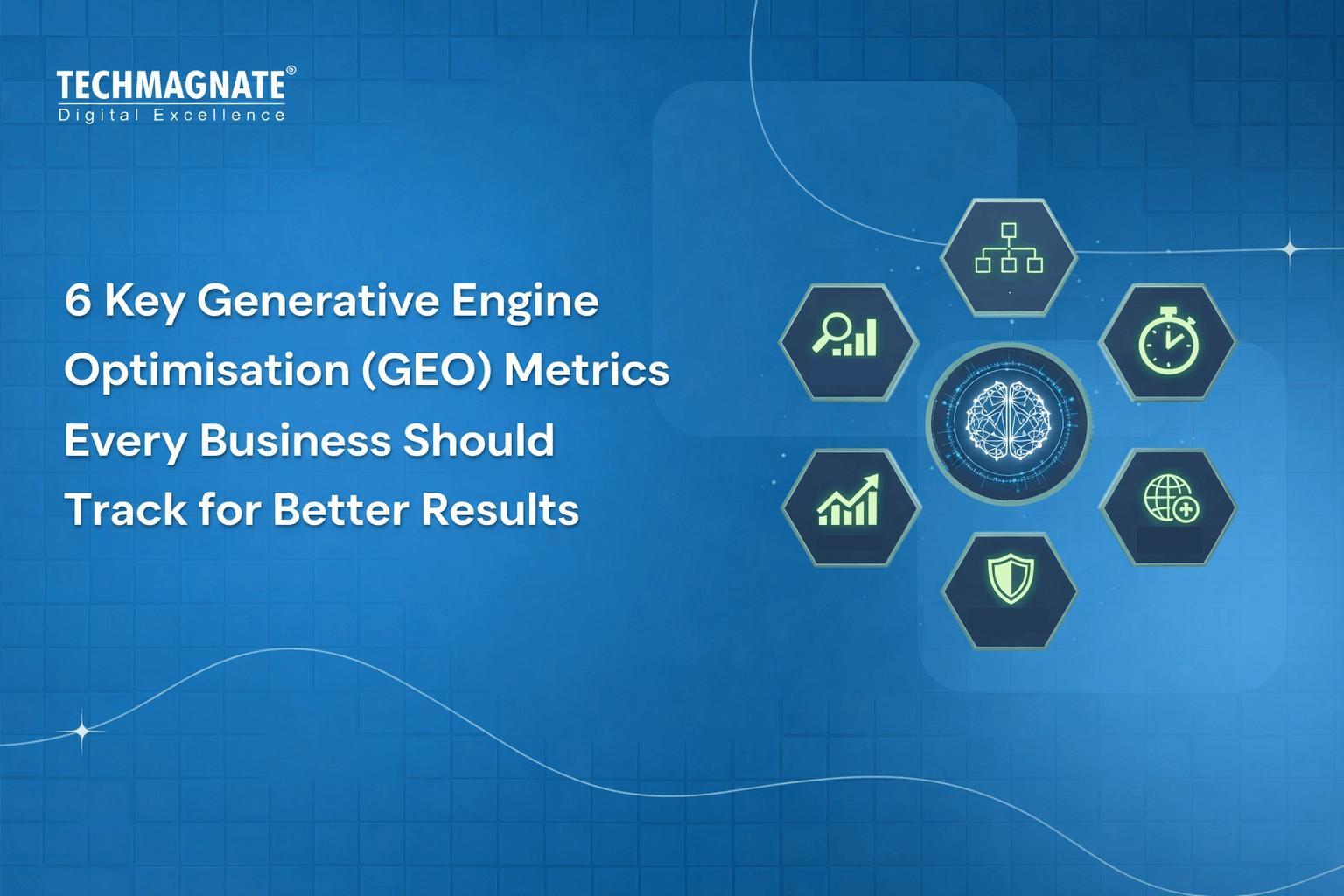
The rise of AI-powered search is changing how businesses measure SEO success. Platforms such as ChatGPT, Google AI Overviews, and Gemini increasingly deliver direct answers instead of traditional search result pages. As a result, metrics like keyword rankings, organic traffic, and click-through rates no longer provide the full picture of online visibility.
In this new environment, businesses must track Generative Engine Optimization (GEO) metrics that show how often their content appears in AI-generated responses and how AI systems interpret their expertise. These metrics help organizations understand whether their brand is visible, credible, and trusted within AI-powered search results.
By adopting AI-aware measurement strategies, companies can gain better insights into how their content is discovered, referenced, and engaged with. Tracking the right signals helps businesses refine their SEO approach, strengthen authority in their industry, and maintain visibility as search continues to evolve.
Table of Contents
Why Tracking Generative Engine Optimization (GEO) Metrics Matters for Businesses
Traditional SEO metrics focus primarily on human behaviour, such as clicks and page visits. However, in AI-powered search, content is first evaluated and processed by AI systems before it reaches users. This means businesses must understand how AI interprets their content, brand authority, and topical expertise.
Tracking Generative Engine Optimization (GEO) metrics allows organizations to evaluate how well their content performs in AI-generated answers and summaries. These insights help businesses identify gaps in their strategy, refine their content, and ensure AI systems recognize their expertise.
Key benefits include:
Improved visibility in AI search: Businesses can understand whether their brand appears in AI-generated responses across platforms.
Better content planning: Insights into AI interactions help identify which topics and formats perform best.
Stronger authority signals: Consistent references and mentions strengthen credibility in AI-driven environments.
More accurate performance tracking: Businesses gain a clearer understanding of how their digital presence performs beyond traditional search metrics.
Monitoring these signals helps organizations adapt to the evolving search environment and remain competitive as AI-driven discovery becomes more common.
1. AI Visibility
AI visibility measures how consistently your brand appears in AI-generated responses when users ask questions related to your industry, products, or services, across platforms such as ChatGPT, Gemini, and Google AI Overviews.
As users increasingly rely on AI assistants for quick answers, appearing in these responses is becoming essential for digital visibility. If your brand is absent from AI-generated results, a significant portion of potential users may never encounter your content.
Businesses can monitor AI visibility by building a set of queries their target audience is likely to ask around relevant topics, problems, and categories, and regularly running these across AI platforms to track how often their brand appears in the response. Note that visibility is not the same as being cited. A brand can appear in a response without being directly credited, and that still counts toward visibility.
Tracking AI visibility helps determine whether AI systems recognise your brand as a relevant source of information across the topics that matter to your audience.
2. AI Citations
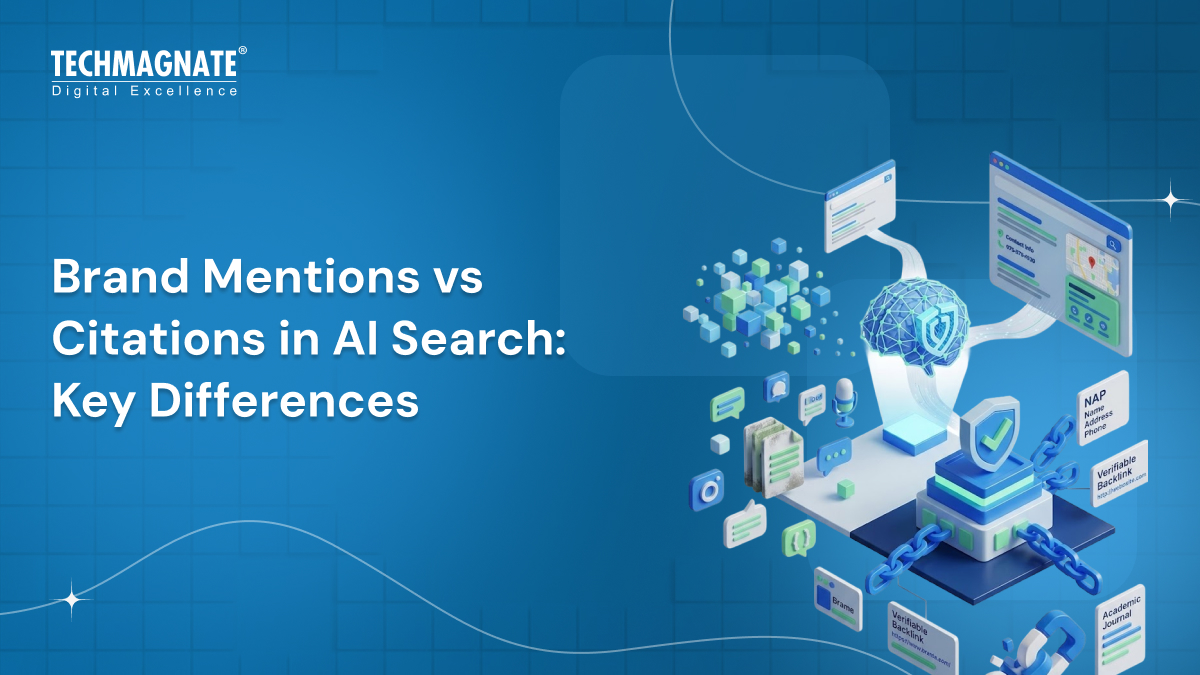
AI citations occur when an AI system directly references or attributes information to your website or content.
These citations function similarly to backlinks in traditional SEO. When AI models reference your content as a source, it signals that your information is considered trustworthy and relevant.
Frequent AI citations expand your brand’s reach because users encounter your expertise within AI-generated answers.
To monitor this metric, businesses can search for key topics in AI tools and identify when their website or insights are cited in responses.
3. Brand Mentions
Brand mentions refer to instances where your brand name appears within AI-generated answers, even if a direct link or citation is not provided.
These mentions play an important role in establishing authority. AI systems often learn from multiple sources, and repeated references to your brand across the web strengthen its recognition as a credible entity.
For example, if AI platforms frequently mention your brand when answering questions about your industry, it signals strong topical relevance and authority.
Businesses should track how often their brand name appears in AI responses related to their niche.
4. Topical Authority
Topical authority measures whether AI systems recognize your website as a trusted source within a particular subject area.
AI-powered search platforms prioritise content from sources that demonstrate consistent expertise and depth within a topic. If your website publishes comprehensive, reliable information on a subject, AI systems are more likely to surface your content in their answers.
Businesses can strengthen topical authority by publishing detailed guides, answering common industry questions, and maintaining consistent coverage of core topics.
When AI recognizes your brand as an expert in a specific field, your content becomes more likely to appear in AI-generated responses.
5. Content Confidence
Content confidence refers to how reliable and trustworthy AI systems perceive your content to be.
AI platforms prioritise information that is accurate, clearly structured, and regularly updated. Content that is vague, outdated, or poorly organized is less likely to appear in AI-generated answers.
Factors that influence content confidence include:
Clear and accurate information
Proper structure and formatting
Updated statistics and references
Strong credibility signals
By maintaining factual accuracy and structured content, businesses can improve how AI systems evaluate and present their information.
6. Referral Traffic from AI Platforms
Referral traffic from AI platforms measures the number of users who visit your website after discovering your content through AI-generated responses.
This metric indicates whether AI visibility is translating into actual engagement and user interest. If users encounter your brand in AI answers and then visit your website, it suggests your content is providing value and encouraging deeper exploration.
Businesses can track this metric through Google Analytics, which shows referral traffic sources and user behaviour.
Monitoring referral traffic helps determine whether AI-driven visibility is contributing to meaningful user engagement and conversions.
At Techmagnate, we use AI SEO insights to help businesses drive transformational growth, turning advanced metrics into strategies that boost visibility in AI-driven search and strengthen long-term performance.
How Businesses Can Track and Improve These Metrics?
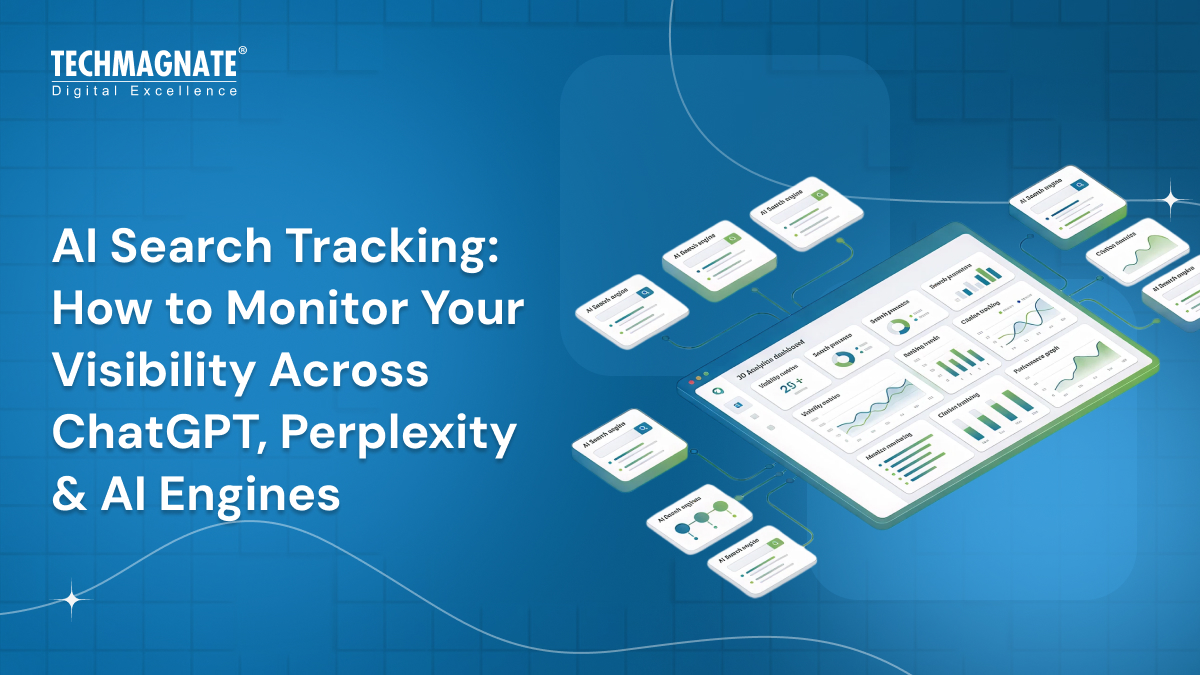
To track these metrics effectively, businesses should use dedicated tools rather than manual searches. Tools like SEMrush and Ahrefs offer AI visibility tracking alongside keyword performance and content gap analysis.
Techmagnate’s Prism tracks AI visibility across LLM platforms and organic rankings in one place. Google Analytics helps monitor referral traffic from AI platforms and user engagement on your website.
Setting a regular monitoring cadence, whether weekly or monthly, helps spot trends and identify gaps over time. By consistently tracking these signals, businesses can make informed decisions and stay visible as AI-powered search continues to grow.
Adapting SEO Measurement for the AI Era
The way search performance is measured is evolving. Traditional metrics such as rankings and clicks still matter, but they no longer capture the full impact of AI-driven discovery.
Tracking metrics such as AI visibility, citations, brand mentions, topical authority, content confidence, and referral traffic helps businesses understand how their content performs in AI-generated search environments.
Organizations that adapt their measurement strategies early will be better positioned to build authority, improve visibility, and connect with audiences as AI-powered search continues to grow.
If you are looking to improve how your brand shows up in AI-generated responses, Techmagnate’s LLM optimization services can help you build the visibility and authority your business needs in the AI search era.
Sarvesh Bagla is an enterprise SEO expert and industry leader who has driven transformational digital growth for India’s top brands across the BFSI, Healthcare, Automotive, and ECommerce industries. As the Founder and CEO of Techmagnate, he leads large-scale organic search strategies and performance marketing campaigns for businesses looking to succeed in today’s AI-driven search landscape.
A strong advocate for thought leadership, Sarvesh is deeply involved in SEO evangelism and regularly contributes to industry discussions through LinkedIn, webinars, and CMO roundtables. His focus today is on helping brands prepare for an AI-first SEO future (AEO, GEO) and strategies for Large Language Models (LLMs) at the core.
Get the most valuable search related insights about leading brands, trending keywords, search volumes, fastest growing categories, city-level insights and much more!
It has come to our notice that fraudulent job offers are being circulated on the internet through messaging apps like WhatsApp and Telegram, which falsely claim to be from Techmagnate. We take this matter seriously and would like to caution all candidates to be wary of such postings.
Please Note That –
We do not charge any fees/security deposit/payment from candidates, irrespective of the professional experience they hold, for job applications or interviews
Official communication channels include our website and verified social media accounts, primarily LinkedIn.
Kindly double-check the domain name – @techmagnate.com – in the email address
We follow a transparent and ethical approach for hiring/onboarding supported by proper documentation.
Ensure that you only apply through verified channels to avoid being scammed. We also recommend that you exercise caution when sharing personal information or financial details with any job posting or recruitment agencies claiming to represent us.
We want to ensure that potential candidates interested in joining Techmagnate have a safe and positive experience.
If you find that someone that fits the description above has reached out to you, please notify us immediately at jobs@techmagnate.com.
 Important Alert:
 Important Alert: