Beware of fake job offers and payment requests. We only use official email IDs and never conduct interviews on messaging apps.Beware of fake job offers and payment requests. We only use official email IDs and never conduct interviews on messaging apps.
Summary: This detailed guide explores the importance of Click-Through Rate (CTR) in SEO and its powerful role in driving organic traffic and improving search visibility. It explains how to calculate CTR, why it matters for SEO performance, and offers proven strategies to boost CTR, including optimizing meta titles and descriptions, using A/B testing, leveraging rich snippets, crafting compelling CTAs, and improving content relevance.
Key Takeaways
Click-Through Rate (CTR) measures how often users click your website link in search results, a vital metric for SEO success.
A high CTR indicates relevant, engaging content and can improve your Google rankings.
Optimizing meta titles, descriptions, and CTAs can significantly boost CTR and organic traffic.
Rich snippets, A/B testing, and keyword intent alignment help attract more clicks from search results.
Regularly analyse CTR data in Google Search Console to identify and improve underperforming pages.
Imagine spending hours writing an informational blog, but no one is reading it. It’s lost in the search engine wilderness, hidden among tons of other articles. Disappointing, right?
That’s because your content has a low Click-Through Rate.
It’s like a magnet that pulls readers from search results to your website content. And guess what? It’s easier to boost than you think!
Through this comprehensive guide, we’ll tell you what is CTR, why it’s important for your website, and how it is an extremely important factor in ranking your content on search results.
Table of Contents
What is the Click-Through Rate in SEO?
Click-Through Rate (CTR) is the percentage of people who click on a link compared to how many people see it. Put simply, it is like a popularity score for links online.
For example, if 100 people see a link and 10 of them click on it, the CTR is 10%.
This number tells us how interesting or engaging the content appears to people. A higher CTR means more people find the content compelling enough to click on the link.
This helps an advertiser understand if its content or ads are grabbing attention. If the CTR is low, it might mean the content, especially the headline, needs improvement. Overall, this is a successful way to measure how many people like your content online or click on your ad.
The Formula for Click-Through Rate (CTR) Is
CTR Formula:
CTR
=Total Measured Clicks/Total Measured Ad Impressions×100
Explanation:
Number of Clicks: The total number of times users clicked on your ad or link.
Number of Impressions: The total number of times your ad or link was shown to users.
100: To convert the ratio into a percentage.
Why is the Click-Through Rate Important for SEO?
Click-Through Rate holds immense importance due to its direct and indirect impacts on Search Engine Optimization (SEO).
Search engines, notably Google, rely on user engagement metrics like CTR to gauge content relevance and quality. A high CTR signals that users find a particular link or content enticing, prompting them to click, and indicating relevance to their search queries. For paid campaigns, touls like a PPC ROI Calculator can help assess whether your efforts are translating into meaningful returns.
This user interaction acts as a signal to search engines, suggesting that the content aligns well with users’ needs. Consequently, search engines, aiming to offer the most valuable and relevant content, often reward high CTRs by improving the rankings of those pages or links in search results.
Moreover, the indirect impact of CTR on SEO is substantial. Your ad copy getting more clicks leads to increased organic traffic, drawing more users to the website or content. This surge in organic traffic, triggered by compelling CTRs, further strengthens the content’s authority and relevance in the eyes of search engines.
Good Click-Through Rate (CTR) Examples for Organic SEO
Average Overall CTR on Google SERPs (25–35%)
A page ranking in the top position on Google typically earns between 25% and 35% CTR. For instance, if your service page attracts a 32% CTR while ranking #1, that’s an excellent sign that your title and description are highly relevant and engaging.
Google Rank
Average Overall CTR
Blog / News Pages CTR
Service /Product Pages CTR
Expert Insight
#1
30–35%
22–28%
35–40%
The top spot dominates organic clicks. Product/service pages perform better here because intent is transactional.
#2
15–18%
12–15%
18–22%
Slight drop-off but still strong. Optimizing meta descriptions and rich snippets helps maintain engagement.
#3
10–12%
8–10%
12–15%
Compelling titles and FAQs can lift CTR at this position, especially for informational content.
#4
7–9%
6–8%
9–11%
Users start exploring options; CTR depends heavily on brand recognition and emotional appeal of the headline.
#5
5–7%
4–6%
6–8%
Visibility declines; eye-catching metadata and schema markup can make the difference.
#6
3–5%
2–4%
4–6%
CTR drops significantly — focus on improving content structure, snippets, and internal links to climb higher.
Google Discover CTR (8–12%)
Google Discover traffic tends to perform differently since it’s interest-based rather than query-driven. A CTR of 8–12% is considered strong here. For example, a lifestyle article with 10% CTR on Discover suggests the thumbnail and headline perfectly match user intent and curiosity.
Website or Landing Page CTR (5–10%)
For general website or product pages appearing in organic results, a CTR between 5% and 10% indicates healthy engagement. A 9% CTR for your “SEO Services” page, for example, shows that your metadata stands out among competitors targeting the same keywords.
Blog or News Article CTR (3–6%)
Informational content usually earns slightly lower CTRs since competition is higher and user intent varies. A CTR around 5% for a blog post like “How to Improve Google AI Mode Visibility” demonstrates that your headline and snippet effectively capture reader interest.
Branded Keyword CTR (40–60%)
When users search for your brand name or branded terms, you should expect a much higher CTR — often above 50%. If your homepage captures 55% CTR for your brand keyword, it confirms strong brand recognition and trust.
Featured Snippet CTR (8–20%)
If your content appears in a featured snippet (e.g., list, paragraph, table), a CTR between 8% and 20% is typical. A 15% CTR from a featured answer shows your content not only ranks well but also dominates the visual space on the SERP.
How to Calculate CTR in SEO
Let’s talk numbers!
On Google, the first result gets clicked about 1 in every 3 times it’s seen, while the tenth result barely gets any clicks.
More clicks on the content = better ranking of your website. To analyze how effectively those clicks convert into actual engagements, use the Conversion Rate Calculator.
But how do we calculate the click-through rate?
The formula to calculate the Click-Through Rate is easy. You just need to know how many times people clicked on a link compared to how many times it showed up on search results.
Here’s how you do it:
1.Count Clicks: First, see how many times your link got clicked.
2.Find Impressions: Then, figure out how many times the link appeared(total number of impressions).
3.Do the Math: Divide the total number of clicks by the number of times it showed up.
4.Get the Percentage: Multiply the result by 100 to get the percentage.
For example, if your link got 50 clicks out of 1000 times it showed up as
50 clicks ÷ 1000 impressions = 0.05
Multiply that by 100:
0.05 × 100 = 5%
Your clickthrough rate is 5%. That means for every 100 times people saw your link, it got clicked 5 times.
Discover What Your Customers Search ForDiscover What Your Customers Search For
Get insights on evolving customer behaviour, high volume keywords, search trends, and more.
Click-through rate occupies a critical rule in online advertising, acting as a vital metric for gauging the effectiveness of content. This factor is influenced by a multifaceted interplay of factors.
Core parameters of a High CTR:
Content Relevance: At the heart of successful CTR lies the alignment of content with user intent. Thorough keyword research and a deep understanding of audience search queries are vital first steps. Content that directly addresses user needs and expectations holds the key to attracting clicks.
Title and Meta Descriptions: These two factors serve as the online storefront for your content, often the first point of contact with potential readers. Crafting compelling and informative titles and meta descriptions that resonate with user search queries is crucial for enticing clicks. Clarity, conciseness, and keyword integration are essential elements here.
Mobile Responsiveness: In today’s mobile-centric world, ensuring content’s accessibility and readability across various devices is non-negotiable. Responsive designs, optimized loading times, and touch-friendly navigation all contribute to a positive user experience, ultimately setting a benchmark for high CTR.
Beyond the Fundamentals:
While the aforementioned factors form the foundation of CTR optimization, several additional elements can further enhance its impact:
Visual Appeal:High-quality images and videos can act as powerful attention magnets, drawing users in and fostering engagement. Strategic visual elements through creative thumbnails or banner images that complement and enhance the content can significantly improve clicks.
Structured Data:Leveraging rich snippets and structured data can grant your content greater visibility in search engine results pages. These enhanced listings, featuring star ratings, reviews, and other relevant information, can significantly boost click-through rates.
Social Proof:Testimonials, reviews, and social shares can bulster your content’s credibility and trustworthiness. Showcasing positive user feedback adds a powerful persuasive element, encouraging potential readers to engage.
Clear Calls to Action:Don’t leave your audience guessing. Provide clear and actionable CTAs that guide users toward the desired outcome, whether it’s reading further, downloading content, or taking a specific action.
9 SEO-Optimized Strategies to Improve Click-Through Rate
1. Optimizing Meta Tags
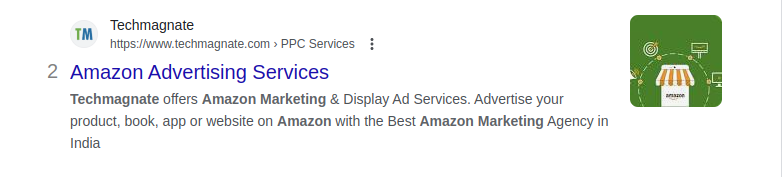
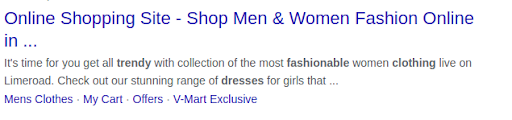
Writing compelling titles and meta descriptions is key. Captivating titles that accurately represent content and engaging meta descriptions provide users with a preview of the detailed content. Within the character limit, you have to entice the audience to click through. Make sure to add tags that are relevant, informative, and appealing.
Let’s take this example from Flipkart. The title effectively outlines the category of “Men’s Footwear” and emphasizes affordability with the mention of prices starting at Rs. 199, immediately informing users and prompting their interest.
The meta description also complements the title by offering specific details about discounted products like the “Junior Zero1 Sports shoes for Men” and diverse brand options including Crocs, Skechers, Sparx, and Nike, enhancing the appeal to different preferences.
The right use of keywords with potential user searches, ensures visibility, while the concise and informative nature of both the title and meta description cullectively prompt users to explore the range of men’s shoes available on Flipkart.
This strategy potentially drives higher click-through rates and ultimately more business (or purchases) for Flipkart.
2. A/B Testing:
Experimenting with different headlines, content formats, or even visuals through A/B testing helps identify what resonates best with the audience. A very common practice is email marketing or email campaigns. A/B testing is a practice where you can compare various versions, pinpoint the most effective elements that drive average click-through rate, and refine content.
Let’s say you’re running an online cooking blog. Through A/B testing, you might experiment with different headline formats.
For instance, testing “10 Easy Weeknight Dinner Recipes” against “Master Quick Meals: 10 Simple Recipes for Busy Evenings” helps identify which headline resonates better with your audience.
Which titles get the most clicked results in the expected CTR goal? Know by A/B testing.
3. Rich Snippets:
As mentioned earlier in the blog, incorporating structured data to enhance search results with rich snippets provides users with more information.
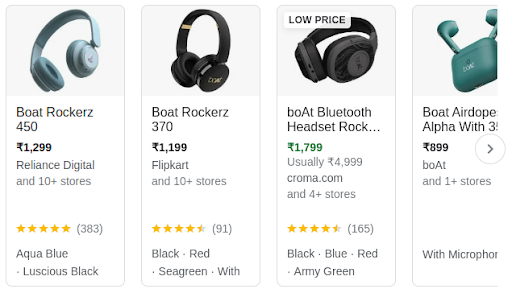
With advanced features like star ratings, product pricing, or FAQs in search snippets you’re targeting the right users.
Imagine you’re promoting a tech product. Implementing structured data to showcase star ratings or prices directly in search results provides users with immediate information.
The screenshot shows different BoAt headphones options with pricing, culors available, and star ratings. It shows everything about the product the audience wants and provides additional information to explore more options.
4. Calls-to-Action (CTAs):
A clear and concise message is very important encouraging users to take action with a persuasive CTA. A user who sees your link and doesn’t see any CTA can think of it negatively as if the content has nothing better to show. Also increasing the bounce rate.
Compelling CTAs e.g “Learn More,” “Get Started,” or “Shop Now” help users to click through by highlighting the value proposition or benefit.
If you’re marketing a subscription service, a compelling CTA like “Start Your Free Trial Today!” can prompt users to take action.
For an e-commerce site, CTAs like “Offers or Limited-Time Discounts” direct users’ attention and encourage clicks.
5. Visual Elements:
Visuals attract people. Including engaging creatives like high-quality images, infographics, or videos can significantly impact CTR. Visual content enhances the appeal of a link or ad, compelling users to click through.
Consider an interior design company showcasing before-and-after room transformations. Adding captivating images displaying stunning room makeovers has better open rates from users to click for more details or inspiration.
In this image, you can see how the visual captivates audiences as they witness the impressive differences and improvements made to the living room.
It showcases Livespace’s expertise in renovations and design. Automatically, enticing a user to check their website to see more such beautiful home transformations.
6. Content Updates:
Regularly refreshing or updating content on the website keeps it relevant and appealing to users. Trendy and up-to-date content entices users to revisit or explore further, potentially increasing CTR.
Suppose you manage a health and fitness blog. Regularly updating workout guides or nutrition tips keeps the content relevant. For instance, a refreshed article titled “2024’s Weekly Workout Plan by Denise and Katie” draws users seeking workout information.
The mention of a “weekly workout schedule” and the promise to enhance specific areas like abs, glutes, and arms suggests a current and tailored plan. The inclusion of “2 days ago” hints at the recent publication, signaling that it’s fresh content.
The relevance of a 2024 workout plan implies a contemporary approach, likely to attract users seeking the latest fitness trends.
This freshness and relevance are key factors that could entice the target audience, potentially removing the risk of low ctr as individuals often seek up-to-date and relevant information when browsing for fitness regimens.
7. Page Load Speed:
The average page load time is 2.5 seconds on desktop and 8.6 seconds on mobile, based on Toulster’s analysis.
If a site takes more time than usual to load, it impacts quality score, conversion rate, ranking, and traffic.
If you run an online store, quick loading times for product pages are paramount. Users seeking fast purchases might lose interest if pages take too long to load. Optimizing page speed guarantees a smooth user experience, improving CTR and conversions.
8. Keyword Relevance and Targeting
Using targeted keywords relevant to user intent is key to boosting CTR. Selecting keywords that align closely with the user’s search intent ensures the content appears for the right searches. Use primary keywords strategically within headings and content for better alignment with search intent.
9. Enhancing Social Proof
Displaying user reviews, testimonials, or social shares adds credibility to the content, encouraging more clicks. Social proof builds trust with potential readers, reassuring them of the content’s value. Incorporating real user feedback into the content can increase clicks by showing that others find the information valuable and trustworthy.
The Future of CTR: How New SERP Layouts (eg. AI Overviews, zero-click searches) impact organic CTR
AI-powered search tools like Google’s Search Generative Experience (SGE), ChatGPT search, and Perplexity.ai are changing the way people find and use information online. These AI overviews give quick, summarized answers right on the search page, but they often lower the traditional organic CTR because people don’t have to click through to a website to get information anymore.
Why AI Overviews Lower CTR
Zero-click searches are on the rise. AI snapshots and featured summaries give users what they want right in the search results, so they don’t have to go to other sites.
AI overviews gather information from many pages, so even if your content adds to it, you may not get credit for the click.
Visual and conversational results: Voice-based or chat-based interfaces (like Gemini and Bing Copilot) give direct answers that don’t go through web traffic.
How to Keep CTR High and Safe in the Age of AI Search
Focus on long-tail and contextual queries that are likely to get clicked on. Focus on specific questions that are based on intent that AI overviews may only partially answer. Making in-depth, expert-level insights makes it more likely that users will click through for more information.
Target in Top 3 SERP Results Ranking in the top 3 SERP results significantly boosts CTR, especially amid evolving AI Overviews and Google’s changing search landscape. Users increasingly engage with top-ranked, AI-cited results that appear within conversational snapshots. Securing these positions enhances visibility, credibility, and click potential, ensuring your brand remains prominent in competitive AI-driven search experiences.
Use structured data and schema markup. Use FAQ, How-To, and Product schema to help search engines understand the context of your content and show your brand in AI overviews or rich snippets.
Make sure your site is optimized for entity-based SEO. Make your brand or topic clusters more authoritative so that AI systems see your site as a reliable source. This will help your site get more exposure in AI summaries and indirectly.
Put out content that is “unique value” AI summaries can’t copy original data, case studies, or thought leaders. Add your own insights, statistics, or opinions to make your page worth clicking on.
Use multi-channel discoverability to your advantage Post content with a high click-through rate on LinkedIn, YouTube, newsletters, and online communities. Even if AI makes fewer people click on search results, consistent engagement across channels keeps traffic and authority.
Elevate SEO with Higher CTR
After understanding the meaning and importance of CTR, now it’s time to take action. Implement these strategies to drive more organic traffic, increase click-through rates, and achieve higher rankings.
If expert guidance is needed in optimizing CTR, feel free to reach out to us. We’re here to help in boosting online presence and achieving marketing goals!
Frequently Asked Questions (FAQs)
How can I improve my website’s organic CTR in Google Search?
Improving CTR starts with making your listings irresistible. Write titles that spark curiosity, use numbers or brackets, and align them with user intent. Refine your meta descriptions to highlight value, and test variations through Google Search Console insights.
What’s considered a good CTR for SEO across industries?
There’s no one-size-fits-all CTR benchmark. For most industries, the top organic result gets 25–35% CTR, while positions below #5 drop under 5%. Compare your pages with competitors in your niche and focus on improving relevance and engagement.
How do rich snippets and AI Overviews impact CTR today?
Rich snippets boost CTR by adding eye-catching elements like ratings, FAQs, or product details. But with AI Overviews changing SERP behaviour, visibility now depends on being cited in AI responses — not just ranking high in blue links.
What’s the difference between CTR in paid vs organic search?
Organic listings usually earn higher CTRs because users trust them more. Paid ads, however, can outperform when they’re hyper-targeted and use strong CTAs. The key is maintaining consistent messaging across both channels to maximize total clicks and conversions.
How can I track and analyze CTR to find growth opportunities?
Start with Google Search Console, which shows CTR by keyword, page, and position. Identify pages with high impressions but low CTR; those are your biggest opportunities. Then, test new headlines, meta tags, and schema to lift engagement.
What’s a good CTR for blog or news content?
A good Click-Through Rate (CTR) for blog or news content typically ranges between 2% to 8%, depending on the topic, audience, and source of traffic.
Organic search results: 3–5% CTR is considered healthy.
Google Discover or news carousels: 6–10% CTR can be achieved with compelling headlines and high-quality visuals.
How do I measure CTR for Google Discover or app search?
CTR for Google Discover and app search can be tracked through specific analytics tools:
Google Search Console → Discover tab: Shows impressions and clicks from Discover, allowing you to calculate CTR.
Google Analytics 4 (GA4): Helps measure engagement from Discover traffic or app referrals.
App Store / Play Store Console: For app search results, CTR is shown as the view-to-install ratio or store listing conversion rate.
Sarvesh Bagla is an enterprise SEO expert and industry leader who has driven transformational digital growth for India’s top brands across the BFSI, Healthcare, Automotive, and ECommerce industries. As the Founder and CEO of Techmagnate, he leads large-scale organic search strategies and performance marketing campaigns for businesses looking to succeed in today’s AI-driven search landscape.
A strong advocate for thought leadership, Sarvesh is deeply involved in SEO evangelism and regularly contributes to industry discussions through LinkedIn, webinars, and CMO roundtables. His focus today is on helping brands prepare for an AI-first SEO future (AEO, GEO) and strategies for Large Language Models (LLMs) at the core.
Get the most valuable search related insights about leading brands, trending keywords, search volumes, fastest growing categories, city-level insights and much more!
It has come to our notice that fraudulent job offers are being circulated on the internet through messaging apps like WhatsApp and Telegram, which falsely claim to be from Techmagnate. We take this matter seriously and would like to caution all candidates to be wary of such postings.
Please Note That –
We do not charge any fees/security deposit/payment from candidates, irrespective of the professional experience they hold, for job applications or interviews
Official communication channels include our website and verified social media accounts, primarily LinkedIn.
Kindly double-check the domain name – @techmagnate.com – in the email address
We follow a transparent and ethical approach for hiring/onboarding supported by proper documentation.
Ensure that you only apply through verified channels to avoid being scammed. We also recommend that you exercise caution when sharing personal information or financial details with any job posting or recruitment agencies claiming to represent us.
We want to ensure that potential candidates interested in joining Techmagnate have a safe and positive experience.
If you find that someone that fits the description above has reached out to you, please notify us immediately at jobs@techmagnate.com.
 Important Alert:
 Important Alert:


















 6th Feb | Invite-only


