Beware of fake job offers and payment requests. We only use official email IDs and never conduct interviews on messaging apps.Beware of fake job offers and payment requests. We only use official email IDs and never conduct interviews on messaging apps.
Summary: AI-generated content is not penalised by Google just because it was produced by AI. Rather, it prioritises following its E-E-A-T guidelines, as well as content quality and relevancy. Even though AI tools can speed up the generation of content, poorly thought out, or overly optimised AI material might lower SEO ranks. Businesses must make sure AI-generated content is fact-checked, human-edited, and user-focused in order to avoid penalties.
Key takeaways:-
As long as AI-generated material satisfies quality criteria and adheres to E-E-A-T guidelines, Google does not penalise it.
Regardless of whether it is produced by people or artificial intelligence, content must be correct, pertinent, and useful to users.
Overly optimised, repetitious, or poorly researched AI material might result in fines and lower SEO ranks.
Always use human knowledge to fact-check, edit, and improve AI-generated material to make sure it meets Google’s quality standards.
While AI may help with finding keywords, organising content, and coming up with ideas, human monitoring is crucial to preserving credibility and user confidence.
Remember when creating content meant hours of research, hunting down references and mapping out exactly what to write? The rise of artificial intelligence (AI) has changed all of that. From blog posts to product descriptions, marketers have rushed to tools like ChatGPT, Gemini, Claude and Jasper to generate content at scale. And with that shift came the question dominating the SEO community in 2026: does Google penalize AI content? And if it does, what are the causes of Google penalties?
Plenty of content creators and businesses worry that using AI tools will trigger penalties or sink their rankings, the right AI content optimization strategies to boost SEO avoid that risk. But is that actually true? Does Google care how content is made, or only how good it is? In this guide we answer that directly, walk through what Google officially says, explain when AI content really does get penalised, and show you how to optimise AI content so it ranks – safely and how the benefits of using AI in SEO can work in your favour.
Table of Contents
What is AI-Generated Content?
According to IBM, “AI-generated content is any type of content, such as text, image, video or audio, which is created by artificial intelligence models. These models are the result of algorithms trained on large datasets that enable them to produce new content that mimics the characteristics of the training data.”
There are several technologies available online in current times that enable users to create bulk information. These technologies produce work that seems produced by a human employing sophisticated algorithms and natural language processing (NLP) techniques. Among the usually used instruments are:
ChatGPT (OpenAI): ChatGPT is the most widely used AI writing tool in the world. It works like a conversation – you ask, it responds, and you keep refining until you get what you need. It is easy enough for beginners and powerful enough for professionals. Since it has a training data cutoff, always fact-check before publishing.
GPT-4o (OpenAI): One of the most advanced AI writing tools, capable of producing essays, articles, code, and more with high accuracy.
Jasper: Jasper is built specifically for marketers and SEO teams. It comes with ready-made templates for blogs, ads, and emails, and integrates with tools like Surfer SEO to help optimise content for target keywords while writing – making it a practical choice for businesses that need SEO-ready content at scale.
Gemini (Google): This is Google’s own AI tool. It is built directly into Google Search, Google Docs, and Gmail. The fact that Google itself has an AI content tool makes the question “Does Google penalize AI content?” even more interesting — because Google is both the judge and a creator of AI content.
Claude (Anthropic): Claude is designed with a strong focus on accuracy, safety, and handling long documents. It is widely used by businesses that need careful, well-researched content — making it a strong choice for content that needs to meet E-E-A-T standards.
These tools are very incredibly useful, and people have started heavily relying on them. But the question still remains: Does Google penalise AI content? The answer depends on how the content is utilized and if it passes Google’s quality check.
Discover What Your Customers Search ForDiscover What Your Customers Search For
Get insights on evolving customer behaviour, high volume keywords, search trends, and more.
And so, we come to answer the most important question when it comes to AI generated content: what is Google’s stance on it — see our common causes of Google penalties for the other ways sites get flagged. And to this end, Google has made it very clear that it, in fact, does not penalize content just because it has been created by AI. Rather, Google prioritizes the caliber and pertinence of said material.
One should pay attention to Google’s update regarding its algorithm. Whether created by artificial intelligence or people, Google’s algorithms really only give reliable and helpful resources top priority. This implies that, provided it follows Google’s E-E-A-T Guidelines (Experience, Expertise, Authoritativeness, and Trustworthiness), even artificial intelligence (AI) developed has the capacity to score highly.
Therefore, it is crucial to keep in mind that even AI produced can be ranked well; yet, Google will not rank your AI-generated content if it is spammy, irrelevant, or of poor quality, therefore severely compromising your SEO initiatives.
What Google Actually Says About AI Content
Google has addressed AI-generated content directly, and its position is consistent: how content is produced matters far less than whether it is helpful. In its official guidance on AI-generated content, Google states that “rewarding high-quality content, however it is produced, is the key to what our systems aim to do” and that “using AI doesn’t give content any special gains. It’s just content.” The same guidance warns that using automation – including AI – to generate content for the primary purpose of manipulating rankings is a violation of its spam policies.
Two updates from 2024 anchor this stance. First, in the March 2024 core update Google folded its “helpful content system” directly into its core ranking systems, so people-first quality assessment is now a continuous part of ranking rather than a separate update. Second, Google introduced a new spam policy on “scaled content abuse” – defined as producing many pages primarily to manipulate rankings and add little value for users, “no matter how it’s created” (whether by automation, humans, or a combination). Google said these March 2024 changes were designed to cut low-quality, unoriginal results by around 40%.
The takeaway, in Google’s own framing: there is no “AI penalty”. There is a quality-and-helpfulness bar, plus spam policies that apply equally to human and AI content. (Sources: Google Search Central – “Google Search’s guidance about AI-generated content”; Google Search Central Blog – “What web creators should know about our March 2024 core update and new spam policies”.)
Why Does Quality Matter Over AI Generated Content?
Google is the go to search engine for most people for a reason. It has one goal and one goal only: it wants to deliver the best possible answers to its users. When you go on to search something on Google, how likely are you to go to the second page of your results? Most people seek and trust answers from the first page, if not the first result itself. And this is why this search engine places such a strong emphasis on content quality rather than where it has originated.
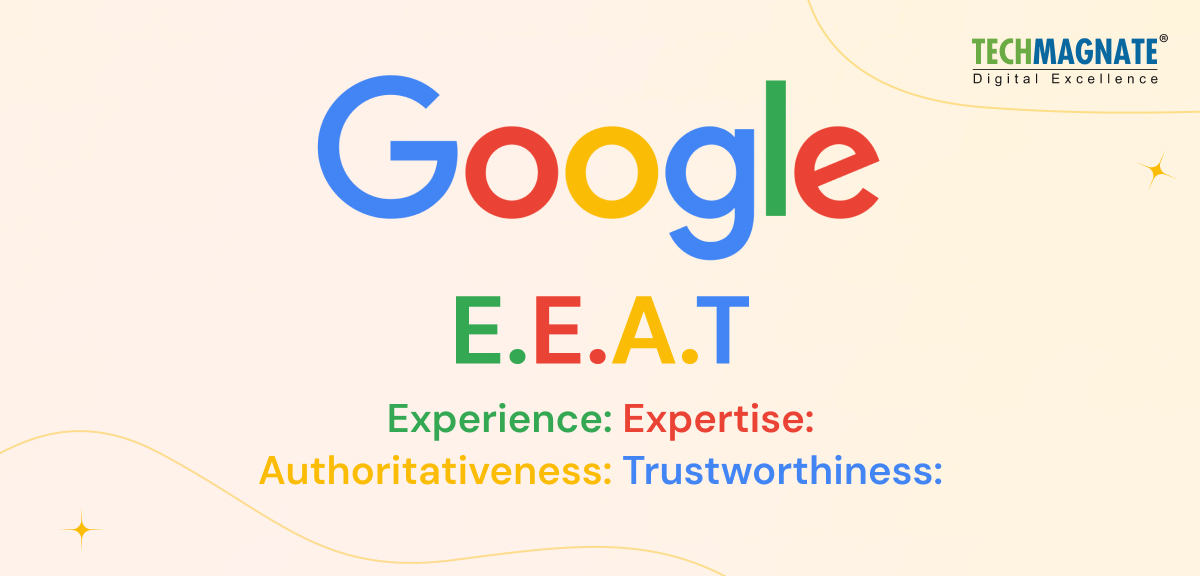
To understand how Google figures out if your content is of good quality or not, you need to understand Google’s E-E-A-T framework. This is not a ranking factor, but instead it evaluates content based on the following factors:
Experience: Does the content reflect real-world experience?
Expertise: Is the author knowledgeable about the topic?
Authoritativeness: Is the content from a credible source?
Trustworthiness: Is the information accurate and reliable?
Even AI-generated content may meet these criteria if the author of said content does their due diligence. A well-researched and fact-checked article that has been vetted by a human can be just as valuable as one written entirely by a human. In fact, Google reported that by April 2024, its algorithm updates had reduced low-quality and unoriginal content in search results by 45%.
The Risks of Using AI for SEO
AI is not risk-free, even if it can be a very useful tool for content production. The following are some possible dangers to stay away from:
1. Poor Content
AI systems occasionally generate shallow, repetitive, or generic information. Google can penalize your website if it finds such information.
2. False Information
AI systems rely on pre-existing data, which is occasionally inaccurate or out-of-date. Should you present misleading information, your trustworthiness and rankings could decrease.
3. Excessive Optimization
Penalties may result from using AI to stuff keywords or produce content just for search engines. The user experience should always come first.
4. Duplicate or Near-Duplicate Content
AI tools often pull from the same training data, which means different users can end up with very similar articles. If your AI content closely resembles other pages on the web, Google may treat it as duplicate content, which can hurt your rankings.
When Does AI Content Get Penalised? (And Why)
AI content gets demoted or penalised for the same reasons any content does – never simply for being AI-made. The specific triggers Google’s policies and ranking systems target are:
Scaled content abuse.
Mass-producing pages – by AI, humans or a mix – primarily to rank rather than to help users is a named spam policy violation since March 2024. This is the single biggest risk for sites publishing AI content at volume, and it can attract manual action.
Thin or unhelpful content.
Pages that add little original value, restate what’s already ranking, or read as generic “SEO filler” are downranked by Google’s core (helpful content) systems. Lack of depth – not AI authorship – is the trigger.
Inaccuracy and missing E-E-A-T.
AI can produce confident but wrong or outdated claims. On YMYL and expertise-led topics, content without clear experience, named authorship and trustworthy sourcing struggles to rank.
Site-wide quality drag.
If a large share of a site is thin AI content, Google’s systems can apply a site-wide signal that pulls down even your good pages – so the risk isn’t always page-by-page.
In short: Google penalises behaviour and quality, not the tool. Avoid these patterns and AI content is free to rank.
6 Ways to Rank Your AI Generated Content on Google
AI-generated content can be powerful, but to rank well on Google, it must go beyond automation. Google’s algorithms prioritize high-quality, relevant, and helpful content — regardless of whether it’s written by humans or machines. Here are six actionable strategies to help your AI content rank in search results:
1. Optimize for E-E-A-T (Experience, Expertise, Authoritativeness, Trustworthiness)
Google values content that demonstrates real expertise and trust. Add human insights, author bios, citations, and first-hand experience to make your AI content credible.
2. Edit and Humanize AI Text
AI output can be generic or repetitive. Always review, refine, and inject personality or brand tone to ensure the content feels authentic and engaging.
3. Use the Right Keywords Strategically
Conduct keyword research and naturally incorporate primary and secondary keywords. Ensure proper use in the title, meta tags, headers, and throughout the content.
4. Match Search Intent
Align content with users’ search intent — whether informational, transactional, or navigational. Answer questions directly and comprehensively.
5. Add Unique Value
Don’t just rephrase existing content. Enhance AI-generated posts with original examples, case studies, data, visuals, or expert commentary to stand out.
6. Maintain Technical SEO Best Practices
Ensure fast loading speeds, mobile responsiveness, clean URLs, internal linking, and a proper heading structure. Good technical SEO boosts rankings for all content types.
How to Optimise AI Content to Rank (Without a Penalty)
AI content optimization is less about the tool and more about the workflow around it. Use AI to draft and structure, then layer in the signals Google rewards. A repeatable process looks like this:
Start from intent, not the prompt.
Analyse the live SERP for your target keyword before writing. Identify the questions ranking pages answer, the format Google favours (guide, comparison, FAQ), and the gaps you can fill. Brief the AI against that intent rather than a generic “write an article about X”.
Add first-hand experience and original data.
Inject examples, screenshots, internal case data, expert quotes or a point of view the model can’t invent. This is what separates a helpful page from generic AI output and directly addresses the “Experience” in E-E-A-T.
Fact-check and update for accuracy.
Verify every claim, statistic and date – AI training data lags reality. Cite primary sources (like Google Search Central) and refresh time-sensitive sections so the page stays current.
Edit for a human, not a model.
Cut repetition and filler, vary sentence structure, and rewrite in your brand voice. Aim for a page a reader would happily finish – Google’s helpful-content signals reward exactly that.
Add structure, schema and internal links.
Use clear H2/H3 hierarchy, descriptive headings, an FAQ with FAQPage schema, and contextual internal links to related guides. This improves both crawlability and topical authority.
Attribute to a named, credible author.
Publish under a real expert with a bio and credentials, and keep the modified date honest. Authorship is a core trust signal – especially for SEO advice.
Google’s Helpful Content Update – Impact on AI-Generated Content
Google’s Helpful Content Update is designed to prioritize content that’s created for people, not just search engines. This update was first introduced in August 2022 and was integrated into Google’s core ranking system as of March 2024. With the rise of AI tools like ChatGPT and Jasper, many marketers are asking: Can AI-generated content still rank under this update? The answer lies in how well that content aligns with Google’s quality standards.
Key Impacts on AI-Generated Content
People-First Content Is Key – AI-generated content that lacks depth, originality, or real user value may be downranked, even if it’s SEO-optimized.
Too Much Thin AI Content Can Hurt Your Whole Site – If Google sees that most of your pages are generic, unhelpful AI content, it can drop your entire website’s rankings, not just individual pages. This is called a site-wide quality signal.
Original Insights Win – Google rewards content that offers first-hand experience, expertise, and new perspectives—something raw AI often lacks.
Human Review Is Essential – AI content that is carefully edited, fact-checked, and tailored to user intent is far more likely to pass Google’s quality filters.
Content Strategy Over Quantity – Publishing hundreds of AI-generated posts won’t help if they don’t meet Google’s “helpful” criteria. Focus on user intent and topical relevance.
Quick Checklist Before You Publish AI Content
Use these practices to make sure your AI-generated content ranks highly and steers you clear of any causes of Google penalties:
Include Human Experience
AI-generated content should always be reviewed and edited to make sure it is in line with your brand voice and offers readers something of value.
Pay attention to E-E-A-T
To increase the credibility of your writing, include relevant statistics, professional insights, and real-world experiences.
Ensure Accuracy and Relevance
AI tools might not always provide up-to-date information. Use AI to enhance your content, but verify all facts to ensure your content is accurate and current. Conduct thorough research to maintain credibility and relevance.
Don’t Stuff Keywords
Make natural use of keywords and concentrate on producing content that responds to user inquiries.
Can AI-Generated Content Help with SEO?
When used correctly, there are many benefits of using AI in SEO which can be a valuable asset for your overall strategy. Here’s an AI SEO guide for you to use it to the best of your advantage:
1. Keyword Research
AI tools can analyze search trends and suggest relevant keywords to target.
2. Content Organization
To improve readability, AI can assist you with structuring your text into distinct headers, subheadings, and bullet points.
3. Generating Ideas
Do you have writer’s block? AI can help you get started with your content development process by producing topic ideas and outlines.
The Future of AI and Google’s Algorithms
As AI technology continues to evolve, so will Google’s algorithms. Here’s what we can expect in the future:
1. Smarter AI Detection of Low-Quality Content
Google is already improving its ability to spot thin or unhelpful AI content. Rather than detecting ‘AI origin,’ Google focuses on detecting low value, so the best protection is simply making your content genuinely useful. However, the focus will remain on content quality rather than origin, highlighting the importance of AI SERP optimization to ensure your content performs well in search results.
2. Greater Emphasis on E-E-A-T
As AI becomes more prevalent, Google may refine its E-E-A-T guidelines to ensure users receive accurate and trustworthy information.
3. Integration of AI in SEO Tools
AI is already part of major SEO tools like Semrush, Ahrefs, and Surfer SEO. Going forward, these tools will get smarter at predicting what content will rank, suggesting edits in real time, and automating technical SEO checks.
Conclusion
And so, the original question, “Does Google penalize AI content?” has a clear answer: While Google does not penalize AI-generated content that maintains high quality and meets Google’s guidelines, it also doesn’t rank low-quality content well. The same holds true across industries, understanding the Google AI impact on SEO for banks shows how quality and relevance still determine rankings, even in highly regulated sectors. Yes, AI tools can help simplify content creation, but human supervision is mandatory if you wish to maintain accuracy and provide relevant and valuable content to your audience.
Additionally, SEO improvements through AI require a focus on E-E-A-T principles and user experience to avoid penalties. The evolution of AI technology demands that SEO professionals stay informed and adaptable to preserve their competitive advantage.
As a results-driven content writing company, we ensure every piece of content blends accuracy, authenticity, and SEO excellence, keeping your brand future-ready in the AI era.
Frequently Asked Questions (FAQs)
Why is Google concerned about AI-generated content?
Google wants to make sure users find helpful, accurate, and trustworthy information. Some AI-generated content can be repetitive, vague, or even incorrect. If it’s created just to rank in search without adding real value, it can hurt the user experience. Google isn’t against AI itself—it’s concerned about low-quality or spammy content made using AI. Their goal is to promote content that’s written for people, not just for algorithms.
What types of AI content does Google consider low quality?
Google considers AI content low quality if it’s shallow, copied, misleading, or created just to manipulate search rankings. Examples include keyword-stuffed articles, generic posts without useful insights, and content that lacks accuracy or relevance. If AI-generated content doesn’t help the reader or feels robotic and repetitive, it could be flagged as unhelpful. Quality matters more than how the content is made—so human review, editing, and adding value is essential.
How does AI content affect E-E-A-T (Experience, Expertise, Authoritativeness, Trustworthiness)?
AI content can struggle to meet Google’s E-E-A-T standards. That’s because AI doesn’t have real-world experience or personal expertise. It often lacks trust signals like author bios, original research, or personal stories. However, if you edit AI content, add human insights, link to trusted sources, and show your authority on the topic, you can still meet E-E-A-T guidelines. The key is to combine AI efficiency with human credibility.
Is it safe to use AI content for blog posts and landing pages?
Yes, it’s safe—as long as the content is high-quality, relevant, and edited by humans. AI can help speed up content creation, but you should always review it for clarity, accuracy, and tone. Use it to generate ideas, outlines, or first drafts, but make sure the final content speaks to your audience and meets Google’s helpful content standards. Avoid publishing raw AI text without customization or proofreading.
Can using too much AI content lead to a manual penalty?
Using too much unreviewed or low-quality AI content might trigger issues, especially if it looks spammy or repetitive. While Google doesn’t penalize AI content just for being AI-made, manual penalties can happen if your site has lots of thin, misleading, or auto-generated content that violates Google’s policies. To stay safe, focus on quality and always add a human layer to review, refine, and enrich the AI-written material.
Is mixing human and AI content a good strategy?
Yes, combining human and AI content is often the best approach. AI can speed up research or help with outlines, but humans add the personality, depth, and real expertise that Google and readers love. This hybrid strategy helps you publish faster without sacrificing quality. Use AI for structure and efficiency, then let a writer or editor add insights, refine tone, and ensure accuracy. It’s a win-win for SEO and content quality.
Can Google detect AI-written content?
Google has tools like SpamBrain that detect manipulative or low-quality content at scale. However, Google's official stance is that it does not penalize content for being AI-written - only for being unhelpful, inaccurate, or spammy. No public tool from Google currently flags content purely based on AI origin.
How does the “Helpful Content Update” specifically change my AI strategy?
This update prioritizes "people-first" content. If your AI content is just thin, generic, or rephrased information without original depth, it is at risk of being down ranked. You need to ensure your AI tools are producing content that answers user questions directly and comprehensively.
What “extra ingredients” must I add to AI text to make it rank?
Raw AI often lacks the "secret sauce" Google loves: original insights, case studies, and first-hand experience. To rank well, you should inject your brand’s personality and add unique visuals or data that a machine simply can’t invent.
Can AI actually improve my technical SEO, not just my writing?
Absolutely! Beyond just writing, AI is a powerhouse for organizing content structure with proper headers and bullet points to improve readability. It can also help you analyze search trends and identify high-volume keywords to target strategically.
Why is “Human Review” considered mandatory for AI-generated posts?
AI tools aren't perfect; they can rely on outdated data or generate "shallow" and repetitive info,. Human oversight is essential to fact-check the material, ensure it aligns with your brand voice, and maintain the trust of your audience.
How can I use AI to overcome writer’s block without hurting my SEO?
You can safely use AI as an automated helper to generate topic ideas, outlines, and initial drafts. This speeds up the creation process while allowing you to focus your energy on adding the E-E-A-T (Experience, Expertise, Authoritativeness, and Trustworthiness) that Google rewards.
Does Google penalize AI content in 2026?
No. As of 2026, Google still does not penalise content for being AI-generated. Its position — set out in Google Search Central guidance and reinforced by the March 2024 core update and the scaled content abuse spam policy — is that it rewards helpful, high-quality content however it's made, and acts against thin, unoriginal or mass-produced content whether written by a human or AI.
How do you optimize AI content so it ranks on Google?
Optimise AI content the way you'd optimise any content: start from search intent, add first-hand experience and original data, fact-check every claim, edit it into a natural human voice, structure it with clear headings and schema, add internal links, and publish under a credible named author. The AI drafts; the human adds the E-E-A-T signals that earn rankings.
Sarvesh Bagla is an enterprise SEO expert and industry leader who has driven transformational digital growth for India’s top brands across the BFSI, Healthcare, Automotive, and ECommerce industries. As the Founder and CEO of Techmagnate, he leads large-scale organic search strategies and performance marketing campaigns for businesses looking to succeed in today’s AI-driven search landscape.
A strong advocate for thought leadership, Sarvesh is deeply involved in SEO evangelism and regularly contributes to industry discussions through LinkedIn, webinars, and CMO roundtables. His focus today is on helping brands prepare for an AI-first SEO future (AEO, GEO) and strategies for Large Language Models (LLMs) at the core.
Get the most valuable search related insights about leading brands, trending keywords, search volumes, fastest growing categories, city-level insights and much more!
It has come to our notice that fraudulent job offers are being circulated on the internet through messaging apps like WhatsApp and Telegram, which falsely claim to be from Techmagnate. We take this matter seriously and would like to caution all candidates to be wary of such postings.
Please Note That –
We do not charge any fees/security deposit/payment from candidates, irrespective of the professional experience they hold, for job applications or interviews
Official communication channels include our website and verified social media accounts, primarily LinkedIn.
Kindly double-check the domain name – @techmagnate.com – in the email address
We follow a transparent and ethical approach for hiring/onboarding supported by proper documentation.
Ensure that you only apply through verified channels to avoid being scammed. We also recommend that you exercise caution when sharing personal information or financial details with any job posting or recruitment agencies claiming to represent us.
We want to ensure that potential candidates interested in joining Techmagnate have a safe and positive experience.
If you find that someone that fits the description above has reached out to you, please notify us immediately at jobs@techmagnate.com.
Team @Techmangate
Build a Better Digital Marketing Strategy with Techmagnate’s Search Trends Reports
 Important Alert: