Beware of fake job offers and payment requests. We only use official email IDs and never conduct interviews on messaging apps.Beware of fake job offers and payment requests. We only use official email IDs and never conduct interviews on messaging apps.
Summary: AI-driven content optimization enhances content quality, relevance, and performance by analyzing user data, search trends, and competitors. It moves beyond traditional SEO by focusing on user intent, semantic relevance, and content gaps. This approach improves engagement, search rankings, and provides a competitive edge by ensuring content is both user- and search-engine-friendly.
Key Takeaways:
AI content optimization tailors content to meet both user needs and search engine algorithms.
Unlike traditional SEO, AI enhances content by analyzing user intent and semantic relevance.
Predictive content personalization and AI-driven keyword clustering help improve content visibility and engagement.
Using AI tools like Surfer SEO and MarketMuse ensures content comprehensiveness and authority.
Successful integration of AI into content strategies requires balancing automation with human creativity.
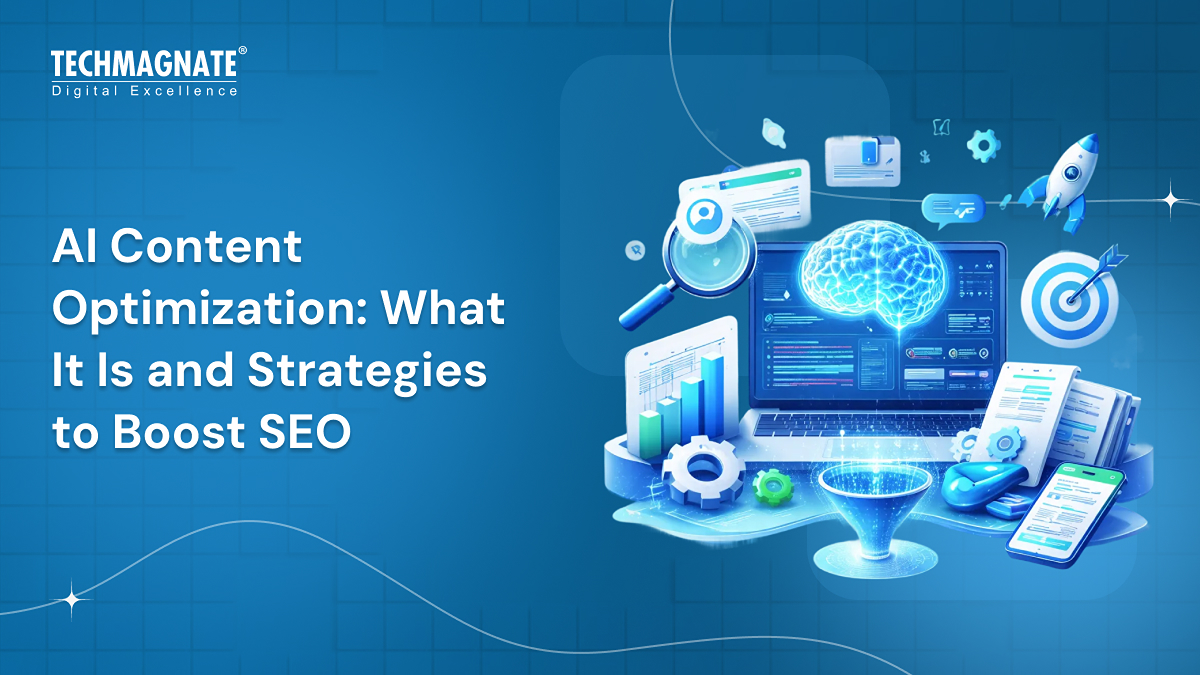
AI is changing the way content is created, but simply writing text isn’t enough to stand out online. AI content optimization helps refine your content by analysing data, audience behaviour, and search trends. This approach ensures your content is both reader-friendly and search engine-friendly, improving visibility and engagement while guiding the right audience to your website.
Table of Contents
What is AI-Driven Content Optimization?
AI content optimization refers to the use of artificial intelligence and machine learning technologies to improve the quality, relevance, and performance of digital content. Unlike traditional optimization, which often relies on manual keyword stuffing or adherence to basic checklists, AI-driven approaches analyze vast datasets to understand why certain content ranks.
Traditional SEO might tell you to include a keyword five times. AI-driven content optimization tells you that the top-ranking pages for that keyword also discuss three specific sub-topics, use a particular reading level, and answer five common user questions.
How It Differs from Traditional Methods
The core difference lies in depth and intent. Traditional methods focus on “on-page” elements like title tags and keyword density. AI goes further by analyzing:
Semantic Relevance: Understanding the context behind words, not just the words themselves.
User Intent: Predicting what a user actually wants to achieve when they type a query.
Competitive Gaps: Instantly scanning top results to see what they are missing that you can provide.
By utilizing AI content optimization, businesses move from guessing what Google wants to knowing exactly what is required to satisfy the algorithm and the user.
AI Content Optimization Strategies to Boost Your SEO
To achieve measurable growth, organizations must transition from theoretical concepts to actionable implementation. Below are five specific AI content optimization strategies that enterprise businesses use to secure their market positions and enhance visibility.
1. Data-Backed Keyword Research and Clustering
Traditional keyword research often focuses solely on search volume. Modern AI-driven content optimization shifts this focus toward “keyword clusters,” groups of related terms that share a single user intent. By processing millions of queries, AI identifies these relationships, allowing you to create one comprehensive pillar page rather than multiple thin posts. This builds topical authority, which is essential for modern search engine algorithms.
2. Predictive Content Personalization
AI studies large amounts of user data to understand which content formats work best for different audiences. Whether readers prefer detailed reports or easy-to-read guides, AI tools use engagement metrics to adjust the tone and structure. This helps keep visitors on your page longer and lowers bounce rates, sending positive signals to search engines.
3. Automated Content Gap Analysis
A highly effective AI content strategy is automated gap analysis. AI tools can quickly scan your website and compare it with competitors. They identify topics your competitors rank for that you haven’t covered, giving you a clear plan to create new content, improve search rankings, and attract more relevant visitors to your site.
4. Intent Matching via Natural Language Processing (NLP)
Search engines use NLP to understand the context behind a search query. By using AI tools with similar NLP capabilities, you can analyze your drafts for “entities,” the specific terms, concepts, and phrases that provide contextual relevance. This process of using NLP in SEO ensures your content aligns perfectly with AI in SEO trends. It proves to search engines that your material thoroughly addresses the user’s underlying intent, making it more likely to rank higher.
5. Answer Engine Optimization (AEO)
With the rise of generative search experiences, such as Google’s AI Overviews, your content must be structured for direct answers. AI tools analyze the formatting of featured snippets to help you draft concise definitions and structured lists. This increases the likelihood that AI agents will retrieve and cite your content as a primary source.
At Techmagnate, these strategies are applied through structured workflows that combine AI-driven insights with deep SEO expertise, enabling transformational growth by turning content optimization efforts into sustained organic success for large-scale websites.
Top AI Content Optimization Tools for SEO
Implementing these advanced strategies effectively requires a robust, specialized technology stack. To support this process, we have outlined the industry-leading AI content optimization tools that are currently shaping modern search engine results.
Surfer SEO
Surfer SEO is a staple for on-page optimization. It analyzes the top-ranking pages for your target keyword and provides a content editor with real-time feedback. It tells you exactly which words to use, how many headings to include, and the ideal word count. It removes the guesswork from writing SEO-friendly copy.
Clearscope
Clearscope is highly favored by enterprise teams. It focuses heavily on “content grading.” It uses IBM Watson’s natural language understanding to identify the relevant entities and concepts you need to cover to be considered an authority on a topic. It is excellent for ensuring your content is comprehensive.
MarketMuse
MarketMuse is designed for content planning and strategy. It analyzes your entire domain to determine your current authority on a specific subject. It then suggests personalized difficulty scores and content briefs, helping you prioritize topics where you have the best chance of ranking.
Frase
Frase helps specifically with research and answering user questions. It crawls the top search results to automatically generate content briefs and identify the questions people are asking about your topic. This is particularly useful for capturing long-tail keywords and optimizing for voice search.
Grammarly Business
While known for grammar, Grammarly’s AI features now include tone adjustments and clarity improvements. Ensuring your content is readable and maintains a consistent brand voice is a subtle but critical part of AI content writing tools and AI-driven content optimization.
Common Challenges in AI-Driven Content Optimization
While the benefits are clear, integrating AI content optimization into your workflow is not without hurdles. It is important to be aware of these challenges to navigate them successfully.
Over-Reliance on Automation
The biggest risk is losing the human element. AI can provide data and structure, but it cannot replicate human experience, empathy, or unique brand storytelling. If you rely entirely on AI to write and optimize, your content may end up sounding generic. It is essential to use AI as a guide, not a replacement for expert content writing services.
Quality and Fact-Checking
AI tools can sometimes “hallucinate” or provide outdated information. When using AI for research or drafting, rigorous fact-checking is mandatory. Publishing inaccurate information can severely damage your brand’s E-E-A-T (Experience, Expertise, Authoritativeness, and Trustworthiness), leading to plummeting rankings.
Integration with Existing Workflows
For large organizations, adding new tools to an established process can be disruptive. Teams may resist changing how they research or write. Successful implementation requires training and a clear demonstration of how these tools make the job easier, not harder. This is a key part of effective AI content optimization strategies.
Keeping Up with Algorithm Shifts
AI tools are built on existing data. If a search engine pushes a major core update that shifts how it values content, AI tools may lag slightly in their recommendations. It remains crucial to stay updated on SEO trends and not follow tool recommendations blindly if they contradict new best practices.
The Future of AI-Driven Content Optimization
As we look ahead, AI-driven content optimization will become even more integrated into the fabric of digital marketing. We are moving toward a future where optimization occurs in real time.
Hyper-Personalization at Scale
Future AI systems will likely enable websites to adjust content based on individual visitors dynamically. Imagine a landing page that rewrites its headlines and value propositions in real time to match the user’s specific search intent and demographics.
Predictive SEO
Instead of reacting to search trends, AI will predict them with greater accuracy. Tools will alert content teams to rising topics weeks before they peak, allowing businesses to create content that captures the wave early.
Integration with Multimedia
Currently, most optimization focuses on text. The future of AI content optimization involves video, audio, and image analysis. AI will help optimize video scripts for retention, suggest alt text based on image recognition, and ensure every media element on a page contributes to SEO performance.
The Rise of AI Agents
As users begin to rely on AI agents to perform tasks (like “book me a flight” or “find the best CRM”), optimization will shift toward being the chosen source for these agents. This will require a technical focus on structured data and clear, factual content delivery.
Embracing AI for SEO Success
Search is constantly changing, and AI content optimization strategies have become essential for businesses that want to stay visible online. By using data to guide content decisions, you ensure that every article, product page, and guide serves a clear purpose and has a real chance to rank.
However, tools are only effective when supported by the right strategy. The aim is not to automate everything, but to strengthen your expertise with AI-driven insights. If you are ready to apply these strategies but need help with the technical side, working with experienced professionals can speed up results. Explore our AI SEO services to see how we can help you implement advanced workflows and achieve measurable growth.
Frequently Asked Questions
What are some effective AI content optimization strategies to improve SEO?
Effective AI content optimization strategies include:
Data-backed keyword research and clustering
Predictive content personalization
Automated content gap analysis
Intent matching via Natural Language Processing (NLP)
Answer Engine Optimization (AEO) for featured snippets.
How can AI content optimization improve user engagement?
AI optimizes content by analyzing user data, determining the preferred formats and tones, and tailoring content for higher engagement. Personalized, user-centric content reduces bounce rates and improves retention, which are positive signals for search engines.
What role does Natural Language Processing (NLP) play in AI content optimization?
NLP enables AI to understand the context behind a search query, allowing content to match the user’s intent more precisely. It ensures that the content is semantically relevant, improving its chances of ranking higher in search results.
How do AI-driven tools like Surfer SEO, Clearscope, and MarketMuse aid in content optimization?
AI tools like Surfer SEO provide real-time feedback on keyword usage and structure. Clearscope helps identify relevant entities and topics to cover for comprehensive content, while MarketMuse assists with content planning and prioritization by analyzing domain authority and providing content briefs.
What is the importance of content gap analysis in AI content optimization?
Content gap analysis identifies missing topics or subtopics that competitors are ranking for, which your website has not covered. AI tools can automate this process, giving you a roadmap to create new content that improves your rankings and attracts relevant traffic.
Sarvesh Bagla is an enterprise SEO expert and industry leader who has driven transformational digital growth for India’s top brands across the BFSI, Healthcare, Automotive, and ECommerce industries. As the Founder and CEO of Techmagnate, he leads large-scale organic search strategies and performance marketing campaigns for businesses looking to succeed in today’s AI-driven search landscape.
A strong advocate for thought leadership, Sarvesh is deeply involved in SEO evangelism and regularly contributes to industry discussions through LinkedIn, webinars, and CMO roundtables. His focus today is on helping brands prepare for an AI-first SEO future (AEO, GEO) and strategies for Large Language Models (LLMs) at the core.
Get the most valuable search related insights about leading brands, trending keywords, search volumes, fastest growing categories, city-level insights and much more!
It has come to our notice that fraudulent job offers are being circulated on the internet through messaging apps like WhatsApp and Telegram, which falsely claim to be from Techmagnate. We take this matter seriously and would like to caution all candidates to be wary of such postings.
Please Note That –
We do not charge any fees/security deposit/payment from candidates, irrespective of the professional experience they hold, for job applications or interviews
Official communication channels include our website and verified social media accounts, primarily LinkedIn.
Kindly double-check the domain name – @techmagnate.com – in the email address
We follow a transparent and ethical approach for hiring/onboarding supported by proper documentation.
Ensure that you only apply through verified channels to avoid being scammed. We also recommend that you exercise caution when sharing personal information or financial details with any job posting or recruitment agencies claiming to represent us.
We want to ensure that potential candidates interested in joining Techmagnate have a safe and positive experience.
If you find that someone that fits the description above has reached out to you, please notify us immediately at jobs@techmagnate.com.
 Important Alert:
 Important Alert:

















 6th Feb | Invite-only


