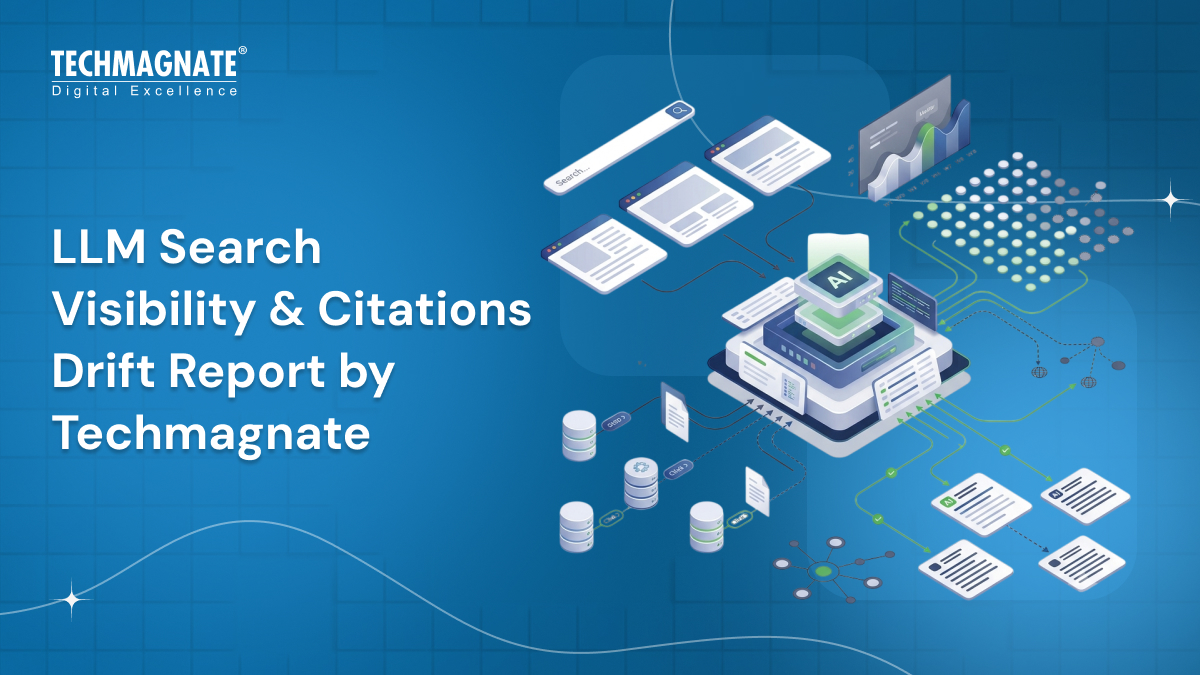
Summary: Large Language Model Optimization (LLMO) is becoming an essential move to make content more findable and visible in AI-generated answers. In contrast to SEO, which aims at search engine ranking, LLMO optimizes content structure, clarity, and contextual richness to help AI models discover, comprehend, and suggest your content. When done well, LLMO enhances brand visibility across AI platforms, improves content interaction, and future-proofs your online presence in a more AI-first world.
Key Takeaways:-
According to Bloomberg Intelligence, Generative AI could become a $1.3 trillion market by 2032. Generative AI tools like ChatGPT, Bard, and Claude are reshaping how users search for and consume information, often bypassing traditional search engines altogether. For brands, this means one critical thing: if your content isn’t optimized for Large Language Models (LLMs), you’re invisible where the next wave of attention is going.
This move has opened up a new front in search visibility known as Large Language Model Optimization (LLMO). While the old SEO was all about ranking in SERPs, LLMO is about making your content AI-ready so it gets surfaced, referenced, or summarized by users who increasingly rely on tools for answers.
Let’s understand what LLMO is, how it compares to SEO, and most of all, how you can leverage it to future-proof your content strategy and get more brand visibility in an AI-first world.
Large Language Model Optimization (LLMO) is about tailoring your content for AI systems like ChatGPT, Google Bard, and others, not just traditional search engines like Google. Instead of ranking pages based on keywords, these AI models generate answers by understanding content from huge amounts of data. The goal is to make your content easy for AI to understand and use when it responds to users’ questions.
Get insights on evolving customer behaviour, high volume keywords, search trends, and more.
How does LLMO work?
Whereas keyword matching and link-building are the focus of a traditional SEO strategy, LLMO is about how well and broadly your content responds to user queries, and precisely how LLMs are programmed to provide answers.
Embracing LLMO in SEO offers several advantages to brands that aim to future-proof their content marketing strategy:
Although both SEO and LLMO optimize content visibility, they achieve it through different methods.
| Aspect | SEO Focus | LLM Optimization (LLMO) Focus |
|---|---|---|
| Focus of Optimization | Aims at search engines like Google to improve page rankings. | Optimizes content for AI models like ChatGPT or Bard for better understanding and summarization. |
| Keyword Use | Relies heavily on exact-match keywords and keyword density. | Emphasizes contextual understanding, semantic relevance, and natural language use. |
| Content Structure | Uses keyword-rich headers, meta tags, and backlinking. | Focuses on well-structured, clear explanations easily understood by AI. |
| User Intent | Aligns with exact search terms used by users on search engines. | Aligns with conversational queries and implied user intent. |
| Technical Optimization | Includes page load speed, mobile responsiveness, sitemaps, and schema markup. | Focuses on clarity, neutrality, and reducing ambiguity for effective AI summarization. |
| Outcome Goal | Aims to rank higher on SERPs and increase organic traffic. | Aims to be referenced or quoted in AI-generated answers. |
To align with future content trends, AI SEO Strategies play a crucial role in ensuring that content is optimized not only for traditional search engines but also for AI-driven models like ChatGPT and Bard.
Rolling out LLM optimization isn’t just about reworking your existing SEO content. It’s about shifting your approach to create content that’s designed specifically for AI models. To make this change successful, you need a clear strategy that focuses on crafting content that both appeals to AI and remains engaging for your audience. Here’s how you can do it:

Must Read: Google AI Mode Impact on SEO for Banks

The following are some of the challenges one may face during LLMO:
LLM optimization is set to change the way we create content, offering hyper-personalization, real-time updates, and seamless integration with analytics, transforming how brands engage and strategize.
With LLMs, brands will be able to create content that’s tailored to individual users based on their past behavior and preferences, making experiences feel more personal and relevant.
Expect to see LLMs integrated with analytics tools, allowing AI to generate content that aligns with audience behavior and business goals, making every piece of content smarter and more targeted.
Real-time, AI-generated content is becoming a reality. Picture landing pages that adapt and rewrite themselves based on who’s viewing them. LLMO is no longer just an option, it’s becoming the cornerstone of future content strategies.
Must Read: Questions to Ask Your SEO Agency About LLM Optimization
Embrace LLM-driven content to secure long-term visibility in an AI-powered search landscape. Optimizing for large language models goes beyond boosting rankings – it helps you create content that answers real questions and builds authority with both AI and users.
Don’t wait for your traffic to decline before acting. Start integrating LLM optimization into your content strategy today with our expert AI SEO Services. Stay ahead of the competition and future-proof your digital presence with tailored solutions designed to maximize your brand’s impact.
LLMO refers to Large Language Model Optimization, a way of optimizing content for AI models such as ChatGPT and Google Bard. It makes your content clearly formatted, contextually dense, and AI-optimized.
Get insights on evolving customer behaviour, high volume keywords, search trends, and more.
A closed-door discussion for leaders navigating scale,
visibility, and AI-driven change.
6th Feb | Invite-only
Request an Invite