Beware of fake job offers and payment requests. We only use official email IDs and never conduct interviews on messaging apps.Beware of fake job offers and payment requests. We only use official email IDs and never conduct interviews on messaging apps.
Summary: Businesses can convert website visitors into paying customers with the aid of conversion rate optimization. The main components of CRO are covered in this guide, including landing page optimization, UX/UI enhancements, user research, website analytics, and CTA improvements. A/B testing, heatmaps, and funnel analysis are examples of data-driven tactics that can be used to increase revenue, lower acquisition costs, and improve user experience.
Analytics, A/B testing, surveys, and heatmaps track behavior and increase conversions.
High visibility CTAs include action-driven messaging, quick speed, easy navigation, and mobile friendliness.
Refine important pages and examine data with A/B test headlines, calls to action, and form lengths.
Let’s say your SEO is working well, and your web page is ranking first on Google’s search page. However, you are still struggling to convert customers.
While it is very important to have your website appear on the first page of search engines like Google, getting people to come to your site is just half of the story. The other half is getting those visitors to transform into paying customers.
And how can you do that?
This is where CRO and SEO strategies play a crucial role. SEO helps drive the right traffic, and CRO ensures you maximize the ROI of SEO by converting that traffic into paying customers, ultimately enhancing your return on investment.
Whether you operate an eCommerce store, a SaaS platform, or a content-driven website, optimizing your eCommerce conversion rate can significantly boost revenue, enhance user experience, and lower customer acquisition costs. For businesses using Shopify, implementing a tailored Shopify CRO strategy can streamline the user journey, optimize key touchpoints, and ultimately improve checkout conversions.
Table of Contents
What is Conversion Rate Optimization (CRO)?
Conversion rate optimization (CRO) is all about getting more of your website visitors to take the actions you want, whether it’s making a purchase, signing up for a newsletter, or filling out a contact form.
CRO focuses on improving your website in ways that make it easier and more enjoyable for users to navigate, like tweaking the design, making sure call-to-action buttons are clear, or improving overall user experience. The goal is to make it as simple as possible for visitors to find what they need and take action. By optimizing your content, running tests, and streamlining workflows, you can boost your sales and create a smoother, more satisfying experience for your customers. Every click should bring them closer to what they’re looking for, while also making them want to come back.
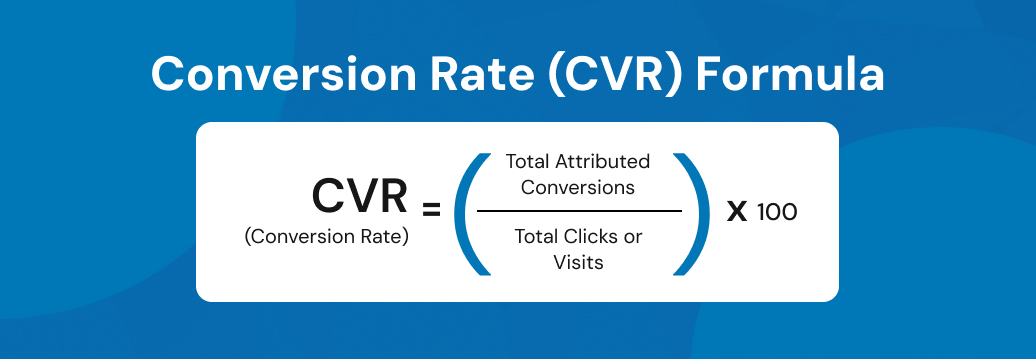
To calculate your conversion rate, just divide the number of conversions by the total number of interactions that could lead to a conversion. For example, if you had 100 purchases out of 1,000 visits, your conversion rate would be 10%.
Discover What Your Customers Search ForDiscover What Your Customers Search For
Get insights on evolving customer behaviour, high volume keywords, search trends, and more.
Conversion Rate Optimization (CRO) isn’t just a trendy term, it’s a smart strategy to get more out of the traffic you already have on your website.
Rather than pouring extra money into ads or trying to bring in more visitors, CRO focuses on turning the people who are already visiting your site into paying customers. It’s about making the most of what you’ve got and improving your website to encourage more conversions.
Here’s why it matters:
More Revenue from the Same Traffic: Even a small lift in your conversion rate can mean big results. For example, if your site converts at 2% with 10,000 monthly visitors, that’s 200 conversions. Improve the rate to 3%, and you’re suddenly getting 300 conversions—with the same traffic. That’s a 50% boost in results!
Lower Cost per Acquisition (CPA): By improving how your site converts, you’re reducing the money spent to acquire each customer.
Better Return on Marketing Spend: CRO helps you squeeze more value from every click, ad, and campaign you run—without increasing your budget.
Improved User Experience (UX): Optimization efforts often lead to a cleaner, faster, and easier-to-navigate site. A smoother journey makes users more likely to convert.
Higher Customer Retention: A better experience doesn’t just help you win new customers—it also encourages repeat visits and long-term loyalty.
Real-World Example
Let’s say you run an e-commerce store with a product page that gets 5,000 visits per month. Right now, it has a 2% conversion rate (100 purchases). After optimizing the call-to-action, simplifying the checkout process, and adding social proof, your conversion rate climbs to 3%. That one percent increase equals an extra 50 sales per month—without any extra ad spend.
Conversion Rate Calculator: How to Measure and Improve Your CRO Efforts
Once you understand Conversion Rate Optimization (CRO), it’s essential to measure how effectively your website converts visitors. A ” A Conversion Rate Calculator helps track this metric by showing the percentage of visitors who take a desired action, such as making a purchase or signing up for a newsletter.”
How to Use a Conversion Rate Calculator
The formula is simple:
Conversion Rate (%) = (Number of Conversions / Total Interactions) x 100
For example, 100 conversions from 1,000 interactions equals a 10% conversion rate.
Improving Your Conversion Rate
To boost conversions, focus on these key strategies:
Optimize CTAs: Use action-oriented, clear text like “Start Saving Today.”
A/B Testing: Test different versions of your pages to find what works best.
Enhance UX/UI: Ensure your site is easy to navigate and mobile-friendly.
Funnel Analysis: Identify drop-off points and address friction areas.
Regularly calculating and optimizing your conversion rate can lead to better performance, increased revenue, and a more satisfying user experience.
Key Elements and Strategies for Conversion Rate Optimization
A successful CRO (Conversion Rate Optimization) plan is all about understanding what makes users take action and then using that data to improve your website. Below are the key elements of CRO, along with practical strategies you can use to increase conversions and keep your users happy.
1. User Research
Understanding your audience is one of the greatest principles of CRO. You need to know what visitors are looking for, how they navigate your site, and what prevents them from taking your desired action.
How to Conduct Effective User Research?
Use Heatmaps and Session Recordings: Tools like Crazy Egg, Contentsquare, and Hotjar visually depict user behavior—highlighting where users click, scroll, and drop off.
Collect Customer Feedback Through Surveys & Polls: Ask direct questions via Qualaroo, Google Forms, or SurveyMonkey:
What prevented you from finishing your purchase?
What details were you trying to find but couldn’t?
How might this website be made more user-friendly?
Compare Website Elements Using A/B Testing: Test different CTAs, layouts, headlines, and price points using tools like Optimizely, Google Optimize, or VWO to identify what resonates best with your audience.
2. Website Analytics
Without data, CRO becomes guesswork. Real-time analytics help businesses understand user journeys, identify drop-off points, and refine campaigns.
Important Web Analytics Metrics to Monitor
Bounce Rate: High bounce rates may signal poor content relevance or bad UX.
Exit Pages: Identify the points where users commonly leave the site.
Average Session Duration: Longer durations often reflect higher engagement.
Click-Through Rate (CTR) on CTAs: A low CTR could indicate poor CTA visibility or messaging.
Recommended tools: Google Analytics, Contentsquare, and Mixpanel.
3. UX/UI Design Optimization
Optimizing your website’s design improves the overall user experience and encourages users to take action.
Important UX/UI Upgrades for Increased Conversions
Make Your Website Mobile-Friendly: With over 62% of traffic from mobile, ensure responsiveness using Google’s Mobile-Friendly Test.
Boost the Speed of Your Website: Use Core Web Vitals, GTmetrix, and Google PageSpeed Insights. Improve load time with CDN, image compression, and caching.
Simplify Navigation: Reduce unnecessary clicks, keep menus intuitive, and ensure search functionality is effective and prominent.
4. Call-to-Action (CTA) Optimization
A strong CTA guides users toward key actions—be it signing up, making a purchase, or requesting a quote.
Crucial Techniques for High-Converting CTAs
CTAs Should Be Clear and Actionable: Use specific phrases like “Start Saving Today” instead of generic ones like “Click Here.”
Put CTAs in the Best Position for Visibility: Ensure visibility above the fold and across key pages (blogs, products, checkout).
Make CTAs with Contrasting Colours: Use colors that stand out from the background and test different variations via A/B testing.
5. Landing Page Optimization
Landing pages are critical for conversion. A clear, persuasive, and fast-loading page can make a significant difference, which is why following a landing pages checklist is essential to ensure every element is optimized for success.
Essential Components of High-Converting Landing Pages
An Attention-Grabbing Headline: Clearly express the value proposition (e.g., “Boost Your Sales with a Free Marketing Audit”).
Content that is Clear and Convincing: Use bullet points and trust signals in CRO
A/B Testing Important Elements of Landing Pages:
Headlines & Subheadings: Test for relevance and clarity.
Button Position & Colour: Small changes can make a big impact.
Form Length: Shorter forms generally perform better.
Optimize for Fast Loading Speed: Use lazy loading and compress multimedia for faster performance.
6. Define Clear Conversion Goals
Before you begin optimizing, it’s essential to set specific, measurable, achievable, relevant, and time-bound (SMART) goals. These help guide your entire CRO strategy and allow you to measure success effectively.
Examples of Clear CRO Goals:
Increase newsletter sign-ups by 15% in 90 days
Reduce cart abandonment rate by 20% in 60 days
Improve lead form submissions by 25% from the services page in one quarter
These concrete goals help prioritize your efforts and measure progress consistently.
7. Conduct a CRO Audit
A CRO audit is a deep dive into your website to identify friction points, usability issues, and areas for improvement across the conversion funnel optimization, helping to enhance your site’s ability to convert visitors into customers.
Steps to Conduct an Effective CRO Audit:
Review Top Pages: Use Google Analytics to find your most visited landing pages and check their performance.
Analyze User Journeys: Track how users navigate your site, and where they drop off using tools like GA4, Hotjar, or Contentsquare.
Audit Forms and CTAs: Are they too long, confusing, or poorly placed? Small tweaks can significantly impact conversions.
Review Site Speed and Mobile Usability: A poor mobile experience or slow-loading page can hurt conversion rates significantly.
This audit helps you find and fix the key obstacles preventing users from converting.
8. Identify Key Areas for Optimization
Not all pages are equally important. You should focus your CRO efforts where they’ll have the biggest impact.
High-Impact Areas to Prioritize:
Product Pages (for eCommerce): Optimize images, descriptions, reviews, and CTAs.
Pricing Pages (for SaaS): Simplify pricing tiers, add FAQs, and include trust badges.
Lead Generation Forms (for service businesses): Reduce the number of form fields and add benefits like “Get Your Free Quote in 24 Hours.”
Checkout Flow: Remove unnecessary steps, offer guest checkout, and add reassurance elements like secure payment icons.
By focusing on these critical areas, you ensure your efforts lead to the highest ROI.
9. A/B Testing & Hypothesis Formation
A/B testing allows you to make data-driven decisions by testing different versions of web elements.
How to Do It Effectively:
Formulate a Hypothesis: Example – “Changing the CTA from ‘Submit’ to ‘Book My Free Demo’ will increase form completions.”
Test One Element at a Time: Don’t change too many variables at once—keep it focused (e.g., CTA text, headline, image).
Use CRO Tools: Tools like Google Optimize, VWO, or Optimizely can help run structured tests.
Track Key Metrics: Monitor conversion rate, CTR, and bounce rate to evaluate impact.
This helps you continuously improve based on real user data instead of assumptions.
10. Analyze Results & Iterate
CRO is not a one-time fix — it’s a continuous cycle of testing, learning, and improving.
Best Practices to Analyze and Iterate:
Review Test Results: Identify what worked and why. Don’t just focus on wins — learn from failed tests too.
Implement Winning Variations: Once a variation proves successful, roll it out site-wide or to similar pages.
Keep Testing: Regularly test new hypotheses. Even small improvements can compound into big gains over time.
Document Learnings: Maintain a CRO log to track what tests were run, their results, and what was learned.
Iterating consistently ensures your conversion rates keep improving while adapting to changing user behavior and trends.
Conversion Rate Optimization Tools
1. Heatmaps & Session Recording
Hotjar: Monitors scroll depth and user clicks.
Contentsquare: Offers insights into user behaviour driven by AI.
2. A/B Testing Tools
Optimizely: Simple A/B testing to make modifications to websites.
Google Optimize: A free tool for testing websites.
3. Funnel Analysis Tools
Google Analytics: Monitors the customer journey.
Crazy Egg: Offers scrollmaps and heatmaps.
4. Survey & Feedback Tools
SurveyMonkey: Gathers customer feedback.
Qualaroo: Uses micro-surveys to gather user intent.
Conversion Rate Optimization Process
To optimize your conversion rate effectively, follow this straightforward process:
Establish Your Conversion Goals: Start by setting clear objectives. Whether it’s increasing product sales, generating leads, or boosting newsletter subscriptions, having specific goals helps guide your optimization efforts.
Analyze Your Sales Funnel: Look closely at your sales funnel to understand how users are interacting with your site. Identify where they’re dropping off, so you can improve those areas for better conversions.
Focus on High-Traffic and Underperforming Pages: Begin with pages that receive the most visitors. If these pages aren’t converting well, improvements here can make a big difference quickly. Similarly, underperforming pages that should be driving higher conversions should be prioritized.
Generate Hypotheses for Changes: Based on the data you gather, come up with ideas to improve your site. This could be redesigning certain pages, tweaking your call-to-action buttons, or changing your content to make it more appealing.
Run A/B Tests on Your Ideas: After making changes, test them against the original versions using A/B testing. This will help you find out what works best and which modifications lead to higher conversion rates.
Evaluate Results and Implement Winning Changes: Analyze the test results and see which changes had the best effect. Apply those winning changes to your site and remove or adjust elements that didn’t work as expected.
Keep Iterating and Improving: CRO is an ongoing process. Even after you’ve made initial improvements, continue testing and optimizing to keep refining the user experience and conversion rate.
Example: A retailer selling hats notices that their hats page gets a lot of traffic but has a low conversion rate. By improving the design or adding a better CTA, they might be able to convert more visitors into buyers, leading to a noticeable increase in sales.
CRO Best Practices
To achieve better results with Conversion Rate Optimization, follow these key practices:
Understand Your Audience: Research your users’ needs and frustrations. By understanding their behavior and pain points, you can make more informed decisions to improve conversions.
Optimize Call-to-Action (CTA) Buttons: Ensure your CTA buttons are clear, persuasive, and placed in prominent positions. Don’t overwhelm visitors—make the next step easy and intuitive.
Simplify Page Content: Keep pages clutter-free. Too much information can confuse users, so focus on a single action or goal per page, making it easier for users to take the next step.
Optimize for Mobile: Many visitors access websites on mobile devices, so your site must be fully responsive. Make sure all CTAs, forms, and content work flawlessly across all devices.
Speed Up Your Pages: A slow-loading website will frustrate users and lead to higher bounce rates. Speed up your site by optimizing images, reducing heavy scripts, and using tools like content delivery networks (CDNs).
Use Trust Signals: Add trust-building elements like customer testimonials, reviews, and security badges to reassure visitors that your website is credible and safe to use.
Personalize User Experience: Offer personalized content or product suggestions based on users’ browsing history or preferences. Personalization can increase engagement and drive higher conversions.
Track User Engagement with Heatmaps: Use heatmaps to see where users are clicking or spending most of their time. By understanding their behavior, you can improve areas of your site that need attention and focus on the most engaging content.
Conclusion
Conversion Rate Optimization (CRO) is one of the best ways to boost sales, improve user experience, and get more value from your existing website traffic. By regularly testing and tweaking different elements of your site, businesses can increase conversions, without having to spend more on ads.
Sarvesh Bagla is an enterprise SEO expert and industry leader who has driven transformational digital growth for India’s top brands across the BFSI, Healthcare, Automotive, and ECommerce industries. As the Founder and CEO of Techmagnate, he leads large-scale organic search strategies and performance marketing campaigns for businesses looking to succeed in today’s AI-driven search landscape.
A strong advocate for thought leadership, Sarvesh is deeply involved in SEO evangelism and regularly contributes to industry discussions through LinkedIn, webinars, and CMO roundtables. His focus today is on helping brands prepare for an AI-first SEO future (AEO, GEO) and strategies for Large Language Models (LLMs) at the core.
Get the most valuable search related insights about leading brands, trending keywords, search volumes, fastest growing categories, city-level insights and much more!
It has come to our notice that fraudulent job offers are being circulated on the internet through messaging apps like WhatsApp and Telegram, which falsely claim to be from Techmagnate. We take this matter seriously and would like to caution all candidates to be wary of such postings.
Please Note That –
We do not charge any fees/security deposit/payment from candidates, irrespective of the professional experience they hold, for job applications or interviews
Official communication channels include our website and verified social media accounts, primarily LinkedIn.
Kindly double-check the domain name – @techmagnate.com – in the email address
We follow a transparent and ethical approach for hiring/onboarding supported by proper documentation.
Ensure that you only apply through verified channels to avoid being scammed. We also recommend that you exercise caution when sharing personal information or financial details with any job posting or recruitment agencies claiming to represent us.
We want to ensure that potential candidates interested in joining Techmagnate have a safe and positive experience.
If you find that someone that fits the description above has reached out to you, please notify us immediately at jobs@techmagnate.com.
 Important Alert:
 Important Alert:
















 6th Feb | Invite-only


