Beware of fake job offers and payment requests. We only use official email IDs and never conduct interviews on messaging apps.Beware of fake job offers and payment requests. We only use official email IDs and never conduct interviews on messaging apps.
Summary: This blog post comprises 12 best SEO tools for your online marketing campaigns. Each tool is unique in its way and adds value to your digital marketing efforts.
A well-optimized website is a challenging endeavor, given Google’s frequent algorithm updates that make it increasingly difficult to achieve top SERP rankings for your own company and clients. Several crucial factors contribute to a website’s optimization, including the current status of the website, technical issues, content quality, social signals, removal of penalties, and effective reporting.
To achieve higher rankings and better visibility, it is essential to utilize the best SEO tools for advanced analysis. However, with too many tools and numerous reviews for each, choosing the best ones can be time-consuming and confusing. To assist you in this endeavor, we have compiled a comprehensive list of the best online SEO tools that can streamline day-to-day tasks related to website optimization.
While many of these tools offer free versions, opting for the paid versions is recommended for more in-depth data analysis and the development of an effective digital marketing strategy.
Table of Contents
What is an SEO tool?
An SEO tool is a software or platform that helps you improve your website’s visibility in search engines like Google. These tools assist with analyzing, optimizing, and monitoring various elements of SEO — from keyword research to site performance, backlinks, and content optimization.
Key Functions of SEO Tools:
Keyword Research:- Find the best keywords your audience is searching for, along with their search volume, difficulty, and trends.
On-Page SEO Analysis:- Audit your web pages to ensure proper use of meta tags, headers, alt text, internal linking, and content quality.
Technical SEO Checks:- Identify and fix technical issues like site speed, crawl errors, mobile usability, and indexability.
Backlink Analysis:- Track who’s linking to your site (or competitors), assess domain authority, and find opportunities for link building.
Rank Tracking:- Monitor how your website ranks for specific keywords over time across search engines and locations.
Competitor Analysis:- See what’s working for competitors in terms of content, keywords, and backlinks.
Content Optimization:- Get suggestions to improve your content’s readability, keyword usage, and SEO structure.
Top 12 SEO Tools to Boost Your Strategy in 2025
SEO Tool
Description
Version
Google Search Console
Provides website health check-ups, indexing insights, backlinks, and search traffic details.
Free
Google Analytics
Unravels user behavior and conversion data, offering comprehensive website insights.
Free
SEMrush
Empowers with competitor analysis, profitable keyword discovery, and content optimization.
Paid
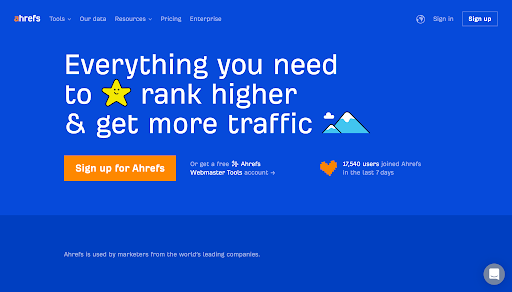
Ahrefs
Offers detailed backlink insights, competitor strategies, and website authority analysis.
Paid
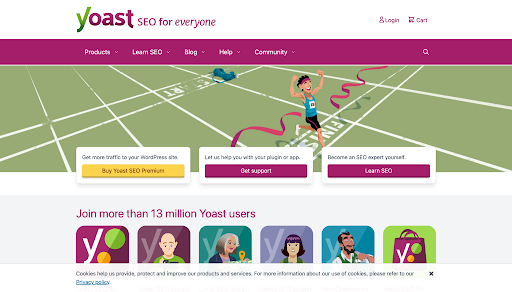
Yoast SEO
Real-time content analysis and meta tag optimization, a friend to WordPress users.
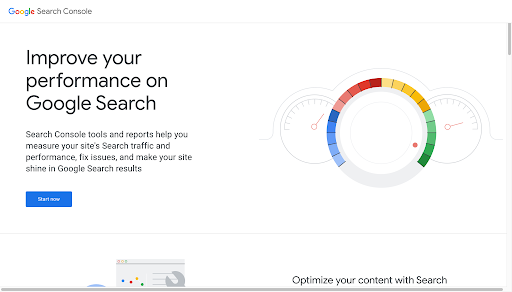
Features: Provides insights into your website’s performance, indexing status, and mobile usability.
Benefits: Helps identify issues, monitor backlinks, and track search traffic.
Pricing: Free tool offered by Google.
Expert Insight on How to Use Google Search Console: It is considered the best tool for identifying website issues. Its comprehensive features allow you to uncover indexing problems and monitor your site’s performance.
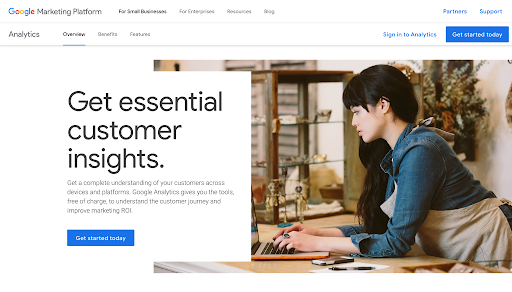
Features: Offers comprehensive data on website traffic, user behavior, and conversions.
Benefits: Helps in-depth analysis, goal tracking, and audience segmentation.
Pricing: Free tool with advanced features available in Google Analytics 360.
Expert Insight: Google Analytics is one of the most popular SEO tools used for data analysis and reporting. It allows you to track organic traffic, keyword rankings, and conversions, which are crucial SEO reporting metrics.
Features: Comprehensive suite for keyword research, competitor analysis, and site auditing.
Benefits: Assists in identifying profitable keywords, monitoring competitors, and optimizing content.
Pricing: A paid tool with different subscription plans.
Expert Insight: SEMrush is highly regarded for its wide range of features, including competitor analysis and keyword research. It provides valuable insights that can shape your SEO strategy.
Features: Focuses on backlink analysis, competitor research, and keyword tracking.
Benefits: Provides detailed insights on backlinks, organic search traffic, and content gaps.
Pricing: A paid tool with various pricing tiers.
Expert Insight: Ahrefs is known for its comprehensive backlink analysis. It helps you understand your competitors’ strategies and identify opportunities for improving your website’s authority.
Benefits: Offers real-time content analysis, XML sitemap generation, and meta tag optimization.
Pricing: Free version is available, with advanced features in the premium version.
Expert Insight: Yoast SEO is a popular choice for WordPress users. It provides valuable on-page optimization suggestions and ensures your content meets SEO best practices.
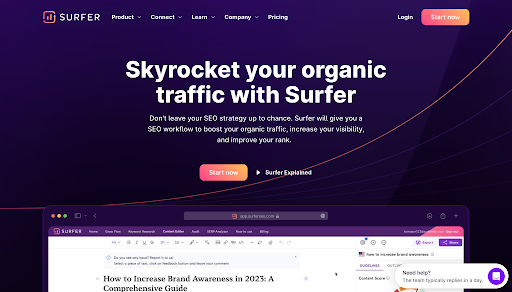
Features: Helps optimize content for search engines using data-driven recommendations.
Benefits: Provides analysis of top-ranking pages, content length suggestions, and keyword density.
Pricing: A paid tool with different subscription options.
Expert Insight: Surfer SEO is known for its data-driven approach to content optimization. It offers insights into how top-ranking pages are structured, helping you create content that performs well in search engine rankings.
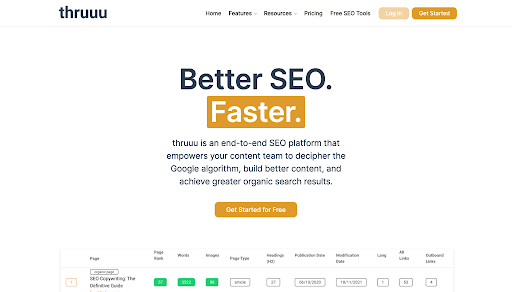
Pricing: Free tool with additional paid features available.
Expert Insight: THruuu provides valuable insights into keyword research and content analysis. It helps you uncover relevant keywords and analyze competitor content to enhance your SEO strategy.
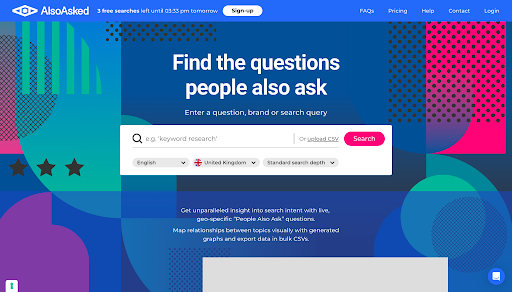
Features: Provides insights into related questions and topics for content optimization.
Benefits: Helps generate content ideas, improve user experience, and expand on relevant topics.
Pricing: Free tool with advanced features available in the premium version.
Expert Insight: AlsoAsked is a useful tool for content optimization. It allows you to explore related questions and topics, helping you create comprehensive and valuable content that satisfies user intent.
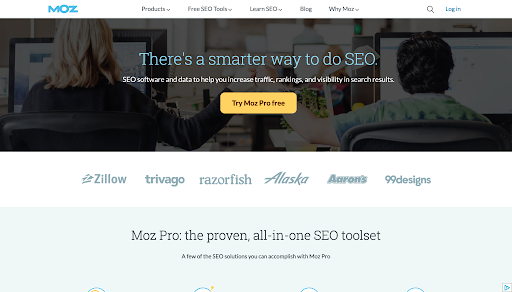
Features: Suite of SEO tools, including keyword research, rank tracking, and link analysis.
Benefits: Assists in optimizing on-page elements, monitoring backlinks, and tracking rankings.
Pricing: A paid tool with different subscription plans.
Expert Insight: Moz offers a comprehensive suite of SEO tools that can support various aspects of your SEO strategy. It provides valuable insights into keyword research, on-page optimization, and link analysis.
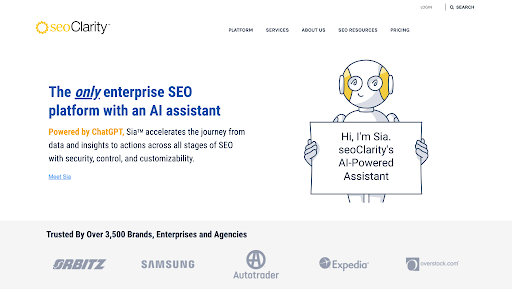
Features: Offers advanced SEO analytics, keyword tracking, and content optimization tools.
Benefits: Provides data-driven insights for keyword strategies, competitive analysis, and content performance.
Pricing: Enterprise-level tool with customized pricing based on requirements.
Expert Insight: SEO clarity is one of the best tools for enterprise SEO, offering advanced analytics and data-driven insights. It can help you optimize keyword strategies, analyze competitors, and track the performance of your content, making it an essential tool for developing your enterprise SEO strategy.
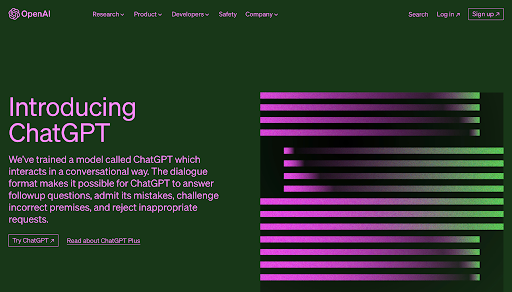
Features: AI-powered chatbot with natural language processing for human-like conversational dialogue.
Benefits: Versatile tool for various applications, including keyword research, on-page optimization, and link analysis.
Pricing: A paid tool with different subscription plans.
Expert Insight: ChatGPT, developed by OpenAI, has gained significant popularity and is being utilized by major brands for generating ad and marketing copy, according to CNBC.
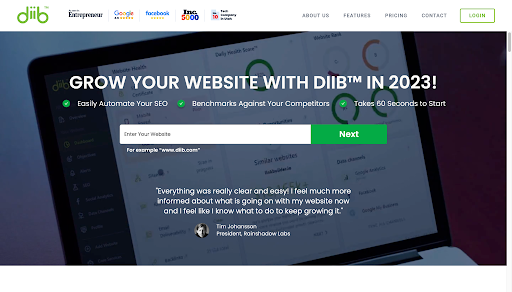
Features: Diib is an AI-powered SEO tool that offers in-depth insights to enhance website performance, tracks existing SEO keywords, and generates new ones to optimize online visibility.
Benefits: Versatile tool for various applications, including keyword research, on-page optimization, and link analysis.
Pricing: A paid tool with different subscription plans.
Expert Insight: Diib is renowned for its user-friendly interface and simplicity. It works as an automated SEO tool that scans websites and offers actionable insights to enhance SEO, speed, security, and user experience.
An SEO tool is essential for optimizing your website and staying competitive in search engine rankings. Without one, you’re essentially flying blind—missing out on valuable data, insights, and optimization opportunities.
1. Understand How Your Website is Performing
SEO tools help you track critical metrics like:
Organic traffic levels
Keyword rankings
Click-through rates (CTR)
Bounce rates
Site speed
2. Get Actionable SEO Insights
With the help of an SEO tool, you can:
Identify technical issues (like broken links or crawl errors)
Spot duplicate content
Optimize metadata (titles, descriptions, headers)
Improve internal linking
3. Discover the Right Keywords
Good SEO tools provide keyword research capabilities:
Find high-traffic, low-competition keywords
Analyze what your competitors rank for
Uncover long-tail opportunities
4. Analyze and Build Backlinks
Backlinks are a major ranking factor. SEO tools let you:
Identify new backlink opportunities
This strengthens your site’s authority and trustworthiness.
5. Track Your Progress Over Time
With ongoing reporting and rank tracking, SEO tools allow you to:
Monitor keyword performance
Measure ROI from SEO campaigns
Set benchmarks and goals
6. Stay Ahead of Competitors
Competitor analysis tools help you:
See what content drives their traffic
Understand their backlink strategy
Learn from their SEO wins and gaps
Factors to Consider When Choosing an SEO Tool:
Choosing the right SEO tool is a critical decision that can significantly impact your digital marketing success. With so many tools available—each offering unique features and price points—it’s easy to get overwhelmed. To ensure you’re investing in the right solution, here are some key factors to consider:
1. Define Your SEO Goals
Before diving into tool options, start by identifying what you need to accomplish. Are you trying to improve your website’s technical health? Focus on keyword research? Track competitors? Your specific goals—whether it’s growing organic traffic, ranking for new keywords, or building backlinks—should guide your choice. A tool that aligns with your SEO priorities will offer more value than one packed with features you don’t actually need.
2. Understand the Tool’s Core Strengths
Not all SEO tools are created equal. Some are all-in-one platforms, while others specialize in particular areas like content optimization, technical SEO, or link building. For example, Ahrefs and SEMrush are excellent for competitor analysis and backlink tracking, while Screaming Frog is perfect for technical site audits. Choose a tool whose core strengths match your strategic focus.
3. Ease of Use and User Experience
Even the most powerful tool is only helpful if you and your team can use it efficiently. A steep learning curve can slow down progress and cause frustration. Prioritize tools with a clean interface, intuitive navigation, and solid documentation. Bonus points if it comes with onboarding guides or an active support community.
4. Data Accuracy and Update Frequency
SEO relies on up-to-date data to make informed decisions. Ensure the tool you choose provides accurate keyword rankings, backlink metrics, and site health reports. Tools that update frequently offer more reliable insights—especially in fast-moving industries or competitive niches.
5. Budget and Pricing Flexibility
Your budget plays a huge role in your decision, especially for startups and small businesses. Some tools offer robust free plans, while others can be quite costly with advanced features. Consider whether the tool’s pricing matches its value and whether it offers scalability as your SEO efforts grow.
6. Integration with Other Tools
SEO tools shouldn’t work in isolation. Look for platforms that integrate smoothly with other essential tools in your marketing stack—like Google Analytics, Search Console, your CMS, or reporting tools. These integrations streamline your workflow and allow you to extract more comprehensive insights.
7. Collaboration and Team Access
If you work in a team or agency setup, user permissions and collaborative features are essential. The ability to assign roles, share dashboards, and collaborate on reports can make your SEO process more efficient and organized.
8. Reporting Features
Whether you’re reporting to a client, your boss, or yourself—clear, customizable reporting is key. Look for tools that let you automate, export, and customize reports with relevant KPIs. This not only saves time but also makes your SEO efforts easier to communicate and justify.
9. Customer Support and Community
When things go wrong (and they will), good support makes a difference. Choose tools with responsive customer support, extensive knowledge bases, and active user communities. Platforms that invest in education and user success tend to deliver better long-term value.
Conclusion
To achieve a well-optimized website and top rankings in SERPs, it’s crucial to understand your specific SEO needs. Consider your goals, track relevant metrics, and choose the right SEO tools. Starting with established tools and gradually experimenting with newer ones, alongside leveraging enterprise SEO services, ensures you’re equipped to navigate the dynamic digital landscape successfully. Continuously monitor and adjust your strategy for long-term SEO success.
Remember, investing in the right SEO tools can enhance your business’s digital presence.
Have you chosen the right SEO tools for your business? Share your experiences with us in the comments section below. Get ahead in 2025 with the best SEO tools! Contact Techmagnate to streamline your efforts.
Frequently Asked Questions (FAQs)
What is SEO and why is it important for my website?
SEO (Search Engine Optimization) helps your website show up on Google when people search for related topics. It improves your visibility, brings in more visitors, and helps grow your business online—without paying for ads.
What are backlinks and why are they important for SEO?
Backlinks are links from other websites to yours. They act like votes of trust in Google’s eyes. The more quality backlinks you have, the higher your site can rank in search results, boosting traffic and credibility.
What is the best SEO plugin for WordPress?
The most popular SEO plugin for WordPress is Yoast SEO. It helps you optimize content, meta tags, keywords, and readability. Alternatives like Rank Math and All in One SEO are also great and beginner-friendly.
How long does it take to see results from SEO?
SEO isn’t instant. It usually takes 3 to 6 months to start seeing results, depending on your website’s age, competition, and effort. But once it kicks in, the benefits are long-lasting and cost-effective.
Can SEO be done without a website?
Technically, yes. You can optimize Google Business Profiles, YouTube channels, or social media pages. But having a website gives you more control and better long-term SEO results.
What tasks can we perform with SEO tools?
SEO tools help you find keywords, check rankings, fix site issues, spy on competitors, track backlinks, and improve your content. They make SEO easier, faster, and more effective—especially for beginners and small businesses.
How does Google Search Console help with SEO?
Google Search Console helps with SEO by showing how your site performs on Google. It tracks keyword rankings, site traffic, and backlinks, and alerts you about errors like broken pages or mobile issues. You can also submit sitemaps and request indexing, helping your pages appear faster in search results. It’s free and beginner-friendly.
Neha Bawa is the Director of Brand Marketing at Techmagnate. She has worked in Digital Marketing since 2012 and has specialised in content creation. She has earned a Master’s degree in Interactive Communications from Quinnipiac University in Connecticut, U.S.A. Her interests lie in creating great content, docs, and working towards sustainability through biodiversity.
Get the most valuable search related insights about leading brands, trending keywords, search volumes, fastest growing categories, city-level insights and much more!
It has come to our notice that fraudulent job offers are being circulated on the internet through messaging apps like WhatsApp and Telegram, which falsely claim to be from Techmagnate. We take this matter seriously and would like to caution all candidates to be wary of such postings.
Please Note That –
We do not charge any fees/security deposit/payment from candidates, irrespective of the professional experience they hold, for job applications or interviews
Official communication channels include our website and verified social media accounts, primarily LinkedIn.
Kindly double-check the domain name – @techmagnate.com – in the email address
We follow a transparent and ethical approach for hiring/onboarding supported by proper documentation.
Ensure that you only apply through verified channels to avoid being scammed. We also recommend that you exercise caution when sharing personal information or financial details with any job posting or recruitment agencies claiming to represent us.
We want to ensure that potential candidates interested in joining Techmagnate have a safe and positive experience.
If you find that someone that fits the description above has reached out to you, please notify us immediately at jobs@techmagnate.com.
 Important Alert:
 Important Alert:



















 6th Feb | Invite-only


