Beware of fake job offers and payment requests. We only use official email IDs and never conduct interviews on messaging apps.Beware of fake job offers and payment requests. We only use official email IDs and never conduct interviews on messaging apps.
Summary: This guide highlights SEO best practices: keyword research, on-page and technical SEO, content aligned with search intent, and authoritative backlinks to improve rankings. Emphasizing page speed, content freshness, and structured data for rich snippets enhances SEO performance, driving higher organic traffic and better user engagement.
Key Takeaways:-
Tailoring content to address specific user queries enhances website visibility and engagement, ensuring business relevance and value.
Take a comprehensive approach to SEO, covering keyword placement, URL structure, internal links, page speed, and user experience to boost organic rankings.
Prioritize creating unique, valuable content to build trust and attract organic traffic through SEO optimization.
Regularly monitor SEO performance, user experience, and content engagement metrics, and adjust strategies to stay ahead of evolving search engine algorithms and user preferences.
Staying updated with the latest SEO best practices is essential for businesses aiming to improve their online visibility and search rankings in 2025. As search engine algorithms evolve, so must your strategies. From technical optimizations to high-quality content and user experience, every element plays a role in how your website performs.
This guide outlines the most effective and current SEO techniques to help you stay ahead of the competition and drive meaningful traffic to your site. Whether you’re updating an old strategy or building one from scratch, these practices are key to long-term digital success.
Table of Contents
Why SEO Matters in 2025
SEO (Search Engine Optimization) is crucial for any business or website aiming to grow its online presence. Here’s why it matters:
Increases Organic Traffic – SEO helps your website appear in top search results, driving free, targeted traffic without the need for paid ads.
Builds Credibility and Trust – Websites that rank higher in search engines are often seen as more trustworthy and authoritative by users.
Improves User Experience – SEO involves optimizing site speed, mobile usability, and clear navigation—factors that enhance the overall user experience.
Supports Long-Term Growth – Unlike paid campaigns, SEO delivers lasting results and compounding benefits over time, providing a strong foundation for sustainable growth.
Higher ROI Compared to Paid Ads – While SEO takes time, it often brings a better return on investment as organic traffic continues to grow without ongoing ad spend.
Helps You Understand Your Audience – SEO tools and analytics give valuable insights into user behavior, search trends, and preferences, helping you refine your marketing strategy.
What Are SEO Best Practices?
SEO best practices are a set of strategies and techniques designed to enhance a website’s visibility in search engine results. These practices ensure that your website ranks higher in search engines like Google, Bing, and others, leading to more organic traffic. By aligning your efforts with measurable SEO KPIs and following these best practices, websites can improve both their search engine rankings and overall user experience.
Discover What Your Customers Search ForDiscover What Your Customers Search For
Get insights on evolving customer behaviour, high volume keywords, search trends, and more.
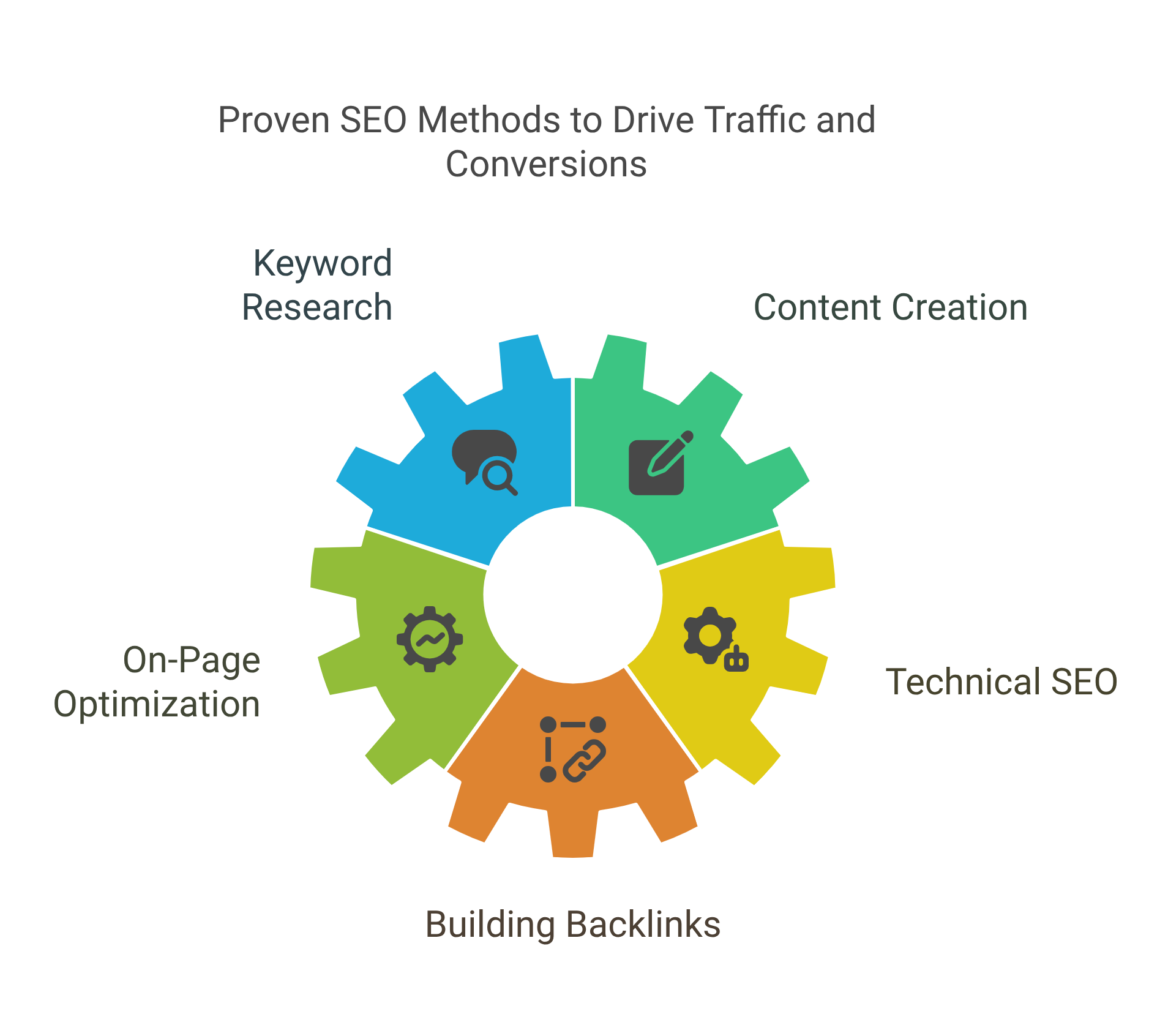
Proven SEO Methods to Drive Traffic and Conversions
Keyword Research
It is crucial for SEO success. Use tools like Google Keyword Planner, SEMrush, or Ahrefs to find high-volume keywords with low competition. These tools help you uncover keywords your target audience is actively searching for. Ahrefs, and SEMrush also provide metrics like keyword difficulty and search volume, which can guide you in selecting the right keywords.
In ai trend, focus on search intent of users, long-tail queries, and AI-assisted keywords that users ask conversationally (e.g., “what’s the best SEO strategy for small businesses in 2025?”).
Content Creation
Regularly publishing high-quality, relevant content based on SEO practices keeps your audience engaged and can improve your search rankings. In fact, mastering SEO writing techniques can significantly help in creating content that not only resonates with your audience but also ranks well in search engines.
Leverage AI-assisted writing tools for research, but maintain human oversight for originality, tone, and EEAT alignment
On-Page Optimization
To optimize on-page elements, use tools like Yoast SEO for WordPress or RankMath to easily edit title tags, meta descriptions, and heading tags. These tools ensure your content is structured for both SEO and user engagement. They also provide keyword suggestions and readability analysis.
Technical SEO
Optimizing the technical aspects of your website, such as improving page load speed, mobile-friendliness, and ensuring proper indexing.
Building Backlinks
Building authoritative backlinks is critical for SEO. Here’s how you can do it:
Link Baiting: Creating valuable resources, such as infographics for SEO, is an effective strategy for attracting backlinks. Infographics not only simplify complex data but also enhance engagement, making them more likely to be shared and linked to by others in your industry.
Skyscraper Technique: Find popular content in your niche, create something more detailed, and reach out to sites linking to the original content, offering them your superior version.
Broken Link Building: Use any backlink checker tools to identify broken links in your niche, and if you find toxic links, use the Google Disavow Tool to prevent them from affecting your website’s ranking.
When these best SEO methods are implemented they impact the website performance significantly including improved search rankings, increased website traffic, and higher conversion rates. All these efforts ultimately enhance your brand’s visibility and credibility online.
12 Proven SEO Practices to Improve Organic Traffic
Here are the recommended 12 SEO best practices that will get your content to rank higher on search engines – further improving your website’s position online, and driving sustainable business growth.
1. Craft Content Aligned with Search Intent
Creating content that aligns with user search intent is one of the critical seo best practices. By understanding what your target audience is actively searching for, you can address their specific queries with the help of content creation. But to create something meaningful, it’s imperative to understand the intent behind those searches. These search intents are categorized into 4 major types;
Informational Intent: When users seek knowledge or answers to specific questions, such as “What is SEO?” or “How to improve website traffic?”
Navigational Intent: When users look for a specific website or page, like “seo services by Techmagnate”
Commercial Intent: When a user wants to know about products or services before making a purchase decision, e.g., “best SEO tools 2025.”
Transactional Intent: When the user is ready to make a purchase or take an action, such as “SEO course fees” or “SEO services packages.”
For one of our clients, a major home loan provider in India, we effectively aligned content with search intent during the rebranding effort. They were facing the challenge of maintaining website traffic and search engine rankings amidst heightened competition. To solve the issue, our SEO experts implemented a strategic SEO approach customized for our client’s industry.
Use AI-powered keyword clustering tools like Surfer SEO, Clearscope, or ChatGPT-based SEO assistants to group keywords by intent and optimize topical relevance.
This comprehensive approach resulted in a remarkable 239% increase in website traffic and a 285% rise in top-ranking keywords. Ultimately, highlighting the significance of aligning content with search intent for successful outcomes.
2. Prioritize Inserting Main Keyword in the Content
Strategic placement of primary keywords within your content remains important for successful international SEO practices. By incorporating your main keyword strategically at the beginning of your content, preferably within the first paragraph or heading, you signal to search engines the relevance and context of your content. This practice enhances a website’s chances of ranking higher for targeted keywords
Placing the main keyword early in your content can signal Google’s E-E-A-T system, prompting it to analyze your piece and potentially boost its rankings. Here are a few ways to boost organic ranking:
Use the main keyword in the first 25-100 words of your content, setting a flow to your resource and making the search engine know what it is about.
Do not stuff the keyword meaninglessly, understand that the content needs to be relevant and justify the use of your main keyword.
3. Create Unique Titles, Descriptions, and Content
In content marketing, originality stands as a mark of differentiation. Craft compelling titles, meta descriptions, and content that captivate and resonate with your audience. Avoid common or duplicate content, as it lowers your website’s authority reducing its visibility in search engine results.
The first step is to avoid the duplication of content. Direct or indirect duplication may lead to content being observed as irrelevant. Including the landing pages, descriptions, image alt texts, category pages, and title tags and making content authentic and unique can increase website authority. Here are a few steps to follow:
Make sure that every title and meta description accurately reflects the content of the page, and includes relevant keywords to improve search engine visibility. Eye-catching titles and descriptions attract clicks and provide valuable information to users about the page content if written informatively.
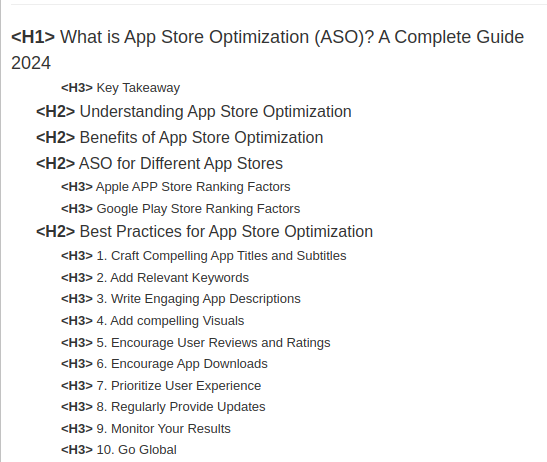
Utilize descriptive headings (H1, H2, etc.) that summarize the content effectively and incorporate relevant keywords. Structuring headings in a hierarchy improves readability for users and helps search engines understand the organization of the content, thereby enhancing its visibility in search results.
4. Optimize SEO Heading Tag Structure
By structuring your content with appropriate heading tags (H1, H2, H3, etc.), you improve readability and also provide search engines with important cues about content hierarchy and relevance. Ensure consistency in heading tag usage and align them with targeted keywords to increase SEO effectiveness.
Try to include primary keywords at the beginning of the title. This can bring the search engine’s attention to the website when a search is made, giving the website a competitive advantage.
Avoid the stuffing of irrelevant terms or jargon in your title. Remember, the title needs to be easy to comprehend for readers as well as search engines.
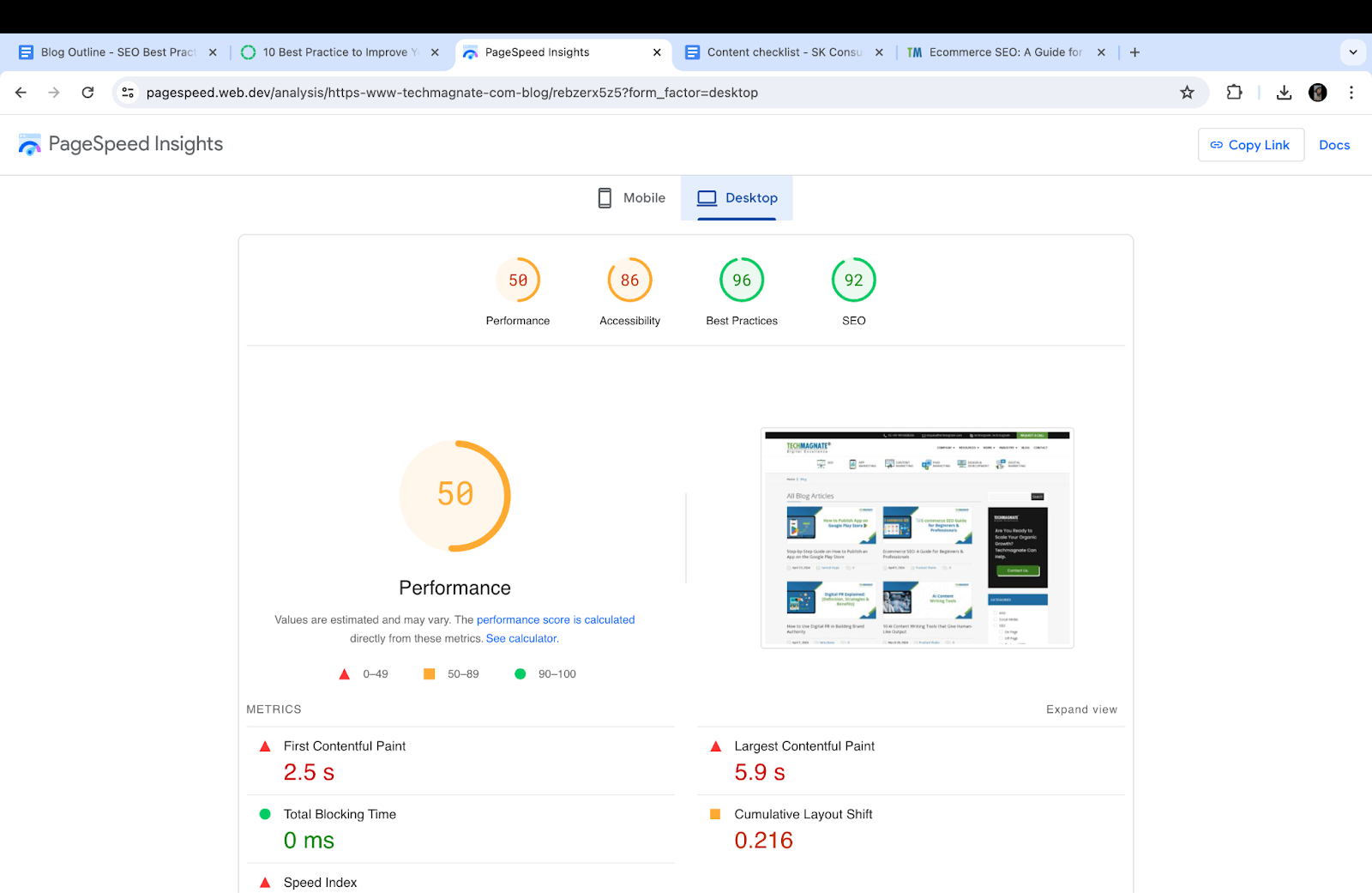
5. Improve Your Website’s Page Loading Speed
Website speed is essential for both user experience and search engine rankings. A slow site can frustrate visitors and can even lead to penalties from search engines like Google. Google PageSpeed Insights is an invaluable tool for assessing page speed. It provides actionable steps to optimize core web vitals such as Largest Contentful Paint (LCP), First Input Delay (FID), and Cumulative Layout Shift (CLS):
Largest Contentful Paint (LCP): This metric measures the loading performance of the main content on your page. Aim for an LCP of 2.5 seconds or less to ensure users see content quickly.
First Input Delay (FID): FID gauges interactivity and responsiveness. A delay of less than 100 milliseconds is ideal, allowing users to engage with your site seamlessly.
Cumulative Layout Shift (CLS): This measures visual stability. A CLS score of less than 0.1 indicates a stable layout, minimizing unexpected shifts that could disrupt user experience.
To improve website speed, invest in robust hosting infrastructure, optimize image sizes, and implement caching mechanisms. Compress high-resolution images to decrease loading times, and choose a lightweight theme optimized for speed.
Tools like Page Speed Insights can help assess your site’s loading performance and provide recommendations for optimization. By prioritizing these factors, you’ll boost user satisfaction and improve your site’s SEO performance.
6. Implement Effective Internal Linking Structure
Internal linking represents a fundamental aspect of website architecture and SEO optimization. By strategically linking relevant pages within your site, you establish a logical content hierarchy and facilitate seamless navigation for users. Additionally, internal linking distributes link equity across your site, ensuring that valuable content receives appropriate visibility and recognition from search engines. For a data-driven analysis of your SEO performance, use our SEO ROI Calculator to measure the financial impact of your efforts. Apply best practices in internal linking, such as using descriptive anchor text and prioritizing relevance and context.
Create content that aligns with the user experience funnel which means that from the current page what will you want your user to know or do next? That is where the next page has to be linked to push the user to the bottom of the funnel.
Avoid general information, and be clear about where the click is leading. Create clear and descriptive anchor texts.
URL structure plays an important role in both user experience and search engine optimization. Clear, concise, and descriptive URLs improve navigability and comprehension, enabling users and search engines alike to differentiate the content of your pages.
Avoid confusing or cryptic URLs, opting instead for straightforward and intuitive structures that incorporate targeted keywords where applicable. By optimizing your URLs for SEO, you enforce content relevance and accessibility, thereby enhancing your website’s organic visibility and traffic.
Here are a few ways to structure the URLs effectively:
Add clear, descriptive, and limited terms to your URL. Ensure that it explains the scope of content without making it unnecessarily long and chaotic.
Avoid using dynamic parameters like query strings and session IDs, search engines prefer URLs that can be easily crawled and indexed.
8. Enhance User Experience
User experience (UX) serves as a foundation of SEO success, exerting a strong influence on visitor engagement and retention. Invest in intuitive navigation, responsive design, and interactive elements to extend a positive browsing experience. Prioritize mobile optimization to accommodate the growing prevalence of mobile devices in online interactions. By aligning UX principles with SEO objectives, you create a seamless and enjoyable journey for users, thereby enhancing site performance and search engine rankings:
Here are a few ways to improve user experience:
Include data-driven insights and user segmentation techniques to deliver personalized recommendations, product suggestions, and content recommendations. By providing relevant and customized experiences, you can improve user engagement and foster long-term loyalty.
Mobile optimization is no longer optional—it’s essential for SEO. Use Google’s Mobile-Friendly Test to assess whether your site is mobile-optimized. Make sure your design is responsive, ensuring that elements resize properly on smaller screens. Google Analytics can show you mobile vs. desktop traffic, helping you spot issues that may affect user experience on mobile devices.
9. Establish Authoritative Backlinks
Establishing backlinks from external websites is crucial for signaling trust and authority to search engines. Focus on acquiring high-quality backlinks from reputable sources within your industry, especially those that are geographically relevant to your target audience. This relevance enhances your chances of ranking higher in local search results.
Acquiring backlinks from local publications and websites is vital for enhancing your local presence. These links help search engines recognize your business as part of the community, improving your visibility in the choice of your physical area.
10. Develop Valuable Content
The success of an effective SEO strategy relies on creating valuable and engaging content that adheres to SEO best practices to rank content higher. Invest time in research, analysis, and creativity to produce content that meets the needs and interests of your target audience. Use various formats, such as articles, infographics, videos, and podcasts, to cater to different learning styles.
By consistently providing useful and shareable content, you boost audience engagement, loyalty, and advocacy, which in turn enhances your website’s organic visibility and traffic potential. Partnering with professional SEO services can further refine this strategy, ensuring content aligns with search engine algorithms and maximizes reach to target audiences.
Google’s Quality Rater Guidelines have evolved to emphasize E-E-A-T, which stands for Experience, Expertise, Authoritativeness, and Trustworthiness. This framework ensures that content meets high-quality standards. To create useful content, focus on delivering data-driven insights, reports, and existing research that benefit users and are easy to understand.
Additionally, integrate content marketing to increase social engagement. When audiences interact with your content, Google recognizes its value and may improve its ranking, further enhancing your organic traffic.
11. Content Freshness
Regularly updating content is a vital SEO practice that enhances relevance, signaling to search engines that your website is fresh and updated, improving rankings. As mentioned in the Google search leak documents, search engines prioritize fresh, relevant content to rank that meets current trends and user needs. Here are some key practices to ensure content freshness:
Regular Reviews: Schedule periodic assessments of your existing articles and resources to identify outdated information.
Update Information: Revise statistics, facts, and examples to reflect the latest data.
Add New Insights: Incorporate recent developments or trends in your industry to enhance relevance.
Promote Engagement: Encourage user interaction through comments or shares, signaling to search engines that your content is helping readers.
By maintaining content freshness and implementing SEO best practices for content, you signal search engines that your site is active and relevant – positively impacting your rankings and attracting more organic traffic.
12. Structured Data (Schema Markup)
Implementing structured data, or schema markup, enhances your website’s SEO by helping search engines understand the context of your content. This can lead to more informative search results and better visibility. It can be done by:
Improved Context: Schema markup provides additional details about your content, such as articles, events, and products.
Rich Snippets: Use structured data to create rich snippets, which can display ratings, reviews, and other engaging information in search results.
Enhanced Click-Through Rates: Rich snippets can make your listings more appealing, increasing the likelihood of users clicking through to your site.
Ongoing Updates: Regularly review and update your schema markup to align with current SEO best practices and changes in search engine algorithms.
For Google’s AI Overviews, schema markup helps ensure your content is eligible for inclusion in AI-generated summaries.
By implementing structured data, you can improve your content’s visibility and click-through rates – ultimately boosting your SEO rankings.
Common SEO Mistakes to Avoid When Implementing Best Practices
When you’re trying to improve your website’s SEO, it’s easy to make mistakes that can hurt your rankings. Avoiding these common SEO mistakes can save you time and help you see better results. Here are some of the biggest mistakes to watch out for:
Keyword Stuffing Using too many keywords in your content may seem like a good idea, but it can make your content sound unnatural and spammy. Instead, focus on using relevant keywords naturally within your text.
Best Practice: Use primary and secondary keywords strategically and naturally within your content. Focus on readability and user value rather than keyword density.
Ignoring Mobile Optimization With most searches happening on mobile devices, it’s crucial to make sure your website is mobile-friendly. Not doing so can lead to a poor user experience and hurt your SEO.
Best Practice: Make sure your website has a responsive design, fast load time, and mobile-optimized layouts that improves user experience across all devices.
Neglecting to Optimize Meta Tags Meta titles and descriptions are key elements for SEO. Missing or poorly written meta tags can lower your click-through rates. Make sure they’re clear, relevant, and optimized with your target keywords.
Best Practice: Write unique, keyword-rich meta titles and descriptions that clearly summarize each page and attract clicks from SERPs.
Focusing Only on Keywords SEO isn’t just about keywords. Content quality, user experience, page speed, and backlinks are all important. Focusing only on one aspect can limit your website’s performance.
Best Practice: Combine on-page, off-page, and technical SEO strategies to achieve balanced growth.
Overlooking Internal Linking Internal links help search engines understand your website’s structure and can improve user navigation. Missing internal links can harm both SEO and user experience.
Best Practice: Add contextual internal links with descriptive anchor text to boost both navigation and SEO performance.
Ignoring User Intent Creating content based solely on keywords without understanding the user’s intent can lead to poor engagement. Always consider what your audience is looking for when creating content.
Best Practice: Map your keywords to search intent (informational, navigational, transactional, or commercial) and create content that directly answers user queries.
Contact us today to implement the best SEO strategies and unlock your website’s full potential for organic growth and success.
Conclusion
In conclusion, implementing SEO best practices, such as keyword research, quality content, on-page optimization, and authoritative backlinks, is key to improving search rankings and driving organic traffic.
Have questions or need help enhancing your SEO strategy?
Contact us online today! Consistently updating content, focusing on user experience, and avoiding common mistakes will ensure long-term SEO success and sustainable business growth.
Frequently Asked Questions (FAQs)
How can I create clean and SEO-friendly URLs?
You can create clean URLs by using targeted keywords and avoiding special characters. Use hyphens to separate words, ensuring they accurately reflect the page content.
What factors affect page speed, and how can I improve it?
Page speed is influenced by server response time, image sizes, backed codes, and browser caching. Improve it by optimizing images, using content delivery networks, and minimizing code.
What is an XML sitemap, and how do I create one?
An XML sitemap is a file that lists your website’s URLs, helping search engines index your pages. Create one using tools like Yoast SEO, then submit it to Google Search Console.
What factors contribute to high-quality content?
High-quality content is engaging, informative, and well-researched. It should meet user needs, use clear language, be free of errors, and include relevant images or videos to enhance understanding.
What are the latest SEO trends and best practices?
Current SEO trends include focusing on user experience, mobile-first indexing, user-generated content, and more. Best practices involve creating valuable content, using structured data, and building authoritative backlinks.
What are the most common SEO mistakes to avoid?
Avoid keyword stuffing, duplicate content, poor mobile experience, and ignoring internal links or meta tags. Regular audits help detect and fix these issues early.
How often should I update or audit my website for SEO?
Perform a full SEO audit every 3 to 6 months. Regular updates to content, backlinks, and technical SEO elements help maintain rankings and adapt to algorithm changes.
How is AI changing SEO best practices in 2025?
AI is transforming SEO by powering personalized search results, automating keyword and content analysis, and shaping Search Generative Experience (SGE). SEO now requires optimizing for AI-driven search engines like Google SGE, ChatGPT, and Perplexity.
How can I optimize my website for AI-powered search results?
Focus on Answer Engine Optimization (AEO) by creating concise, factual, and structured content that directly answers user queries. Use schema markup, improve content depth, and ensure E-E-A-T (Experience, Expertise, Authoritativeness, Trustworthiness) signals are strong.
Sarvesh Bagla is an enterprise SEO expert and industry leader who has driven transformational digital growth for India’s top brands across the BFSI, Healthcare, Automotive, and ECommerce industries. As the Founder and CEO of Techmagnate, he leads large-scale organic search strategies and performance marketing campaigns for businesses looking to succeed in today’s AI-driven search landscape.
A strong advocate for thought leadership, Sarvesh is deeply involved in SEO evangelism and regularly contributes to industry discussions through LinkedIn, webinars, and CMO roundtables. His focus today is on helping brands prepare for an AI-first SEO future (AEO, GEO) and strategies for Large Language Models (LLMs) at the core.
Get the most valuable search related insights about leading brands, trending keywords, search volumes, fastest growing categories, city-level insights and much more!
It has come to our notice that fraudulent job offers are being circulated on the internet through messaging apps like WhatsApp and Telegram, which falsely claim to be from Techmagnate. We take this matter seriously and would like to caution all candidates to be wary of such postings.
Please Note That –
We do not charge any fees/security deposit/payment from candidates, irrespective of the professional experience they hold, for job applications or interviews
Official communication channels include our website and verified social media accounts, primarily LinkedIn.
Kindly double-check the domain name – @techmagnate.com – in the email address
We follow a transparent and ethical approach for hiring/onboarding supported by proper documentation.
Ensure that you only apply through verified channels to avoid being scammed. We also recommend that you exercise caution when sharing personal information or financial details with any job posting or recruitment agencies claiming to represent us.
We want to ensure that potential candidates interested in joining Techmagnate have a safe and positive experience.
If you find that someone that fits the description above has reached out to you, please notify us immediately at jobs@techmagnate.com.
 Important Alert:
 Important Alert: