Beware of fake job offers and payment requests. We only use official email IDs and never conduct interviews on messaging apps.Beware of fake job offers and payment requests. We only use official email IDs and never conduct interviews on messaging apps.
Summary:Using NLP in SEO can significantly improve how your content meets search intent, drives engagement, and boosts visibility. This blog explains why NLP is crucial for your SEO strategies and offers practical steps to seamlessly incorporate it into your best practices.
Key takeaways:-
NLP helps search engines to read, extract and analyse data and establish links between words and phrases that provides context for all search queries.
You can use NLP for speech recognition and linguistic text analysis among other things, to improve your SEO strategies.
BERT is one of the greatest advancements in NLP and significantly enhanced search query interpretation on Google.
By interpreting entities instead of just keywords, NLP makes it easier for Google to understand user intent.
Table of Contents
What Is NLP in SEO?
Natural Language Processing (NLP) in SEO refers to the technology that helps search engines understand and interpret human language more effectively. By bridging the gap between how humans communicate and how search engines process information, NLP plays a crucial role in improving search results.
In the context of SEO, NLP is used to analyze and extract meaning from website content and search queries. This enables search engines like Google to better understand user intent, identify relationships between keywords, and deliver more relevant results.
NLP in SEO works through two main components:
Natural Language Understanding (NLU): Interprets the semantic meaning of text, helping search engines decode the intent and context behind user queries.
Natural Language Generation (NLG): Generates new text or responses based on analyzed content, enhancing the overall user experience.
Uses of NLP in Search:
NLP applications help search engines in deriving insights from text-based unstructured data and also enable information extraction that generates a new understanding of your extracted data. You can build natural language processing examples using TensorFlow, Python or PyTorch.
For several years, Google has been training BERT, MUM and other language models to optimise the interpretation of text, search queries, audio and videos. Before Google started using BERT (Bidirectional Encoder Representations from Transformers), its algorithm couldn’t understand the meanings of all words or their context. This changed after BERT arrived as it now helps Google examine entities and phrases to better understand the search intent of your end user. We will discuss this in detail below.
Discover What Your Customers Search ForDiscover What Your Customers Search For
Get insights on evolving customer behaviour, high volume keywords, search trends, and more.
Understanding customer sentiment: Entity analysis using NLP helps in finding and labelling fields within channels and documents that help in understanding customer opinions a little better and in finding UX and product insights.
Understanding invoices: Understanding common entries in invoices and receipts such as prices or dates can help Google better understand the relationship between payments and requests.
Document analysis: Domain-specific entities contained in individual documents were almost impossible to read before. NLP solves this through custom entity extraction.
Content classification: NLP helps in classifying documents according to domain-specific custom entities and over 700 general categories such as entertainment or sports.
Trendspotting: NLP also helps marketers in extracting relevant brand-related information from online articles, news portals and other platforms. This helps in aggregating news with relevant indexable text.
Healthcare: NLP helps improve clinical documentation, automated registry reporting and research for data mining that significantly accelerates clinical trials.
How Does NLP Work?
In simple terms, NLP works like a computer’s brain that helps it understand and analyze our human language. NLP in SEO enables Google and other search engines to translate these languages and better understand the entities, syntax, sentiment, discourse, and overall semantics of website content and search queries.
The interpretation process of natural language processing starts when a user types a single query into the Google search bar. This could be a question, a keyword, an entity, or even some combination of these. After that, Google’s NLP calculations analyse this query. This entails taking apart the query, understanding its context and identifying user intent.
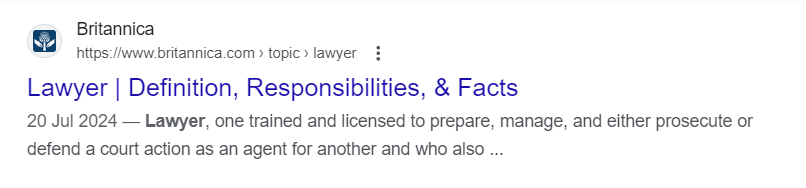
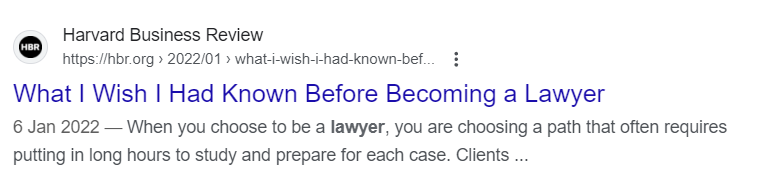
Take a look at these three types of search results from the same keyword.
With the rise of NLP, Google has found it easier to understand what questions mean and what the user could be looking for, and it has used this information to improve and optimise the user’s search experience overall.
Google also performs sentiment analysis on each query to understand the user’s mindset and how they feel. This evaluates the emotional tonality of the query to understand whether it’s positive, neutral or negative. In some instances, Google also classifies the user query into specific topics or clusters which helps deliver a more relevant response.
Based on the analysis of a user query, Google ranks and retrieves SERP results from its cloud. In the past, a user would search for short, keyword-specific words on Google. However, with advancements in NLP in SEO like BERT, users can use natural language to search for anything they want. To make this shift in user behavior possible, search engines needed to understand exactly why a question was being asked.
How Does NLP Affect Content Optimisation and Creation:
Let’s consider an example to understand how NLP works. Imagine you run a business selling homemade accessories.
1. Understand search intent
You would want to rank your business website for the keyword ‘homemade accessories’. Using NLP, Google understands that your user is looking for high-quality accessories made by hand and not factory-made or mass-produced products.
2. Conducting keyword analysis
Using NLP calculations, the search engine connects search terms like ‘accessories’ to other related search terms such as hairbands, bracelets or brooches. The next step would be to create a list of terms and keywords that match your user’s primary intent. Both latent semantic indexing(LSI) and NLP play a key role here. This will give you a list of keywords that you should rank for.
3. Content optimisation
Now that you have the relevant keywords, you need to create content and product descriptions that contain these keywords. This will boost your NLP analysis score and improve your SERP ranking overall. For example, you can create content buckets and landing pages that showcase your unique products. This includes:
Tools used
Quality measures
Workshops
Styling options
Pricing
4. Semantic comprehension
SEO NLP helps Google to grasp the significance and context of words as it evaluates entities, not just individual individual keywords. This would mean that if an end user is looking for hair accessories, Google will understand that this search query is related to handmade accessories and continue to show you related search results.
5. Featured snippet optimisation
Once you have optimised your content and keywords, make sure your website provides enough relevant information about homemade accessories. This makes it easier for Google to pick up this content to include as a snippet at the top of the SERP.
BERT and MUM in NLP
As mentioned before, BERT is considered one of the most important steps forward in SEO and Google search. This update has been designed to optimise search interpretations, initially affecting 10% of Google searches overall.
BERT is critical for query interpretation but also helps with website SERP ranking and featured snippet compilation. It also helps Google to interpret text and questionnaires in text-based media documents.
MUM, which stands for Multitask Unified Model, is an AI-powered algorithm that Google announced in 2021. This multilingual algorithm answers complex searches using multimodal data and then analyses data across media formats.
NLP and SEO Trends to Watch
Understanding content and search queries using entities instead of keywords marked the change from terms to things. Google aims to develop a better understanding of content and search queries semantically. Identifying entities in user searches makes the search intent and meanings of words much clearer. Individual words no longer get interpreted in isolation, but are seen in the context of the search query as a whole.
The importance of search terms in query processing is crucial. The first step is understanding the theme or context of the search query. Once this is clear, Google selects relevant text, images, and videos as potential search results. This becomes more challenging when search terms are unclear or ambiguous.
The future of SEO will be governed by disruptive transformation, driven by AI algorithms, voice searches and mobile-first indexing. Search engines are refining their algorithms using machine learning and AI, which will intensify the focus on delivering personalised, highly relevant search results. As a result, your SEO strategies will need to prioritise user-centric, high-quality content to align with how search engines rank and interpret search results.
NLP in Google Search is Here For a Long Time
When RankBrain came in, it helped interpret search terms and queries through vector space analysis which was never done before. MUM and BERT use NLP, which is a whole new dimension. It helps a Knowledge Graph or other kind of knowledge database to grow scalably, which enhances Google’s semantic search.
Google’s search developments are related closely to BERT and MUM and consequently to semantic search and NLP. In the future, you can expect more entity-based search results to replace phrase-based ranking and indexing.
Make Your SEO Strategy NLP-ready
With the trends in SEO and NLP changing rapidly, you need to keep updating your SEO strategies to align with the latest technology. To stay ahead of your competitors, choose an SEO partner that offers comprehensive SEO services, has years of experience, a team of highly qualified experts, and a proven record of successful clients.
Neha Bawa is the Director of Brand Marketing at Techmagnate. She has worked in Digital Marketing since 2012 and has specialised in content creation. She has earned a Master’s degree in Interactive Communications from Quinnipiac University in Connecticut, U.S.A. Her interests lie in creating great content, docs, and working towards sustainability through biodiversity.
Get the most valuable search related insights about leading brands, trending keywords, search volumes, fastest growing categories, city-level insights and much more!
It has come to our notice that fraudulent job offers are being circulated on the internet through messaging apps like WhatsApp and Telegram, which falsely claim to be from Techmagnate. We take this matter seriously and would like to caution all candidates to be wary of such postings.
Please Note That –
We do not charge any fees/security deposit/payment from candidates, irrespective of the professional experience they hold, for job applications or interviews
Official communication channels include our website and verified social media accounts, primarily LinkedIn.
Kindly double-check the domain name – @techmagnate.com – in the email address
We follow a transparent and ethical approach for hiring/onboarding supported by proper documentation.
Ensure that you only apply through verified channels to avoid being scammed. We also recommend that you exercise caution when sharing personal information or financial details with any job posting or recruitment agencies claiming to represent us.
We want to ensure that potential candidates interested in joining Techmagnate have a safe and positive experience.
If you find that someone that fits the description above has reached out to you, please notify us immediately at jobs@techmagnate.com.
 Important Alert:
 Important Alert:






















 6th Feb | Invite-only


