Beware of fake job offers and payment requests. We only use official email IDs and never conduct interviews on messaging apps.Beware of fake job offers and payment requests. We only use official email IDs and never conduct interviews on messaging apps.
Summary: A multimodal content strategy strengthens brand visibility in AI-driven search by combining text, video, audio, and visuals. It boosts discoverability, engagement, and authority across Google, YouTube, social platforms, and AI answer engines, helping brands stay competitive and future-ready.
Key Takeaways:-
Multimodal content increases visibility across Google, AI Overviews, and answer engines like ChatGPT and Perplexity.
Using diverse formats improves engagement, dwell time, and conversion rates.
Aligning formats with platform behaviour maximises performance and reach.
AI tools accelerate content creation, repurposing, and optimization at scale.
Continuous tracking and refinement ensure consistent growth and better ROI across content formats.
Search engines and AI platforms no longer rely solely on text. They now process videos, images, and audio, delivering richer results. This change brings both challenges and opportunities for brands looking to stay ahead. A multimodal content strategy helps by optimising blogs, videos, podcasts, and other formats for discoverability across Google, AI search, and more. The outcome is broader reach, stronger authority, higher engagement, and better SEO. Marketing leaders looking to future-proof their strategy can use five practical steps to create and execute content that works effectively across different formats while engaging a wide range of audiences.
Table of Contents
What Is a Multimodal Content Strategy?
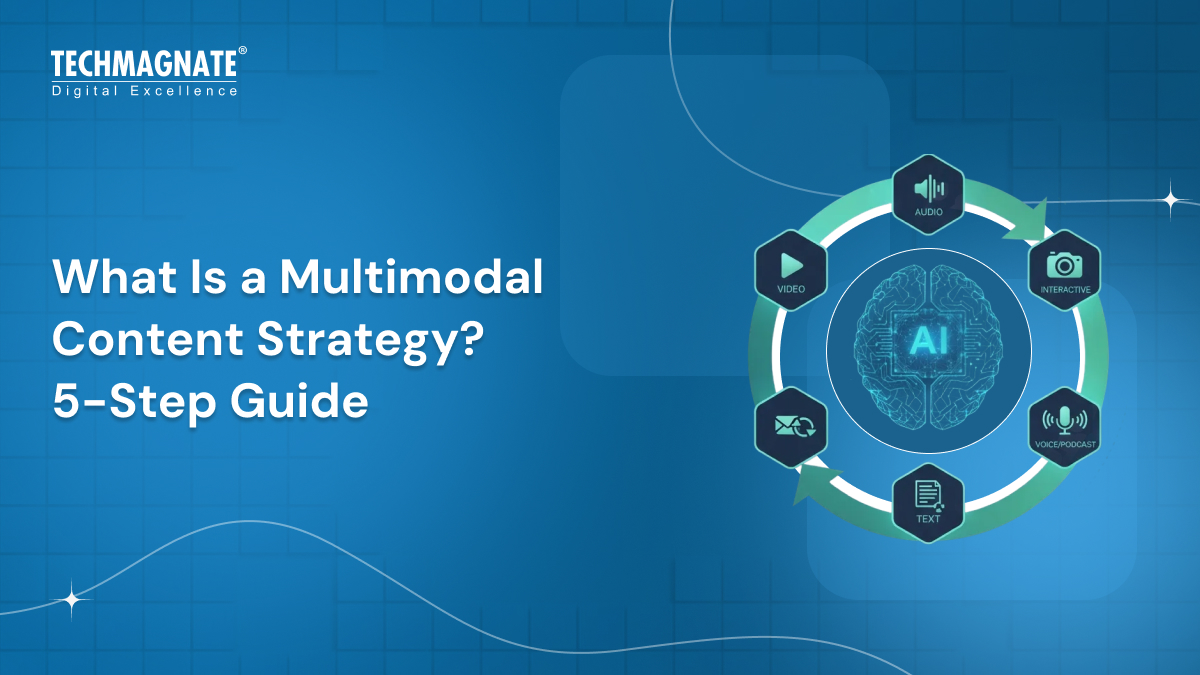
A multimodal content strategy integrates diverse formats (text, video, audio, images, interactive elements) to deliver a cohesive message across multiple channels. This approach uses the strengths of each format to maximize reach, engagement, and search visibility, avoiding reliance on a single format.
Key elements of a multimodal content definition include:
Format diversity: Combining blogs, YouTube videos, podcasts, Instagram Reels, infographics, and carousel posts.
Platform alignment: Matching content types to where your audience consumes information (Google Search, LinkedIn, TikTok, Perplexity).
Message consistency: Ensuring core themes remain unified while adapting tone and structure for each medium.
SEO integration: Optimizing every asset, from alt text to video transcripts, for both traditional and AI-powered search engines.
Multimodal content examples in action:
A fintech company publishes a blog on investment strategies, repurposes it into a YouTube explainer, shares key stats via LinkedIn carousel, and records a podcast episode with industry experts.
An e-commerce brand creates product demo videos, extracts short-form clips for Instagram Reels, writes detailed blog reviews, and adds structured schema markup to boost Google Shopping visibility.
This strategy transforms a single content pillar into multiple touchpoints, improving your chances of appearing in Google AI Overviews, featured snippets, and LLM-generated responses.
Discover What Your Customers Search ForDiscover What Your Customers Search For
Get insights on evolving customer behaviour, high volume keywords, search trends, and more.
Why Multimodal Content Matters for SEO and Brand Visibility
The rise of AI answer engines and multimodal search capabilities has fundamentally changed how users discover content. Google now prioritizes rich results that combine text, video, and images. ChatGPT and Gemini synthesize information from diverse sources to provide comprehensive answers. Bing Copilot integrates visual and textual data to enhance the user experience. Adopting a multimodal SEO strategy ensures that your content is optimised across formats, increasing visibility, improving engagement, and strengthening your brand’s presence in AI-driven search results.
Benefits of a multimodal SEO strategy:
Benefit
Impact
Enhanced discoverability
Content appears across Google Images, Video results, AI Overviews, and answer engines.
Improved engagement
Users spend more time interacting with varied formats (videos boost dwell time by 88%).
Greater accessibility
Transcripts, captions, and alt text make content available to broader audiences.
Stronger authority
Multi-format presence signals expertise and depth to both users and algorithms.
Higher conversion rates
Video and interactive content drive 80% more conversions than text alone.
Multimodal content boosts SEO by addressing zero-click searches. Appearing in featured snippets with videos or images ensures visibility, while AI platforms like Perplexity and Gemini prioritize multimedia sources. For regulated industries, combining formats such as guides, videos, and webinars builds trust and credibility with audiences.
5 Steps to Build a Multimodal Content Strategy
Building a successful multimodal content strategy requires planning, format selection, and optimization. The following five steps provide a structured framework for enterprise marketing leaders to implement this approach effectively.
Step 1: Identify Your Core Content Pillars
Before creating diverse formats, establish the foundational topics that align with your business goals and audience needs. These content pillar strategy themes should reflect your expertise and address high-value search queries.
How to identify content pillars:
Conduct keyword research to uncover topics with strong search volume and intent alignment.
Review customer pain points from support tickets, sales calls, and feedback surveys.
Analyse competitor content gaps to identify opportunities for differentiation.
Align pillars with your product offerings and business objectives.
Example for a fitness brand:
Pillar 1: Nutrition guidance and meal plans
Pillar 2: Workout routines and exercise tips
Pillar 3: Lifestyle and wellness habits
Each pillar becomes the foundation for multiple content formats, ensuring consistency while maximising reach across channels.
Step 2: Choose the Right Formats for Each Channel
Not every format works on every platform. Effective content format selection depends on user search intent, platform behavior, and audience preferences.
Format-to-channel matching guide:
Platform
Best Formats
User Intent
Google Search
Blogs, infographics, and FAQ pages
Research and solutions
YouTube
Long-form videos, tutorials
In-depth learning
Instagram
Reels, carousels, Stories
Quick tips and inspiration
LinkedIn
Articles, case studies, PDFs
Professional insights
Podcasts
Interviews, expert roundtables
On-the-go learning
TikTok
Short-form videos, trends
Entertainment and discovery
Match format to audience behavior:
Use video for complex topics requiring visual demonstration (e.g., product walkthroughs).
Deploy infographics for data-heavy insights that require quick comprehension.
Podcasts can help establish thought leadership while telling engaging, story-driven content.
By aligning formats with platform dynamics, you ensure each piece of content performs optimally where it’s distributed.
Step 3: Integrate AI and LLM Tools for Content Creation
AI content tools have become indispensable for scaling multimodal strategies without increasing resources in proportion. These platforms automate repetitive tasks, assist with content repurposing, and optimize for AI-driven search.
AI tools for multimodal content creation:
ChatGPT & Gemini: Generate blog outlines, video scripts, and podcast topics.
Synthesia: Create AI-generated video avatars for personalized messaging.
Canva AI: Design infographics, social media graphics, and presentations.
Descript: Edit podcasts and videos with AI-powered transcription and editing.
Copy.ai: Repurpose long-form content into social media captions and email snippets.
Automation opportunities:
Automatically transform blog posts into video scripts with AI.
Produce podcast show notes from audio transcripts.
Balancing AI content with human oversight remains vital. Enterprise audiences expect accuracy, authenticity, and brand alignment. At Techmagnate, we support brands with AI-powered SEO strategies that deliver transformational growth while maintaining human-led quality control.
Step 4: Optimize Each Format for Discoverability
Creating multimodal content is only half the equation. Without proper multimodal SEO optimization, your assets won’t surface in search results or AI-generated answers.
SEO best practices by format:
For blog posts:
Include target keywords in H1, H2, and meta descriptions.
Optimize for featured snippets with clear, concise answers.
For videos:
Write keyword-rich titles and descriptions.
Upload accurate transcripts for YouTube and Google indexing.
Add chapter markers for better user navigation.
Use custom thumbnails with text overlays.
For images and infographics:
Write descriptive alt text incorporating relevant keywords.
Use image file names that describe content (e.g., “investment-strategy-infographic.png”).
Compress files for faster load times without sacrificing quality.
Submit images to Google Images via Search Console.
For podcasts:
Publish full transcripts on your website.
Create show notes with timestamps and key takeaways.
Submit to podcast directories (Apple Podcasts, Spotify, Google Podcasts).
Embed audio players on blog posts for cross-format engagement.
AI answer engines like ChatGPT and Perplexity increasingly prioritize content that provides context across formats. When your blog includes an embedded video and downloadable infographic, you increase the likelihood of being cited as a comprehensive source.
Step 5: Track, Measure, and Refine Your Strategy
A successful multimodal content strategy requires continuous monitoring and iteration. Tracking content performance across formats helps identify what resonates with your audience and where adjustments are needed.
Key KPIs to monitor:
Metric
What It Measures
Tools
Engagement rate
Likes, shares, comments, video views
Google Analytics 4, YouTube Analytics
Dwell time
How long users interact with content
GA4, Hotjar
Click-through rate (CTR)
Percentage of impressions leading to clicks
Google Search Console, SEMrush
AI visibility metrics
Mentions in ChatGPT, Gemini, Perplexity
Brand monitoring tools, manual tracking
Conversion rate
Actions taken after content consumption
GA4, HubSpot
Backlinks
Number of external sites linking to content
Ahrefs, Moz
Content performance tracking workflow:
Set baseline metrics for each format (e.g., average video watch time, blog bounce rate).
Conduct monthly reviews to identify top-performing content.
Analyze patterns (Do videos drive more conversions? Do carousels generate higher engagement?).
A/B test headlines, thumbnails, and CTAs to optimize performance.
Repurpose high-performing content into additional formats.
Multimodal strategies amplify results. A high-ranking blog can boost its video, and a podcast can drive traffic to infographics. Track these connections to understand their impact better.
Real-World Example: A Brand Winning with Multimodal Strategy
HubSpot, a leading enterprise brand, is a prime multimodal marketing example. The company combines SEO-optimized blogs, YouTube tutorials, their popular “The Growth Show” podcast, and concise social media content on platforms like LinkedIn and Instagram to reach audiences across formats.
What makes HubSpot’s approach effective:
Pillar Consistency: Core topics such as inbound marketing appear consistently across all formats.
Format Optimization: Content is tailored for each platform (e.g., embedded videos in blogs, video links to blogs, podcast references).
AI-Readiness: Transcripts, schema, and structured data optimize for AI search.
Audience Alignment: Each format targets specific stages of the buyer journey.
HubSpot dominates Google Search, YouTube, and AI platforms by consistently appearing in ChatGPT responses and featured snippets. This strategy of integrating multiple content formats drives their sustained visibility and authority.
The Future of Content Is Multimodal
The move to AI-driven search and multimodal discovery is permanent, as shown by Google’s SGE and ChatGPT’s browsing features. For enterprise marketing leaders, a multimodal content strategy is no longer optional; it’s essential for visibility and engagement.
To succeed, you must adopt diverse content formats, use AI tools, and optimize for discoverability. Thin content is no longer enough. To stay ahead, future-proof your strategy with a full range of formats, and strengthen your execution with our content marketing services, ensuring your message reaches audiences wherever they search.
Sarvesh Bagla is an enterprise SEO expert and industry leader who has driven transformational digital growth for India’s top brands across the BFSI, Healthcare, Automotive, and ECommerce industries. As the Founder and CEO of Techmagnate, he leads large-scale organic search strategies and performance marketing campaigns for businesses looking to succeed in today’s AI-driven search landscape.
A strong advocate for thought leadership, Sarvesh is deeply involved in SEO evangelism and regularly contributes to industry discussions through LinkedIn, webinars, and CMO roundtables. His focus today is on helping brands prepare for an AI-first SEO future (AEO, GEO) and strategies for Large Language Models (LLMs) at the core.
Get the most valuable search related insights about leading brands, trending keywords, search volumes, fastest growing categories, city-level insights and much more!
It has come to our notice that fraudulent job offers are being circulated on the internet through messaging apps like WhatsApp and Telegram, which falsely claim to be from Techmagnate. We take this matter seriously and would like to caution all candidates to be wary of such postings.
Please Note That –
We do not charge any fees/security deposit/payment from candidates, irrespective of the professional experience they hold, for job applications or interviews
Official communication channels include our website and verified social media accounts, primarily LinkedIn.
Kindly double-check the domain name – @techmagnate.com – in the email address
We follow a transparent and ethical approach for hiring/onboarding supported by proper documentation.
Ensure that you only apply through verified channels to avoid being scammed. We also recommend that you exercise caution when sharing personal information or financial details with any job posting or recruitment agencies claiming to represent us.
We want to ensure that potential candidates interested in joining Techmagnate have a safe and positive experience.
If you find that someone that fits the description above has reached out to you, please notify us immediately at jobs@techmagnate.com.
 Important Alert:
 Important Alert:

















 6th Feb | Invite-only


