Beware of fake job offers and payment requests. We only use official email IDs and never conduct interviews on messaging apps.Beware of fake job offers and payment requests. We only use official email IDs and never conduct interviews on messaging apps.
Summary: If you keep yourself updated with the latest news and updates from Google, you must already know about the Google Algorithm Leak Document. If not, we’ll tell you what it is, what it contains, and how it affects the future of SEO.
How Google’s search algorithm functions has always been a big mystery. Over the years, SEOs have done their bit with trying to analyze and decipher the algorithm – and up until now, following the widely understood best practices has been the norm.
However, all that seems set to change, with a whole new twist in the SEO plot. Earlier this year, in May 2024, almost 2569 pages of internal Google search documentation were leaked online (source: Search Engine Journal). This one act sent the whole SEO industry into shockwaves. But why the confusion? Mostly because there’s a lot to read through.
But we’ve done the work so you don’t have to. Our SEO experts have taken the time to dissect the leaked documents and the industry’s analysis to present you with a “quick view” version with the necessary next steps.
After spending a couple of hundred hours researching the leak, we’re ready to share what needs immediate attention from the documents and what can take a little back seat.
Andrew Ansley from Search Engine Land read all the ranking factors and summarized them into a 40-page PDF. Some surprising information he shared from the leak relates to the misconceptions about ranking factors we’ve held for a while.
Some of the key insights he shared from the leaked documents were:
Discover What Your Customers Search ForDiscover What Your Customers Search For
Get insights on evolving customer behaviour, high volume keywords, search trends, and more.
Google has seven different types of PageRank, the most popular being ToolBarPageRank.
Google has a specific method of identifying the following business models: news, YMYL, personal blogs (small blogs), ecommerce, and video sites. It is unclear why Google is specifically filtering for personal blogs.
The most important components of Google’s algorithm appear to be navBoost, NSR, and chardScores.
Google uses a site-wide authority metric and a few site-wide authority signals, including traffic from Chrome browsers.
Google uses page embeddings, site embeddings, site focus, and site radius in its scoring function.
Google measures bad clicks, good clicks, clicks, last longest clicks, and site-wide impressions.
Clearly, there’s a lot to take in with these leaked documents.
We’ve written this blog post to keep things easy and digestible for everyone who has to contend with organic marketing – and divided it into three main sections:
Lastly, we’ll cover what the leak reveals about on-page optimization and user behavior
The Google Leak and Content Optimization: 6 Key Critical Factors
1. Content Effort Score
According to an article by the Search Engine Journal on Google’s search documentation leak, the Content Effort Score is Google’s attempt to determine how much human effort has gone into creating content.
For instance, original translations, custom-built functionalities, or step-by-step guides with screenshots to explain a process are valued more than AI-generated content with generic information.
From now on, brands will need to spend time and effort and take an in-depth approach to creating content to improve their chances of getting ranked on top search results.
2. Focused Content or Expert Content
Focused content in this context means that your content should be closely aligned with the main topics or themes your website typically covers. Google uses vector embeddings—a way of understanding the relationships between words and concepts—to assess how well your content fits with the overall theme of your website.
If your content strays too far from what your site usually discusses, it might not rank well. This is especially true for “upper funnel” content, which is more about broad topics or general information, rather than specific, detailed content that is typically lower in the funnel.
To address this issue, it’s important to ensure that:
Content stays within your core topics: Don’t stray too far from your main subject areas unless you have a clear strategy and expertise.
Authors demonstrate expertise: Encourage your writers to build and showcase their knowledge in the areas they write about. This helps establish their authority, making the content more trustworthy and credible.
Essentially, focused content is about sticking to what you know best and ensuring that your content and authors align with the established expertise of your website.
3. SERP Format Diversity
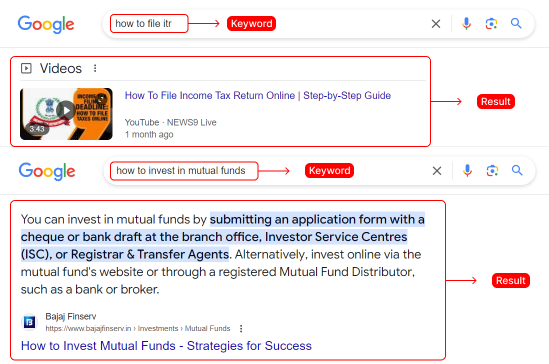
There is no one-size-fits-all answer for Google searches. As we read in the article by Search Engine Land on Google Leaks, Google displays various types of content formats in its search results according to the search query, varying from articles, videos, and images, to featured snippets, and more. So, before jumping into content creation, we have to check the search results to see what’s performing well for the industry.
We recommend following the practices listed below for your content optimization:
Know the Content Types: Research which formats (blogs, videos, etc.) dominate search results for your targeted keywords.
Create Diverse Content: Produce various content types (like blog posts, videos, and infographics) to cover all possible formats that Google might rank for those keywords.
Focus on High-Impact Formats: Prioritize creating content in formats that rank well, like videos if they perform best for certain keywords.
Monitor Search Trends: Regularly check how search results change for your keywords and adjust your content strategy as needed.
Optimize Content: Tailor your content to the formats that are most likely to appear in search results.
Use Data: Analyze which content types rank well for your keywords and let that guide your content creation.
Test and Improve: Experiment with different formats, see what works best, and refine your strategy based on results.
4. Commercial Page Detection
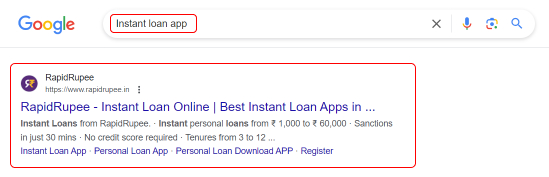
Google sorts pages based on their purpose or intent—whether they are meant to sell something (commercial intent) or provide information (informational intent). For your page to rank well, it should have a clear focus on either one intent or the other, not both.
For example, a page meant to sell a service or product should focus only on that, while a page meant to provide information should stick to that purpose. Mixing both intents on the same page makes it harder for Google to understand what the page is about, hence, affecting the ranking.
5. Last Significant Update
Minor updates, such as changing a page’s title or meta description, generally do not have a substantial effect on how frequently Google revisits or reindexes the page.
In contrast, significant updates involve more substantial changes to the page’s content or structure. This includes adding new information, updating statistics, or revising key details.
Nina Clapperton, founder of ‘She Knows SEO’ also suggests that the age of the content matters.The frequency, quality, and relevance of newly added information impact how often Google reindexes the page and its ranking in search results.
But how do we keep ourselves in Google’s good books? It can be done in 3 ways:
Importance of Real-Time Content
For search queries that need up-to-date information, like “latest interest rates on savings accounts” or “current stock market trends,” it is essential to keep content current.
Regularly updating pages ensures that the content remains relevant and competitive.
Additionally, consistently publishing fresh content, such as weekly posts on “Market Analysis” or “Financial News,” helps maintain your site’s visibility and relevance.
Monitoring and Updating Trends
Monitoring search trends is crucial. For example, when new financial regulations are introduced, promptly update related content. Using timestamps and clear update notices on pages like “Latest Mortgage Rates” can indicate recent revisions. Engaging with user queries by updating content based on popular searches, such as “current credit card offers,” ensures the content stays timely and relevant.
Avoiding Stale Content
To prevent content from becoming outdated, regularly review and update older articles, such as “Previous Year’s Interest Rates on Fixed Deposits,” to reflect current information. Use SEO performance monitoring tools to track how updated pages perform and adjust your strategy based on which pages attract the most traffic.
Significant updates and real-time content optimization are important for maintaining high search rankings – especially for queries requiring the latest information.
6. Page Title Length
The commonly mentioned 60-70 character limit for page titles is not as strict as once thought, according to recent information from the Google search algorithm leak. This means you don’t have to strictly limit your title to this character range.
Instead, for optimizing your page titles, include more relevant keywords. This way, when Google decides to rewrite or shorten your title in search results, it has more keyword options to choose from, which can improve how well your page ranks.
Key Ranking Factors That Stand Out for Content Optimization
While many of the ranking factors we’ve discussed are familiar, the recent leak has solidified their importance. However, there are additional factors mentioned in the article, Unpacking Google’s massive search documentation leak, that deserve closer attention.
Ensuring Site-Wide Quality
Google looks at overall site performance, not just individual pages. To keep the website performing well and ensure its quality,
Remove or improve poorly performing pages: If some pages aren’t performing well, either improve the quality of those pages or delete them. This practice maintains the site’s overall quality.
Keep New Content Fresh: Regularly update new information on your existing content pieces and cover the latest topics relevant to the industry.
UGC Quality Measurement
For sites with user-generated content (like comments or reviews), take the steps to ensure:
Separate Quality Checks: Google checks the quality of user-generated content (UGC) and your main content separately. Both need to be authentic and up to the industry standards.
Encourage and Manage UGC: Get users to post valuable content, and make sure to monitor and remove anything that’s low-quality or irrelevant.
In the next fold, we will reveal what ranking factors Google prefers when it comes to strong link-building.
Google Leaks and Link Building: Key Focus Areas
1. Toxic Backlinks Management
According to Search Engine Land, toxic backlinks are indeed a real thing. In their article, they talk more about how Google frowns upon sites with toxic or harmful backlinks, which are links from low-quality, spammy, or irrelevant sites.
Regularly identifying and disavowing toxic backlinks can maintain a healthy backlink profile. Toxic backlinks can negatively affect search rankings by associating your site with poor-quality content, so managing them is essential to avoid penalties from Google.
2. Focus on Geographic Relevance
The same article also says – Google gives more weight to backlinks from websites that are relevant to the same geographic region as your target audience.
If your target audience is in a specific country, links from sites within that same country are more valuable. Google uses geographic relevance to assess the suitability of the linking site. Therefore, when brands and webmasters focus on acquiring links from geographically relevant sources can improve your site’s ranking in those regions.
3 Ranking Factors That Stand Out for Link Building
1. Link Relevance and Traffic
Google prioritizes backlinks from pages that are both highly relevant to your content and receive a significant amount of traffic.
Instead of running after high DA websites, links from relevant and popular pages signal to Google that your content is valuable and trusted. Google considers the relevance of the linking page’s content to yours, as well as the amount of traffic it receives, to determine the link’s importance.
The more relevant and high-traffic the linking page is, the more positively it will impact search engine rankings.
Mentions of your brand or entity in authoritative and relevant content can influence search rankings by signaling to Google that your brand is recognized and valued in your particular industry. These mentions contribute to your site’s authority and relevance, even without a clickable link.
Combining traditional link-building with public relations efforts (such as securing mentions in high-quality news sites or guest post articles) enhances a site’s authority.
Google values links from authoritative and widely recognized sources, like reputable news websites. By supplementing link-building with PR efforts, you increase the likelihood of acquiring high-quality links that can significantly boost your rankings.
We’ve covered content optimization and link-building factors, but the leaked document also emphasizes focusing on technical SEO and user engagement. These aspects are crucial for a well-rounded SEO approach and should not be ignored (if you want your website to score top results).
How to Approach Technical SEO and User Engagement – As Per Google Leaks
Technical / On-page SEO
Use Clear, Descriptive Links, Detailed Metadata
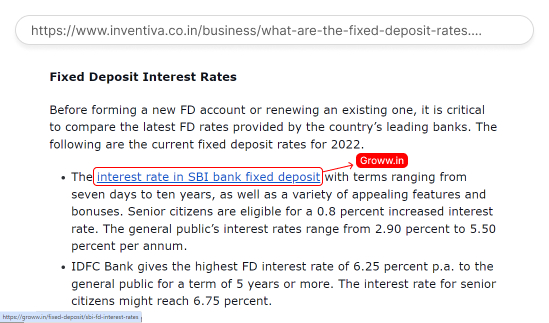
Ensure your internal links guide users to related content on your site, making it easier for them to explore and navigate. External links to reputable sources also help build your site’s credibility.
Improve Mobile User ExperienceMake sure your website is mobile-friendly. Google prioritizes sites that perform well on smartphones and tablets, so your content should be easily accessible and functional on all devices.Include publication dates, sources, and thorough descriptions for your content. This helps Google better understand and index your pages, improving their relevance and search visibility.
Avoid Interstitials
As suggested in the comprehensive database of ranking factors, minimize or eliminate interstitials (pop-ups or overlays) that can block content and disrupt the user experience. This helps maintain your site’s ranking and user satisfaction.Some of the best practices to avoid interstitials are:
Use small banners that don’t cover the main content and place them at the top or bottom of the screen.
Show pop-ups after user actions and ensure they are easy to close and work well on mobile devices.
Regularly check how they affect users and test them on different devices to ensure a good experience.
Secure Your Connections (HTTPS)
Use HTTPS to secure your website with SSL/TLS certificates. A secure site is preferred by Google and helps protect user data, contributing to better search rankings.
If a user clicks on a search result and doesn’t search again, it might still be considered a success if they found what they needed, even if they didn’t spend much time on the site.
If a user clicks on a result, stays on the page for around 5 minutes, and then returns to Google, that’s also a positive outcome. The goal is to create more of these successful interactions.
Chrome Clickstream Data Utilization: Navboost, a tool mentioned in the Google Search API documents, focuses on click signals where users’ clicks are treated like votes. This highlights the importance of having a well-organized, user-friendly website. Sites that are easy to navigate are more likely to rank higher in search results.
Measure User Engagement Metrics: Track metrics such as average clicks on-site navigation, average scroll depth, and click-through rate (CTR) from search results to your site. These metrics help assess how engaged users are with your content and navigation.
References
We’ve highlighted the key takeaways from the Google search leak, but there’s so much more to explore. Below are some of our top references for diving deeper into the insights from the leaked documents. Check them out to learn more about what’s in the Google search leak document.
Sarvesh Bagla is an enterprise SEO expert and industry leader who has driven transformational digital growth for India’s top brands across the BFSI, Healthcare, Automotive, and ECommerce industries. As the Founder and CEO of Techmagnate, he leads large-scale organic search strategies and performance marketing campaigns for businesses looking to succeed in today’s AI-driven search landscape.
A strong advocate for thought leadership, Sarvesh is deeply involved in SEO evangelism and regularly contributes to industry discussions through LinkedIn, webinars, and CMO roundtables. His focus today is on helping brands prepare for an AI-first SEO future (AEO, GEO) and strategies for Large Language Models (LLMs) at the core.
Get the most valuable search related insights about leading brands, trending keywords, search volumes, fastest growing categories, city-level insights and much more!
It has come to our notice that fraudulent job offers are being circulated on the internet through messaging apps like WhatsApp and Telegram, which falsely claim to be from Techmagnate. We take this matter seriously and would like to caution all candidates to be wary of such postings.
Please Note That –
We do not charge any fees/security deposit/payment from candidates, irrespective of the professional experience they hold, for job applications or interviews
Official communication channels include our website and verified social media accounts, primarily LinkedIn.
Kindly double-check the domain name – @techmagnate.com – in the email address
We follow a transparent and ethical approach for hiring/onboarding supported by proper documentation.
Ensure that you only apply through verified channels to avoid being scammed. We also recommend that you exercise caution when sharing personal information or financial details with any job posting or recruitment agencies claiming to represent us.
We want to ensure that potential candidates interested in joining Techmagnate have a safe and positive experience.
If you find that someone that fits the description above has reached out to you, please notify us immediately at jobs@techmagnate.com.
 Important Alert:
 Important Alert:






















 6th Feb | Invite-only


