Beware of fake job offers and payment requests. We only use official email IDs and never conduct interviews on messaging apps.Beware of fake job offers and payment requests. We only use official email IDs and never conduct interviews on messaging apps.
Summary: The six pillars of digital marketing, SEO, content marketing, social media, PPC, email marketing, and CRO, form the foundation for successful strategies. By effectively leveraging these, businesses can boost visibility, engage customers, and drive results in a competitive digital landscape.
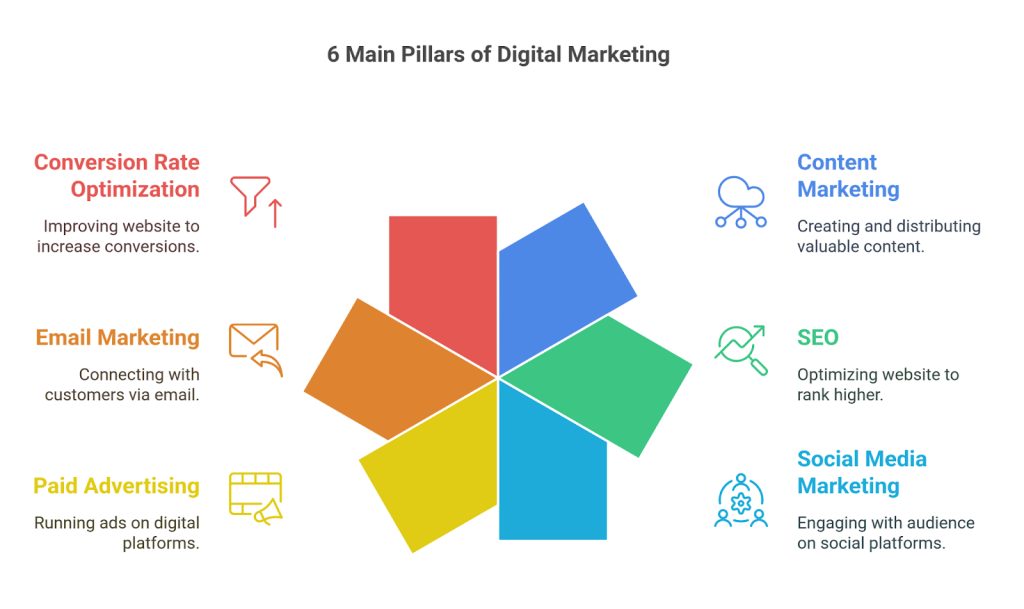
There are 6 main pillars of digital marketing: SEO, content marketing, social media marketing, pay-per-click (PPC) advertising, email marketing, and conversion rate optimisation (CRO). Together these pillars form the foundation of every successful digital marketing strategy.
Digital marketing is the backbone of almost every business today and these six pillars are what hold it up. Each one plays a distinct role: SEO and content earn organic visibility, social media and PPC drive reach and traffic, email nurtures relationships, and CRO turns that traffic into customers.
Below we break down all six pillars one by one – what each is, a real-world example, and the Techmagnate service that delivers it, followed by a quick summary table and a clear explanation of how pillars differ from “channels” and “types” of digital marketing.
People often search for the “types” or “components” of digital marketing and mean slightly different things. Here’s the distinction in plain English:
Pillars are the six strategic foundations of digital marketing – SEO, content, social media, PPC, email and CRO. They are the disciplines you build a strategy around.
Channels are the specific places you execute within a pillar – for example, Google and Bing for SEO; Instagram, LinkedIn and TikTok for social; Google Ads and Meta Ads for PPC; Mailchimp or HubSpot for email.
Types of digital marketing is usually just a broader, looser list (SEO, content, social, PPC, email, affiliate, influencer, mobile, etc.), which mostly maps back to the same six pillars, with a few tactics nested underneath them.
In short: the six pillars are the framework; channels and “types” are how you carry out each pillar. Counting pillars (6) and counting channels or tactics (many) are simply different levels of the same model.
Deep-Dive Into the Six Main Pillars of Digital Marketing:
Now that you’re aware of the six digital marketing pillars, let’s understand what they are, their importance, examples, etc.
Search Engine Optimization (SEO):
This involves selecting the right keywords, optimizing on-page elements, building high-quality and helpful content, earning natural backlinks, and improving the user experience. It’s also important to check the readability of your content to ensure it’s easy for your audience to understand and meets search engine standards for clear, accessible information.
Why SEO is the One of the Main Pillars of Digital Marketing –
According to a study by BrightEdge, organic search drives 53% of website traffic, making SEO a crucial component of any digital marketing strategy.
Top SEO Platform –
Google, Bing
Success Metrics or KPIs –
Website Traffic, Pageviews, Bounce Rate, Time Spent on Page, Clicks, Conversion Rate.
EXAMPLE: Let’s consider a local bakery aiming to attract more customers through online channels. By implementing effective SEO strategies, such as optimizing their website for relevant keywords like “freshly baked pastries” and “artisan bread,” the bakery can improve its search engine rankings, making it more likely for potential customers to discover them when searching for bakery products in their area.
Content Marketing:
Content marketing is all about creating valuable, engaging content and sharing it through the right channels to reach the right audience. By consistently delivering high-quality content, businesses can build authority, establish thought leadership, and foster lasting relationships with their audience. This makes content crucial for today’s digital success.
But you need to have an accurate understanding of Content marketing, as each type of content asset relates and interacts with the target audience accordingly. Keeping that in mind, content marketing can be divided into three Stages TOFU, MOFU, and BOFU –
TOFU (Top of Funnel): In the TOFU stage, the focus is on creating content that raises awareness and captures the attention of a wide audience. This can include creating blog posts, social media content, infographics, videos, or any form of content that educates and entertains potential customers.
MOFU (Middle of Funnel): In the MOFU stage, the goal is to nurture the leads or interested potential customers and provide more targeted content that addresses their specific needs or interests and guides them through the consideration phase. This can include producing in-depth guides, case studies, webinars, or email newsletters.
BOFU (Bottom of Funnel): In the BOFU stage, the focus is on converting leads into customers. The content at this stage should be more sales-oriented and persuasive. This can include sharing product demonstration videos, free trial offers, customer testimonials, or comparison guides. The goal is to provide the final push and convince leads to make a purchase or take the desired action.
Why Content is One of the Main Pillars of Digital Marketing –
Content marketing can generate over three times as many leads as outbound marketing and costs 62% less, according to a Content Marketing Institute report.
Top Content Marketing Platforms –
Website/blog, Email newsletters, Ebooks, Social media groups, Infographics, Video, Earned Media Channels, Guest blogging, Press releases, QA Platforms, Online platforms, Podcasts, Pay-per-click (PPC) advertising, Paid influencer marketing, Sponsored content.
Success Metrics or KPIs-
Website Traffic, Pageviews, Bounce Rate, Time on Page, Click, Conversion Rate.
EXAMPLE: Take the example of a digital marketing agency looking to leverage content marketing for their objectives.
Infographics explaining industry statistics or highlighting the importance of marketing
Explainer videos on various digital marketing topics
Guides or eBooks on digital marketing best practices, industry insights, etc.
MOFU
Engagement and Nurturing
Webinars or online workshops
White Papers diving into industry research and analysis
Email/newsletters
BOFU
Conversion and Sales
Testimonials and success stories from satisfied clients
Free consultations or audits for potential clients
Case studies showcasing the delivered results
Customizable proposals and pricing guides
Corporate presentations
Social Media Marketing:
Social media has become essential in our daily lives, making it a key pillar of digital marketing. It involves creating engaging content, interacting with users, running targeted ads, and using analytics to boost brand awareness, engagement, and conversions.
Why Social Media Marketing is the One of the Main Pillars of Digital Marketing –
The average person spends around 2 hours and 28 minutes per day on social media, making it a powerful tool for businesses to connect with their target audience. Several online marketing tools help businesses optimize their social media strategies to engage with end users and improve their brand visibility.
Engagement rate, Reach, Cost per click (CPC), Return on investment (ROI), Brand sentiment,
Followers and Fans, Customer acquisition rate, Social media referrals etc.
EXAMPLE: Consider a fashion retailer aiming to expand its online presence and attract a younger demographic. By leveraging platforms like Instagram and TikTok, the retailer can showcase its latest fashion collections through visually appealing posts, collaborate with influencers, and run sponsored ads to reach and engage fashion-savvy individuals.
Pay-Per-Click Advertising (PPC):
PPC advertising provides a targeted approach to reach potential customers. It can be highly effective in driving traffic and conversions fairly quickly.
Why PPC is the One of the Main Pillars of Digital Marketing –
Google Ads dominates the PPC advertising space, with over 90% of the market share. Pay-Per-Click advertising allows businesses to display ads on different search engines (Google, Bing) and other platforms (YouTube ads, Display ads, Amazon ads), paying only when users click on the ads.
Top PPC ads Platform –
Google Ads , Facebook Ads (now known as Meta Ads), Instagram Ads (a part of Facebook Ads), Microsoft Ads (formerly Bing Ads), LinkedIn Ads, Twitter Ads, Pinterest Ads, YouTube ads (a part of Google Ads), TikTok For Business, Snapchat For Business
Success Metrics or KPIs –
Click-Through Rate (CTR), Cost per Click (CPC), Conversion Rate (CR), Return on Ad Spend (ROAS), Cost per Acquisition (CPA), Impressions, Engagement.
EXAMPLE: For example, a software-as-a-service (SaaS) company offering project management tools can use PPC advertising to target keywords like “best project management software” and “project management tools for remote teams.” By bidding on these keywords, the company’s ads will appear prominently in search engine results, increasing the likelihood of attracting potential customers actively searching for such solutions.
Email Marketing:
Email marketing is a direct and effective way to connect with potential and existing customers. By sending personalized, targeted messages, businesses can nurture leads, build stronger relationships, and convert them into loyal customers.
Why Email Marketing is One of the Main Pillars of Digital Marketing
According to DMA’s National Client Email Report, email marketing generates an average ROI of £42 for every £1 spent, making it a highly cost-effective strategy for businesses to retain customers and generate sales.
Open Rate, Click-Through Rate (CTR), Bounce Rate, Unsubscribe Rate, Conversion Rate, ROI (Return on Investment), List Growth Rate.
EXAMPLE: Consider an e-commerce store specializing in home decor. By segmenting their email list, the store can send personalized promotions based on customer preferences and past purchase history. For example, they can send a special offer on holiday-themed decor items to customers who have previously bought similar products. This personalized approach increases the chances of customer engagement and conversions.
Conversion Rate Optimization (CRO):
Conversion Rate Optimization (CRO) is all about making your website or landing page more effective at turning visitors into customers. It involves analyzing user behavior, A/B testing, and improving key elements like CTAs, page speed, and user experience to boost conversions.
Why CRO is One of the Main Pillars of Digital Marketing
In a study by Invesp, companies that focus on conversion rate optimization have seen an average of 223% increase in conversions. By improving website performance and user experience, businesses can get more value from the traffic they already receive.
Conversion Rate, Bounce Rate, Average Order Value (AOV), Lead Generation Rate, Engagement Rate, Cart Abandonment Rate.
EXAMPLE: Let’s take the example of a SaaS company offering a free trial. By analyzing user behavior on their sign-up page, the company realizes that a significant number of visitors abandon the page before completing the registration. After conducting A/B testing, the company finds that by simplifying the form and offering a more prominent “Start Free Trial” button, the conversion rate increases significantly, resulting in more sign-ups.
Significance of the Main Pillars in Today’s Time:
In today’s competitive digital landscape, the main pillars of digital marketing hold significant importance. Understanding the types of digital marketing is crucial for businesses to navigate this environment effectively. Here are a few reasons why:
Increased Online Competition: As more businesses embrace digital marketing, the competition for online visibility and customer attention intensifies. Understanding and effectively utilizing the main pillars of digital marketing can give businesses a competitive edge in reaching and engaging their target audience.
Evolving Consumer Behavior: Consumer behavior has significantly shifted towards digital channels, with more people relying on the internet to research, shop, and connect with brands. Businesses that leverage the digital marketing platforms can effectively reach and connect with their audience.
Diverse Marketing Opportunities: The main pillars of digital marketing offer a wide range of marketing opportunities for businesses of all sizes and industries. Whether it’s optimizing website content for search engines, creating compelling social media campaigns, or running targeted PPC ads, these pillars provide versatile avenues to connect with potential customers and achieve marketing objectives.
Effective Utilization of the Main Pillars:
To make the most of the main pillars of digital marketing, marketers should consider the following strategies:
Integrate the Pillars: Instead of treating each pillar as a standalone entity, businesses should integrate them to work in tandem.. Combining SEO, content marketing, social media marketing, and PPC advertising creates a comprehensive approach that maximizes the impact of each pillar.
Research The Target Audience: You must research thoroughly on your audience’s preferences, behaviors, and demographics, etc, to tailor your digital marketing efforts and deliver personalized and relevant experiences.
Consistency and Quality: Consistently is the key across all pillars. Each content asset you create, digital marketing campaign you run, or strategy you make, should be consistent. You should strive to provide valuable information and maintain a consistent brand voice and identity.
These six pillars of digital marketing are essential components that shape successful digital marketing strategies. By leveraging SEO, content marketing, social media marketing, and PPC advertising effectively, marketers can establish a strong online presence, reach their target audience, and drive meaningful results in today’s competitive digital landscape.
To harness the full potential of the six digital marketing pillars, partner with Techmagnate and unlock performance-driven digital marketing services.
Techmagnate has also embraced ai digital marketing services, helping brands stay ahead in a fast-evolving landscape and optimize their presence for higher visibility across search engines and LLM platforms.
Frequently Asked Questions (FAQs)
What are the main pillars of digital marketing?
There are six main pillars: SEO, content marketing, social media marketing, pay-per-click (PPC) advertising, email marketing, and conversion rate optimisation (CRO). Together they cover earning visibility, driving traffic, nurturing leads and converting them.
Why is SEO considered a crucial pillar of digital marketing?
This question can highlight the importance of search engine optimisation in driving organic traffic, improving visibility, and ensuring long-term success.
How does content marketing impact digital marketing strategies?
Focus on how quality content drives engagement, enhances SEO, and builds brand credibility, thereby supporting all other digital marketing efforts.
What is the role of email marketing in digital marketing?
This can explain how email marketing builds relationships with customers, nurtures leads, and drives conversions by delivering targeted messages directly to the audience’s inbox.
How does Conversion Rate Optimisation (CRO) improve digital marketing results?
This question can focus on the importance of CRO in increasing website conversion rates, improving user experience, and turning more visitors into customers.
How many pillars of digital marketing are there?
There are 6 main pillars of digital marketing. Some frameworks split or merge tactics to count 5, 7 or more, but the six-pillar model - SEO, content, social, PPC, email and CRO - covers the full strategy end to end.
Sarvesh Bagla is an enterprise SEO expert and industry leader who has driven transformational digital growth for India’s top brands across the BFSI, Healthcare, Automotive, and ECommerce industries. As the Founder and CEO of Techmagnate, he leads large-scale organic search strategies and performance marketing campaigns for businesses looking to succeed in today’s AI-driven search landscape.
A strong advocate for thought leadership, Sarvesh is deeply involved in SEO evangelism and regularly contributes to industry discussions through LinkedIn, webinars, and CMO roundtables. His focus today is on helping brands prepare for an AI-first SEO future (AEO, GEO) and strategies for Large Language Models (LLMs) at the core.
Get the most valuable search related insights about leading brands, trending keywords, search volumes, fastest growing categories, city-level insights and much more!
It has come to our notice that fraudulent job offers are being circulated on the internet through messaging apps like WhatsApp and Telegram, which falsely claim to be from Techmagnate. We take this matter seriously and would like to caution all candidates to be wary of such postings.
Please Note That –
We do not charge any fees/security deposit/payment from candidates, irrespective of the professional experience they hold, for job applications or interviews
Official communication channels include our website and verified social media accounts, primarily LinkedIn.
Kindly double-check the domain name – @techmagnate.com – in the email address
We follow a transparent and ethical approach for hiring/onboarding supported by proper documentation.
Ensure that you only apply through verified channels to avoid being scammed. We also recommend that you exercise caution when sharing personal information or financial details with any job posting or recruitment agencies claiming to represent us.
We want to ensure that potential candidates interested in joining Techmagnate have a safe and positive experience.
If you find that someone that fits the description above has reached out to you, please notify us immediately at jobs@techmagnate.com.
Team @Techmangate
Build a Better Digital Marketing Strategy with Techmagnate’s Search Trends Reports
 Important Alert: