Beware of fake job offers and payment requests. We only use official email IDs and never conduct interviews on messaging apps.Beware of fake job offers and payment requests. We only use official email IDs and never conduct interviews on messaging apps.
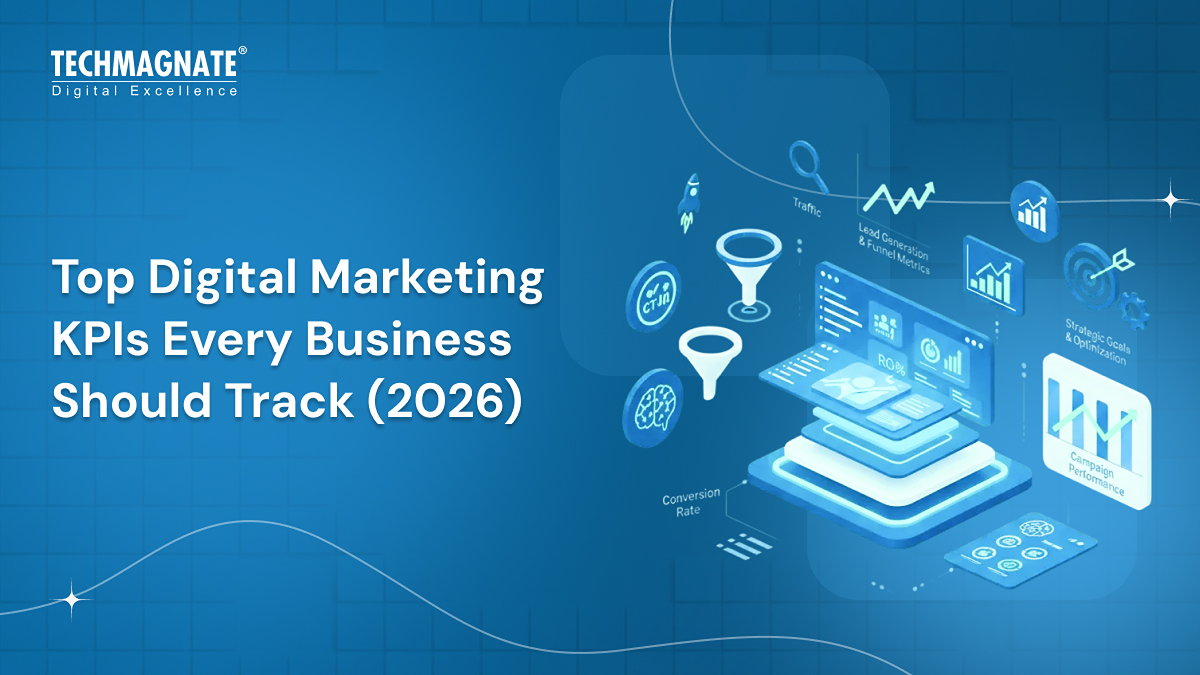
Success in online business relies on more than just intuition; it demands measurable data. Without tracking performance, marketing efforts become a guessing game, draining resources without guaranteeing returns. The only way to know whether your campaigns work is to monitor the right metrics.
This is where digital marketing KPIs come into play. These indicators provide clear evidence of what strategies drive growth and where improvements are needed. By focusing on the data that matters, businesses can refine their approach, optimize budgets, and achieve sustainable results.
Table of Contents
Why Tracking Digital Marketing KPIs Is Essential
The digital landscape is competitive, and businesses that fail to measure their performance often struggle to scale. Tracking KPIs for digital marketing offers an objective view of campaign effectiveness. It moves decision-making away from assumptions and grounds it in reality.
Monitoring these metrics allows marketers to identify trends early. If a specific ad campaign isn’t generating leads, the data will show it immediately, allowing for quick adjustments. Conversely, if a particular seo content strategy drives high engagement, resources can be shifted to capitalize on that success. Essentially, tracking these indicators ensures that every rupee spent contributes to the company’s broader goals.
What Are Digital Marketing KPIs?
Key Performance Indicators (KPIs) are measurable metrics that track the success of specific objectives over time. In digital marketing, they act as vital signs, revealing whether your digital marketing strategy is effective or needs improvement. Unlike vanity metrics, which offer little business value, strong KPIs directly tie to outcomes like audience reach, conversions, and customer acquisition costs. Understanding KPIs is crucial for creating data-driven strategies that align marketing activities with revenue goals.
Key Digital Marketing KPIs to Track
With hundreds of potential data points available in analytics tools, it is easy to get overwhelmed. However, not all data is equally useful. The most effective approach is to focus on a set of core marketing performance metrics that provide a complete picture of the customer journey, from awareness to conversion.
Here are the essential marketing KPIs to track for a robust performance analysis:
1. Website Traffic and Engagement Metrics
Your website is often the central hub of your digital presence. Monitoring website traffic KPIs gives you insight into how well you attract and retain visitors.
Sessions and Users: This measures the total number of visits and unique visitors to your site. A steady increase here indicates effective brand awareness efforts.
Bounce Rate: The percentage of visitors who leave your site after viewing only one page. A high bounce rate often signals irrelevant content, slow loading times, or a poor user experience.
Average Session Duration: This tracks how long a visitor stays on your site. Longer durations typically indicate that your content is engaging and relevant to the user’s search intent.
Pages Per Session: This metric shows how many pages a user visits in a single session. Higher numbers suggest that users are exploring your offerings and finding value in your site structure.
By conducting regular digital marketing audits, you can benchmark these metrics against industry standards and identify technical issues that hinder performance.
2. Conversion Rate and Sales Metrics
Traffic is valuable only if it leads to a desired action. Conversion KPIs focus on the effectiveness of your website in turning visitors into leads or customers.
Conversion Rate: The percentage of visitors who complete a specific goal, such as filling out a form, making a purchase, or signing up for a newsletter. It is calculated by dividing the number of conversions by the total number of visitors.
Sales Conversion Rate: For e-commerce businesses, this specifically measures the percentage of visits that result in a transaction.
Lead Conversion Rate: This tracks the percentage of visitors who become qualified leads. This is vital for B2B companies with longer sales cycles.
Cost Per Conversion (CPC): This measures how much you spend to acquire a single conversion. Keeping this low while maintaining quality is a primary goal for optimization.
Improving these metrics often requires A/B testing landing pages, refining calls to action (CTA), and ensuring your digital marketing campaigns align with user intent.
3. Customer Acquisition Cost (CAC)
Customer Acquisition Cost (CAC) is arguably one of the most critical financial metrics. It tells you exactly how much money you spend to win a new customer.
To calculate CAC, you divide your total sales and marketing expenses over a specific period by the number of new customers acquired during that same time.
Total Marketing & Sales Spend / Number of New Customers = CAC
For example, if you spent ₹1,00,000 on marketing in a month and acquired 100 new customers, your CAC is ₹1,000.
Tracking this helps determine profitability. If your CAC exceeds the lifetime value of a customer, your business model is not sustainable. Techmagnate’s digital marketing services focus heavily on optimizing this balance, ensuring acquisition strategies remain cost-effective as they scale.
4. Return on Investment (ROI)
ROI for digital marketing is the ultimate measure of success. It calculates the profitability of your marketing investments.
(Net Profit / Total Marketing Investment) x 100 = ROI
A positive ROI means your campaigns are generating more money than they cost. A negative ROI signals a need for immediate strategy revision.
It is important to track ROI not just for your overall marketing but also for individual channels. You might find that while your overall ROI is positive, your paid search ads have a negative ROI, while email marketing performs exceptionally well. This granular view allows for smarter budget allocation.
5. Social Media Engagement Metrics
Social media is a powerful tool for building brand loyalty and community. However, measuring its impact goes beyond just counting followers. Social media KPIs should focus on interaction and reach.
Engagement Rate: This measures the level of interaction (likes, comments, shares) relative to your follower count or reach. High engagement indicates that your content resonates with your audience.
Reach and Impressions: Reach refers to the number of unique users who see your content, while impressions track the total number of times your content is displayed.
Click-Through Rate (CTR): This measures how many people clicked on a link in your post to visit your website. It is a direct indicator of how effective your social content is at driving traffic.
Share of Voice: This measures how much of the online conversation in your industry is about your brand compared to your competitors.
Partnering with an AI digital marketing agency can help automate the tracking of these metrics, providing real-time insights into sentiment and trends.
6. Email Marketing KPIs
Despite the rise of social media, email remains one of the most effective channels for direct communication. Email marketing KPIs reveal the health of your subscriber list and the effectiveness of your messaging.
Open Rate: The percentage of recipients who open your email. Low open rates often indicate issues with subject lines or sender reputation.
Click-Through Rate (CTR): The percentage of recipients who clicked on a link within the email. This measures the relevance of your content and the strength of your CTA.
Unsubscribe Rate: The percentage of people who opt out of your list. A spike here suggests you may be sending emails too frequently or that the content is no longer relevant.
Bounce Rate: In email marketing, this refers to emails that were not delivered. A high bounce rate can harm your sender’s reputation and lead to being blacklisted.
How KPIs Impact Marketing Strategy
Data is useless if it sits in a report without influencing action. The true power of marketing key performance indicators lies in their ability to shape strategy.
1. Identifying Strengths and Weaknesses
KPIs act as a diagnostic tool. If your website traffic is high but conversion rates are low, the data suggests that your SEO or ad targeting is working, but your landing page experience needs improvement. Without this distinction, you might waste money fixing the wrong problem.
2. Budget Allocation
Marketing budgets are finite. By analyzing marketing performance metrics, you can identify which channels deliver the best ROI. If LinkedIn ads result in a higher Cost Per Acquisition than Google Ads, you can reallocate the budget to the more efficient channel. This ensures every rupee works harder for your business.
3. Forecasting and Growth
Historical KPI data allows for accurate forecasting. If you know that 1,000 website visits typically result in 10 sales, you can estimate how much traffic you need to hit a target of 100 sales. This makes goal setting realistic and achievable.
4. Improving Agility
The digital market changes rapidly. Regular monitoring of KPIs allows businesses to pivot quickly. If a competitor launches a new product and your market share dips, real-time data alerts you to the issue, allowing you to implement a swift counter-strategy.
Techmagnate utilizes advanced analytics to interpret these metrics, helping businesses transition from reactive fixes to proactive growth strategies. Whether it is refining digital marketing services or overhauling a content plan, the direction always comes from the data.
Start Tracking KPIs for Marketing Success
In the digital world, what gets measured gets managed. Ignoring marketing KPIs to track is akin to driving blindfolded. You might be moving, but you have no idea if you are heading toward your destination or off a cliff.
By establishing a clear set of metrics – from traffic and conversions to CAC and ROI – you gain control over your business growth. You move from spending money on marketing to investing in results.
Start by auditing your current efforts. Identify the gaps in your data. Then, implement a rigorous tracking system that aligns with your specific business goals. If you need assistance setting up these frameworks or interpreting the data to drive growth, Techmagnate provides the expertise to turn numbers into actionable strategies.
Frequently Asked Questions
How Do You Measure Conversion Rate in Digital Marketing?
Conversion rate measures the percentage of visitors who take a desired action (like a purchase or form submission). Higher conversion rates indicate effective content, targeting, and user experience on your site.
What is Customer Acquisition Cost (CAC) and How is It Calculated?
CAC is the total cost spent to acquire a new customer. It’s calculated by dividing your marketing and sales expenses by the number of new customers acquired in a period.
Why is Return on Investment (ROI) Crucial for Digital Marketing?
ROI shows the profitability of marketing efforts. A positive ROI means campaigns are profitable, while a negative ROI signals the need for adjustments to improve efficiency and maximize returns.
How Can Social Media Metrics Impact My Digital Marketing Strategy?
Social media metrics, like engagement rate, reach, and click-through rates, help evaluate content effectiveness. These metrics guide adjustments in strategy, ensuring higher engagement and more website traffic.
What Role Does Email Marketing Play in Digital Marketing KPIs?
Email marketing KPIs, such as open rate and click-through rate, track the effectiveness of email campaigns. These metrics help optimize content, improve engagement, and increase conversions for business growth.
Sarvesh Bagla is an enterprise SEO expert and industry leader who has driven transformational digital growth for India’s top brands across the BFSI, Healthcare, Automotive, and ECommerce industries. As the Founder and CEO of Techmagnate, he leads large-scale organic search strategies and performance marketing campaigns for businesses looking to succeed in today’s AI-driven search landscape.
A strong advocate for thought leadership, Sarvesh is deeply involved in SEO evangelism and regularly contributes to industry discussions through LinkedIn, webinars, and CMO roundtables. His focus today is on helping brands prepare for an AI-first SEO future (AEO, GEO) and strategies for Large Language Models (LLMs) at the core.
Get the most valuable search related insights about leading brands, trending keywords, search volumes, fastest growing categories, city-level insights and much more!
It has come to our notice that fraudulent job offers are being circulated on the internet through messaging apps like WhatsApp and Telegram, which falsely claim to be from Techmagnate. We take this matter seriously and would like to caution all candidates to be wary of such postings.
Please Note That –
We do not charge any fees/security deposit/payment from candidates, irrespective of the professional experience they hold, for job applications or interviews
Official communication channels include our website and verified social media accounts, primarily LinkedIn.
Kindly double-check the domain name – @techmagnate.com – in the email address
We follow a transparent and ethical approach for hiring/onboarding supported by proper documentation.
Ensure that you only apply through verified channels to avoid being scammed. We also recommend that you exercise caution when sharing personal information or financial details with any job posting or recruitment agencies claiming to represent us.
We want to ensure that potential candidates interested in joining Techmagnate have a safe and positive experience.
If you find that someone that fits the description above has reached out to you, please notify us immediately at jobs@techmagnate.com.
 Important Alert:
 Important Alert:
















 6th Feb | Invite-only


