Beware of fake job offers and payment requests. We only use official email IDs and never conduct interviews on messaging apps.Beware of fake job offers and payment requests. We only use official email IDs and never conduct interviews on messaging apps.
Summary: This in-depth guide explores the critical role of anchor text in SEO, providing insights into its definition, importance, and the strategies for optimizing anchor text. Learn how to make a link clickable, understand the nuances of anchor text meaning, and discover best practices that can propel your site to the top of search engine results pages (SERPs).
In the fast-paced digital world, anchor text serves as a crucial navigator for both users and search engines, guiding the journey through the web’s extensive content network. This simple yet potent element of hyperlinks is a linchpin in SEO, influencing your site’s visibility and search rankings significantly.
Mastering anchor text optimization can transform your website into a more accessible and authoritative resource, propelling you to the top of search engine results. It not only enhances site navigation but also provides essential context to search engines, helping them understand and rank your site’s content effectively.
This guide will delve into different types of anchor text and share best practices to optimize them for maximum SEO impact.
Key takeaways:-
Anchor text is the clickable text in a hyperlink that helps improve SEO by providing context to search engines.
Diversify your anchor text types to avoid over-optimization and penalties.
Avoid common mistakes like keyword stuffing and linking to low-quality content.
Utilize SEO tools for effective anchor text analysis and optimization.
Implement advanced strategies, including competitor analysis and comprehensive internal linking, to enhance your anchor text strategy.
Table of Contents
What Is Anchor Text in SEO?
Anchor text is the visible, clickable, and often underlined text in a hyperlink, usually highlighted in blue, that both users and search engines encounter across the web. It’s not just an aesthetic element of a webpage but a crucial SEO component that signals to search engines the content of the linked page. For example, if you want to explore a practical example of anchor text usage, you can simply <a href=”https://example.com”>Visit Example</a>.
Understanding anchor text is essential for mastering SEO, as it directly influences how content is indexed and ranked on search engine results pages (SERPs). At its core, anchor text provides valuable context. For users, it indicates what to expect if they click on the link, thereby enhancing the navigational experience and making information discovery straightforward and efficient.
For search engines, anchor text serves as a vital clue in indexing and determining the relevance of web pages in relation to specific search queries. When the anchor text includes keywords that are directly related to the content of the destination page, it reinforces the subject’s relevance to search engines, which is instrumental in the accurate and effective ranking of websites.
This initial exploration into anchor text sets the foundation for its strategic use in linking practices that can significantly elevate your website’s visibility and performance in SERPs.
Discover What Your Customers Search ForDiscover What Your Customers Search For
Get insights on evolving customer behaviour, high volume keywords, search trends, and more.
There are several types of anchor text, each serving different purposes in the SEO strategy:
Exact-match
Exact-match anchor text directly corresponds with the target keyword or phrase that the linked page aims to rank for, optimizing search engine relevance.
Example:
“Check out our guide on how to buy shoes online.”
This anchor text exactly matches the targeted keyword “buy shoes online” for a product page that sells shoes.
Partial-match
Partial-match anchor text includes variations or extensions of the target keyword, balancing keyword targeting with natural language for SEO.
Example:
“Discover the best shoes online for your next adventure.”
This link uses a variation, “best shoes online,” to point to a page ranking for “best shoes”.
Branded
Branded anchor text utilizes the brand’s name, enhancing brand recognition while linking, which can boost SEO authority and trustworthiness.
Example:
“Visit Techmagnate official website for the SEO Services.”
This anchor text uses the brand name, linking directly to Techmagnate’s homepage.
Generic
Generic anchor text, such as ‘click here’ or ‘learn more,’ offers less SEO value but can be used effectively in a user-friendly context.
Example:
“Click here for more details on our products.”
The anchor text is generic but often used in user-friendly contexts.
Naked URLs
Naked URLs display the full hyperlink as the anchor text, straightforward yet less informative for SEO, typically used for direct references.
Example:
“Visit us at www.techmagnate.com for more.”
In this case, the anchor text is the full URL itself, which is simple but lacks context for SEO purposes.
By strategically using different types of anchor text, websites can enhance their SEO performance. However, the key to effective anchor text lies in its relevance and natural integration into content.
Over-optimizing or manipulating anchor text can lead to penalties from search engines, emphasizing the importance of a balanced, thoughtful approach to its use.
Site Name
Site name anchor text uses the domain name as the clickable text. This type builds brand awareness and is often used for linking to homepages. Example: “Check out Yoast.com for more SEO tips.”
Article or Page Title
This type matches the title of the page or article exactly, providing clear context for users and search engines. Example: “Read our guide: What is Anchor Text?”
Related Keywords
Related keyword anchor text includes phrases closely connected to the topic of the linked page, adding context without exact repetition. Example: Linking “SEO link strategies” to a page about anchor text optimization.
Importance of Anchor Text in SEO Strategy
1. Anchor Text Shapes How Search Engines Understand Content
Anchor text provides context about the linked page, helping search engines determine what the destination page is about. This directly influences how pages are indexed and ranked.
2. It Strengthens Keyword Relevance
When anchor text naturally includes targeted keywords or semantically related phrases, it reinforces the topic relevance of the linked page.
With AI-driven and semantic SEO updates (like Google’s BERT and MUM), search engines now evaluate not only keywords but the context in which they appear making relevant anchor text more critical than ever.
3. It Acts as a Guide for Both Users and Search Engines
Anchor text isn’t just for SEO—it also improves navigation for users by giving them a clear idea of what to expect when they click a link.
4. Well-Optimized Anchor Text Boosts Visibility and Rankings
Pages linked with keyword-rich and contextually relevant anchor text often perform better in search rankings, leading to more organic traffic.
5. Anchor Text Diversity Enhances SEO Health
A varied and natural anchor text profile signals to search engines that your linking strategy is trustworthy and not manipulative—an important factor for maintaining strong SEO performance.
6. It Improves User Experience and Engagement
Clear and relevant anchor text helps users navigate more intuitively, which can reduce bounce rates and increase time spent on your site.
7. It Supports a Holistic SEO Strategy
Strategic anchor text contributes to overall site relevance and authority, working alongside other on-page and off-page SEO elements to drive visibility and engagement.
Best Practices for Optimizing Anchor Text in SEO
Optimizing anchor text is akin to fine-tuning the compass of your website, ensuring that both users and search engines are guided accurately to the treasure trove of content you offer. Regular on page SEO analysis can also help identify any areas where anchor text optimization could be improved, enhancing your site’s relevance, authority, and user experience.
The precision in crafting your anchor text can significantly impact your SEO efforts, enhancing your site’s relevance, authority, and user experience. A well-rounded keyword optimization strategy ensures that you are leveraging anchor text to its fullest potential, making sure both users and search engines find exactly what they need without confusion or redundancy.
Here are several best practices to consider when optimizing anchor text for your website:
Aim for relevance and context
The anchor text should always be relevant to the content of the page it links to. This relevance is crucial not only for SEO but for improving user experience.
Users are more likely to click on a link if the anchor text gives them a clear idea of what to expect on the linked page.
Search engines, on their part, use the anchor text to understand the context of links, which helps them index and rank content more effectively.
Diversify your anchor text portfolio
Using a variety of anchor text types is vital for a natural and healthy link profile. This diversity signals to search engines that your linking strategy is organic and not manipulative.
Incorporate a mix of exact-match, partial-match, branded, generic, and naked URL anchor texts. Such a strategy helps avoid penalties associated with over-optimization of exact match anchor text and ensures a broader relevance across different search queries.
Avoid over-optimization
While it might be tempting to heavily use exact-match anchor text to boost rankings for specific keywords, this approach can backfire by triggering search engine penalties.
Over-optimization is a red flag for search engines, indicative of manipulative SEO practices. Ensure your anchor text usage appears natural and varied to avoid such penalties.
Use descriptive phrases
Descriptive, keyword-rich anchor text provides users and search engines with more information about the content of the linked page. However, it’s important to maintain a balance.
The anchor text should be informative and relevant but not overly long or stuffed with keywords. A well-chosen phrase that naturally fits into the content can enhance both readability and SEO performance.
Branded anchor text uses the name of your brand or website. It’s an effective way to build brand awareness while maintaining a natural link profile.
Branded links are typically perceived as trustworthy by users and search engines alike. Incorporating branded.
Prioritize user experience
Above all, anchor text should enhance the user’s experience on your website. It should be integrated seamlessly into the content, guiding readers to additional relevant information without disrupting their reading flow.
Anchor text that is forced or irrelevant can detract from the user experience and potentially harm your site’s engagement metrics.
Monitor and analyze your anchor text distribution
Regularly review your website’s anchor text distribution using best seo tools like Ahrefs, SEMrush, or Moz.
These tools can provide insights into your anchor text profile, allowing you to identify over-optimizations, uncover opportunities for diversification, and adjust your strategy accordingly.
Internal linking strategy
Your internal linking strategy should also leverage optimized anchor text. Internal links help distribute page authority throughout your site and guide users to related content.
Using descriptive and relevant anchor text for internal links can enhance site navigation and SEO.
Implementing these best practices requires a delicate balance between optimization for search engines and providing value to users.
How to Find & Fix Anchor Text Issues
Anchor text problems can silently weaken your SEO efforts. Over-optimization, irrelevant keywords, or a lack of variety in your anchor text profile may send the wrong signals to search engines and confuse users. Identifying and correcting these issues is essential for maintaining a natural, effective linking strategy. Here’s how to do it:
1. Audit Your Anchor Text Profile
Use SEO tools like Ahrefs, SEMrush, or Google Search Console to extract your current anchor text data. Look for:
Overused exact-match keywords
Generic phrases like “click here” or “read more”
Anchor text that doesn’t match the linked content
2. Identify Over-Optimized Anchor Text
If your anchor text is too keyword-heavy, it can trigger spam signals in Google’s algorithm. Make a list of links with exact-match anchors and assess whether they can be made more natural or descriptive.
3. Spot Irrelevant or Misleading Anchors
Ensure your anchor text accurately represents the linked content. Irrelevant or vague anchors can confuse users and reduce trust, hurting both UX and SEO.
4. Check for Repetition and Lack of Variety
A healthy anchor text profile includes a mix of:
Exact-match
Partial-match
Branded
Generic
Naked URLs
Too much repetition of any one type may raise red flags with search engines.
5. Improve Internal Anchor Text Use
Review your internal linking structure and update anchor text to better reflect content relevance. Use descriptive, keyword-rich text where appropriate—but stay natural.
6. Fix Broken or Redirected Anchor Links
Use tools like Screaming Frog or Sitebulb to identify broken or redirected links. Replace outdated anchors with working URLs and updated text.
7. Keep Your Strategy Balanced
Avoid extremes. Don’t over-optimize, but don’t under-utilize anchor text either. Keep your anchor profile diversified, relevant, and user-focused.
Common Mistakes to Avoid in Anchor Text Optimization
In optimizing anchor text for SEO, several common pitfalls can negatively impact your website’s search engine performance. One critical mistake is the over-optimization of exact-match anchor text, which can lead search engines to view your links as manipulative, possibly resulting in penalties. It’s essential to maintain a natural and varied anchor text profile, incorporating a mix of exact-match, partial-match, and branded anchor texts. Avoid using generic phrases excessively, such as ‘click here,’ which provides little value to search engine algorithms and does not enhance the user’s understanding of the linked content’s relevance.
Here’s a breakdown of typical errors to steer clear of in your anchor text strategy:
Over-optimization of exact-match anchor text can lead to penalties
A frequent misstep is the excessive use of exact-match anchor text, where the anchor text is a carbon copy of the keywords you aim to rank for.
While this might seem like a direct route to higher rankings, search engines now view this practice as manipulative. Link anchor text that is over-optimized can lead to penalties, diminishing your site’s credibility and rankings. Balance is key; ensure your anchor text portfolio is diverse and natural.
Using generic anchor text excessively
While generic anchor texts such as “click here” or “read more” are not inherently bad, overusing them is a missed opportunity for providing context to both users and search engines.
These vague cues do little to describe the linked content, potentially harming user experience and SEO. Instead, opt for descriptive, informative anchor text that offers insight into the content of the linked page.
Ignoring branded and partial-match anchor texts
Neglecting the power of branded and partial-match anchor text in SEO is a common oversight.
Branded anchor text helps reinforce your brand identity and trustworthiness, while partial-match anchor text offers a more natural way to incorporate keywords and variations.
Both types are essential for a balanced and effective anchor text strategy that aligns with search engine guidelines.
Linking to low-quality or irrelevant content
The relevance and quality of the content you link to are just as important as the anchor text itself.
Linking to low-quality or irrelevant pages can harm your site’s reputation and search engine rankings. It sends a negative signal to search engines about the quality of your content and can lead to a poor user experience.
Always ensure that the linked content adds value and is closely related to the context of the anchor text.
Inconsistent anchor text for the same content
Using varying anchor text for the same link across your website can confuse both users and search engines about the linked content’s relevance and focus.
Consistency helps reinforce the topic and relevance of the linked page, enhancing your site’s SEO. While some variation is natural and beneficial, aim for coherence in how you reference and link to your content.
Neglecting internal links
Internal linking is a powerful SEO tool that is often underutilized. Failing to optimize the anchor text of internal links misses an opportunity to enhance site navigation and distribute page authority effectively.
Use descriptive, relevant anchor text for internal links to improve user experience and help search engines understand and rank your content more effectively. Link anchor text within your own site is crucial for both SEO performance and usability.
Forgetting about mobile users
In today’s mobile-first world, ensuring your anchor text is accessible and user-friendly on mobile devices is crucial. Long, complex anchor texts may be cumbersome on small screens, potentially affecting click-through rates and user engagement. Opt for concise, clear
Avoiding these common mistakes requires a mindful approach to anchor text optimization.
Leverage AI-powered SEO tools to regularly audit anchor text distribution, relevance, and intent. Tools like Ahrefs, SEMrush, and Moz now provide insights into over-optimization, link quality, and semantic relevance to align with modern search algorithms.
Tools for Anchor Text Optimization
In the intricate dance of SEO, anchor text optimization plays a pivotal role, guiding search engines and users alike through the web’s vast content.
Mastery over this aspect of SEO is not just an art but also a science, supported by a suite of tools and resources designed to refine and perfect your anchor text strategy.
Here’s an overview of essential tools and resources that can aid in optimizing your anchor text for better SEO outcomes.
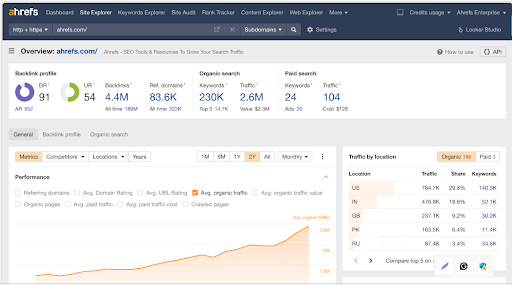
Ahrefs
Image source: Ahrefs
Ahrefs is a comprehensive SEO tool that offers a detailed analysis of your website’s backlink profile, including insights into the anchor texts linking to your site.
Its Site Explorer feature allows you to see the most common anchor texts used in your backlinks, providing an understanding of how your content is perceived by others.
This insight is invaluable for ensuring that your inbound links use a diverse and natural distribution of anchor texts, enhancing your website’s SEO profile.
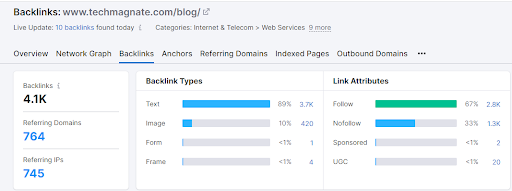
SEMrush
Image source: SEMrush
SEMrush is another powerful tool that provides an anchor text analysis feature, enabling users to examine the anchor texts of their own and their competitors’ backlinks.
This competitive analysis can reveal gaps in your anchor text strategy and uncover new opportunities for optimization.
SEMrush’s detailed reports help you track the balance and variety of your anchor texts, ensuring that your link-building efforts align with best SEO practices.
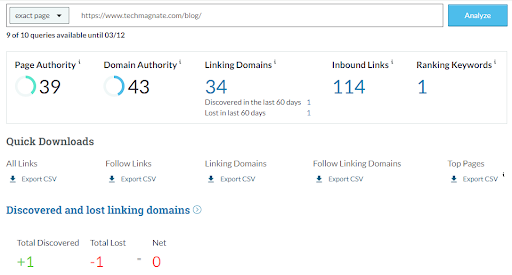
Moz’s Link Explorer
Image source: Moz
Moz’s Link Explorer offers a deep dive into your link profile, including a thorough examination of anchor texts.
By analyzing how your pages are linked internally and externally, Moz helps identify over-optimized anchor texts or areas where more descriptive anchor text could be beneficial.
This tool is particularly useful for evaluating the effectiveness of your internal linking strategy and ensuring that your anchor texts contribute positively to your site’s SEO structure.
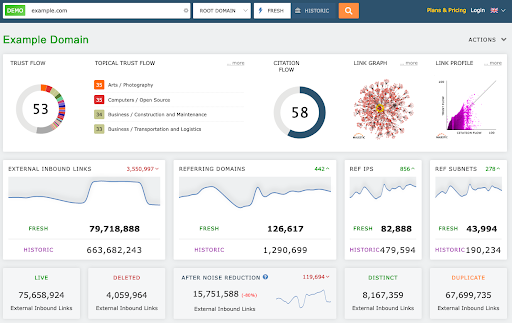
Majestic
Source image: majestic.com
Majestic specializes in backlink analysis and offers detailed insights into anchor text usage across your backlink profile.
Its Anchor Text tool breaks down the text into various categories, including branded, keyword-rich, and long-tail phrases.
This categorization helps in understanding the composition of your anchor texts and adjusting your strategy to avoid over-reliance on any single type.
Yoast SEO
For WordPress users, Yoast SEO provides a comprehensive suite of SEO tools, including readability checks that can indirectly impact your anchor text strategy.
By ensuring your content is clear and accessible, Yoast helps you integrate anchor texts more naturally into your content, improving both user experience and SEO.
Leveraging these tools and resources can dramatically improve your anchor text optimization, enhancing your website’s SEO performance.
By providing insights into your anchor text distribution, identifying opportunities for improvement, and enabling competitive analysis, these tools empower you to craft an anchor text strategy that boosts your site’s visibility and ranking in search engine results.
Advanced Strategies To Optimize Link Text
In the realm of SEO, advancing beyond foundational practices into more sophisticated strategies for link text improvement can significantly enhance your website’s search engine visibility and user engagement. Here are some advanced strategies to elevate your anchor text game:
Competitor links and anchor text analysis
One of the most strategic moves is to conduct a thorough analysis of your competitors’ anchor text profiles. Tools like Ahrefs or SEMrush allow you to peek into the anchor texts linking back to your competitor’s websites.
By understanding the anchor text strategies that are working for them, you can identify gaps in your strategy and opportunities for improvement.
This analysis can reveal trends in keyword usage, brand mentions, and the balance between different types of anchor text that you might not have considered.
Anchor text variation for link-building
While maintaining a natural and diverse anchor text profile is foundational, taking a strategic approach to variation can push your SEO further.
When building new links, aim for a mix of exact-match, partial-match, branded, and LSI (Latent Semantic Indexing) keywords as anchor texts.
LSI keywords, which are semantically related to your main keywords, can broaden your content’s relevance and appeal to a wider array of search queries.
Integration with content strategy
Anchor text optimization in SEO should go hand in hand with a comprehensive content strategy.
By creating content that naturally incorporates a variety of anchor texts, you can enhance your internal linking and encourage natural external links.
Focus on producing high-quality, informative content that addresses the needs and questions of your audience. This approach not only improves the SEO value of your anchor texts but also boosts overall engagement and authority, especially when you optimize thin content.
Utilizing anchor text in broken link-building
Broken link-building presents a unique opportunity for advanced optimization of the anchor text that’s used.
This technique involves finding broken links on other websites within your niche, creating relevant content that could replace the broken link, and reaching out to the website owner to suggest replacing the broken link with a link to your content.
This strategy allows you to propose the anchor text that best suits your SEO goals, providing direct input into how your website is linked.
Analyzing anchor text impact
Finally, continuously monitor and analyze the impact of your anchor text strategies on your website’s SEO performance.
Use tools to track rankings, website traffic, and the performance of specific pages about changes in your anchor text strategy.
This data-driven approach allows for informed adjustments, ensuring that your anchor text optimization efforts yield the best possible results.
Boost Your Online Presence With Anchor Text Optimization
Mastering the art of anchor text optimization is a crucial facet of a successful SEO strategy.
By understanding the nuances of anchor text, avoiding common pitfalls, leveraging powerful tools, and employing advanced strategies, you can significantly enhance your website’s search engine visibility and user engagement.
Remember, the goal is not just to improve rankings but to provide a seamless and informative user experience.
The journey to anchor text mastery involves a delicate balance between relevance, diversity, and strategic alignment with your overall SEO and content strategy.
As you refine your approach, stay informed about the latest search engine guidelines and best practices.
Keep in mind that SEO is an ever-evolving field, and staying adaptable is key to maintaining and improving your website’s performance.
This is where the services of a leading SEO agency come into play. Contact us today to get on top of the SEO game and drive enhanced traffic with higher ROI.
Frequently Asked Questions (FAQs)
What is Anchor Text in HTML?
Anchor text in HTML is the clickable text in a hyperlink that directs users to another page or website. It is defined using the (anchor) tag in HTML. For example:
Html Code
Techmagnate
The text “Techmagnate” is the anchor text in this code.
Is There Any Formula for Creating Anchor Text?
There is no fixed formula for creating anchor text, but the best practice is:
Anchor Text = Relevant Keyword + Natural Flow of Text
Example:
Good Anchor Text: Learn about the best SEO practices → Linking to an SEO guide.
Bad Anchor Text: Click here → Providing no context to the user.
A balanced approach is to use 70% branded text, 20% partial match, and 10% exact match anchor text to maintain SEO health.
What is an Anchor Text Generator?
An anchor text generator is a tool that automatically creates optimized anchor text for your website links. It helps ensure a natural keyword mix, reducing the chances of over-optimization. Some popular anchor text generators include:
SEOJet
Ahrefs Anchor Text Generator
SEO Scout Anchor Text Generator
These tools suggest appropriate anchor text based on your target keyword and content.
Can I Use an Anchor Text Generator for Internal Linking?
Yes, an anchor text generator can be highly effective for internal linking, especially for large websites. It helps:
Diversify anchor text across different pages.
Prevent over-optimized anchor text.
Boost SEO rankings by creating natural and relevant anchor texts.
However, manual control over high-priority pages is always recommended.
Why is Anchor Text Important for SEO?
Anchor text helps search engines understand what the linked page is about. Properly optimized anchor text boosts keyword relevance, rankings, and overall site authority.
What Are the Different Types of Anchor Text?
Anchor text types include branded, exact-match, partial-match, generic, and naked URLs. Using a mix ensures a natural link profile and prevents over-optimization penalties.
What Are Common Anchor Text Mistakes to Avoid?
Avoid keyword stuffing, irrelevant or low-quality links, repetitive exact-match anchors, and unnatural linking patterns these can harm SEO performance.
How Do I Check My Website’s Anchor Text Profile?
Tools like Ahrefs, SEMrush, and Google Search Console let you analyze your anchor text distribution, identify overused keywords, and refine your link strategy.
Does Anchor Text Affect Internal Linking SEO?
Yes. Anchor text in internal links helps search engines understand site structure and context, distributing link equity effectively across your pages.
Neha Bawa is the Director of Brand Marketing at Techmagnate. She has worked in Digital Marketing since 2012 and has specialised in content creation. She has earned a Master’s degree in Interactive Communications from Quinnipiac University in Connecticut, U.S.A. Her interests lie in creating great content, docs, and working towards sustainability through biodiversity.
Get the most valuable search related insights about leading brands, trending keywords, search volumes, fastest growing categories, city-level insights and much more!
It has come to our notice that fraudulent job offers are being circulated on the internet through messaging apps like WhatsApp and Telegram, which falsely claim to be from Techmagnate. We take this matter seriously and would like to caution all candidates to be wary of such postings.
Please Note That –
We do not charge any fees/security deposit/payment from candidates, irrespective of the professional experience they hold, for job applications or interviews
Official communication channels include our website and verified social media accounts, primarily LinkedIn.
Kindly double-check the domain name – @techmagnate.com – in the email address
We follow a transparent and ethical approach for hiring/onboarding supported by proper documentation.
Ensure that you only apply through verified channels to avoid being scammed. We also recommend that you exercise caution when sharing personal information or financial details with any job posting or recruitment agencies claiming to represent us.
We want to ensure that potential candidates interested in joining Techmagnate have a safe and positive experience.
If you find that someone that fits the description above has reached out to you, please notify us immediately at jobs@techmagnate.com.
 Important Alert:
 Important Alert:





















 6th Feb | Invite-only


